


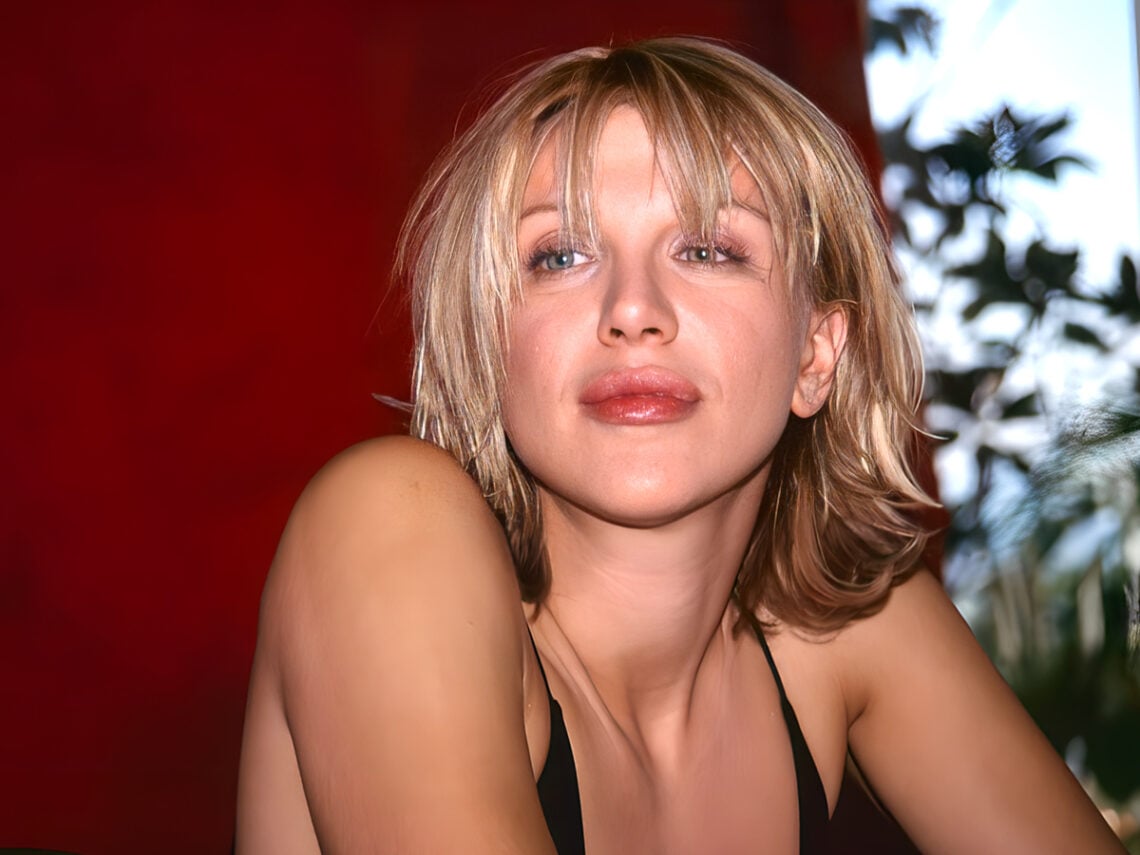
The album that drew Courtney Love the ire of the riot grrrl movement: “Don’t do it!”

In the mid-1990s, it was clear that Courtney Love couldn’t catch a break from public scorn and derision, even if her musical output was deserving of considerably more praise than it received.
Regularly resigned to living in the shadow of husband Kurt Cobain, who had become a star as the frontman of grunge icons Nirvana, Love was often criticised and accused of only ever achieving her own notoriety as a result of her romantic partner’s position in the public eye. Even following his suicide in 1994, rather than being allowed the opportunity to grieve, critics of hers found some way to pass the blame onto her for his demise, despite there being no evidence to suggest that she had any involvement in his passing.
However, these continued character assassinations were rarely related to the quality of her actual musical output, and her position as the frontperson in the alternative rock band Hole is something that many questioned the worth of, despite not having attempted to engage with her music in any meaningful way.
Again, she was alleged to have used Cobain as a ghostwriter rather than being afforded the credit of having been a phenomenal songwriter in her own right, and for her to have managed to persevere in the face of this unwarranted abuse and vehement misogyny is truly a remarkable sign of both bravery and self-belief.
After the release of the band’s 1991 debut album, Pretty on the Inside, which received some attention for having been an interesting amalgamation of art punk and noise rock, the band found themselves moving in a more accessible direction, which was something that worked as a double-edged sword for them to have to contend with. Genre purists saw it as a betrayal, while critics were simply given more ammunition to use in their tirade against Love.
Love, however, didn’t seem to care too much about the increased interest that came in her direction in this interim period, where they showed artistic evolution. In an interview with Rolling Stone in December 1993, just a matter of months before the release of the band’s sophomore album, Live Through This, Love expressed little care for the detractors and went as far as to say that they were wilfully misunderstanding her as an artist.
“It’s so different that there should have been a record in between,” she admitted, comparing Pretty on the Inside to Live Through This. “I didn’t want a punk-rock record – I did that. So it’s very melodic, and there are a lot more harmonies. And you know, because our songwriting is so different, it’s hard to deal with.” She then went on to speak more about how people were unappreciative of the poppier direction that Hole were seemingly taking, and how fans at a particular show of theirs thought they’d been betrayed.
“We played on Halloween, and all these weird purists showed up,” she continued. “Total fans, but every time we’d go into one of our pop songs, they’d start chanting, ‘Don’t do it! Sellout!’ Girls were throwing riot grrrl zines at me and stuff. I was like ‘Uh, I’m really glad you’re here, girls, but check it out: I can write a bridge now.’ I mean, I’m glad people don’t expect much from me, but I wish they had an inkling that I had an inkling of how to write.”
While the commercial and critical response for Live Through This ended up being more positive than this particular show might suggest, it’s only gone on to become more revered as it has aged, and to say that those who were markedly against Hole’s change of direction were wrong is an understatement. The influence it has gone on to have on other bands of a similar ilk is almost unrivalled by any of their contemporaries, and it remains one of the most important mergers of grunge, punk and pop to have emerged from the 1990s.
