


“Wasn’t that good to care about”: why Ray Charles resented Elvis Presley

Ever since he found fame cutting his first singles in Tennesse’s Sun Studios in 1954, Memphis’ Elvis Presley swiftly found himself deified as an icon of 20th-century pop culture, afforded the mantle ‘King of Rock and Roll’ joining the ranks of one of the biggest selling artists of all time. While no one disputes some authentic connection to the gospel and blues that filled his youth growing up in Mississippi’s predominately poor and Black Tupelo neighbourhood, the dizzying success of the young white singer has caused frustration at best among the Black community whose stars navigated a far more fraught road to fame.
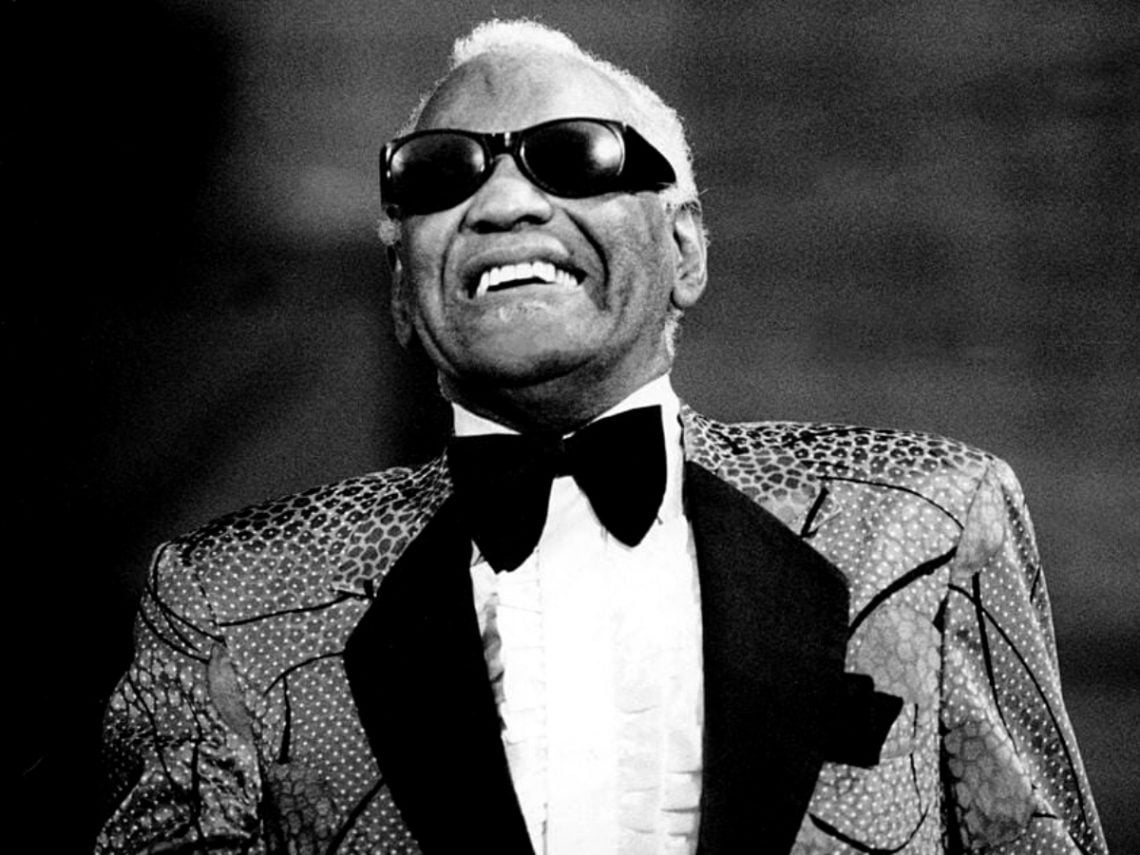
Quite happy to make his feelings known on the so-called ‘King’ was Georgian jazz and soul singer Ray Charles. Interviewed by NBC’s Bob Costas in 1994, Charles confessed some resentment at the adulation thrown at Presley: “It wasn’t that good to care about… I got in trouble because one guy asked me this question, and I said, ‘The King of what?’. He got mad at me. I don’t think of Elvis like that because I know too many artists that are far greater than Elvis”.
The merits of Presley’s swift rise at barely 20 years old provokes a range of opinions among some of Black music’s biggest names. Filmmaker and consultant on Baz Luhrmann’s Elvis biopic Nelson George interviewed several Black individuals who grew up in the same Memphis area who all seemed to corroborate the view that he was an outlier as a young white kid, occasionally heading to East Trigg Avenue Baptist Church to witness Rev Herbert Brewster’s stirring sermons at odds with the Jim Crow mores of the era.
BB King, too, expressed fond reverence for Presley, first meeting in the studio early on in their career and Presley later helping secure King shows. He offered a conciliatory note in his 1996 autobiography Blues All Around Me: “Elvis didn’t steal any music from anyone. He just had his own interpretation of the music he’d grown up on, same is true for everyone. I think Elvis had integrity.”
Long before Chuck D spat the immortal barb “Elvis was a hero to most” line from Public Enemy’s ‘Fight the Power‘, later lifted on Bob Vylan’s equally belligerent ‘Take That’, Presley was already a dirty word in the music biz. Little Richard, who also had gripes with Pat Boone following his ‘Tutti Frutti’ cover, was on record for suggesting their respective careers were amplified tenfold by their whiteness, telling Rolling Stone in 1990: “If I was white, I’d be able to sit on top of the White House! A lot of things they would do for Elvis and Pat Boone, they wouldn’t do for me.”
“He was a person who came along at the right time when he was a white kid that could do his rock ‘n’ roll and rhythm and blues…”
Ray charles
Nobody harboured contempt for Presley as much as raucous blues singer Big Mama Thornton. First recording Jerry Leiber and Mike Stoller’s ‘Hound Dog’ written especially for her, the lyrical lambast of exploitative men sold 500,000 as opposed to Presley’s later millions, Thornton claiming to have received a cheque for $500 and nothing more. She would routinely preface her performances of ‘Hound Dog’ with rebukes against the “King”, and on occasions turn to her drummer and quip “This ain’t no Elvis Presley song, son,” before taking over and performing the rest of the song behind the kit.
Presley had the talent, the moves, and an honest reverence for the blues and R&B that shaped him, but a racist Middle America who saw the Black Man’s music innately subversive and a threat to white, mainstream values absolutely afforded Presley international stardom and cultural esteem his infinitely more talented Black peers and pioneers only dreamed of. This conservativism that repackaged rock and roll’s Black foundations as plantable to whites would later find an eager recruit in Presley. Alienated by the counterculture’s social radicalism and playing to very white Las Vegas audiences far removed from his appropriated heritage, Presley initiated a bizarre meeting with President Richard Nixon to offer his services in combating “anti-Americanism”, seemingly comprised of The Beatles, communists, and notably, the Black Panthers.
Charles succinctly articulated the double standards buried in the American music industry as well as broader society: “…he was a person who came along at the right time when he was a white kid that could do his rock ‘n’ roll and rhythm and blues… and the girls could swoon over him. Nat Cole got in trouble in Alabama when the women swooned over him, got put out of town”.
He concluded: “…Black people were going out shaking their behinds for centuries, what the hell’s unusual about shaking his hips and stuff, and that’s all Elvis was doing with copying that.. .he was doing our kind of music, doing the Willie Mae (Big Mama) Thornton and ‘Jailhouse Rock’, that’s Black music, so what the hell am I supposed to get so excited about man?”
