


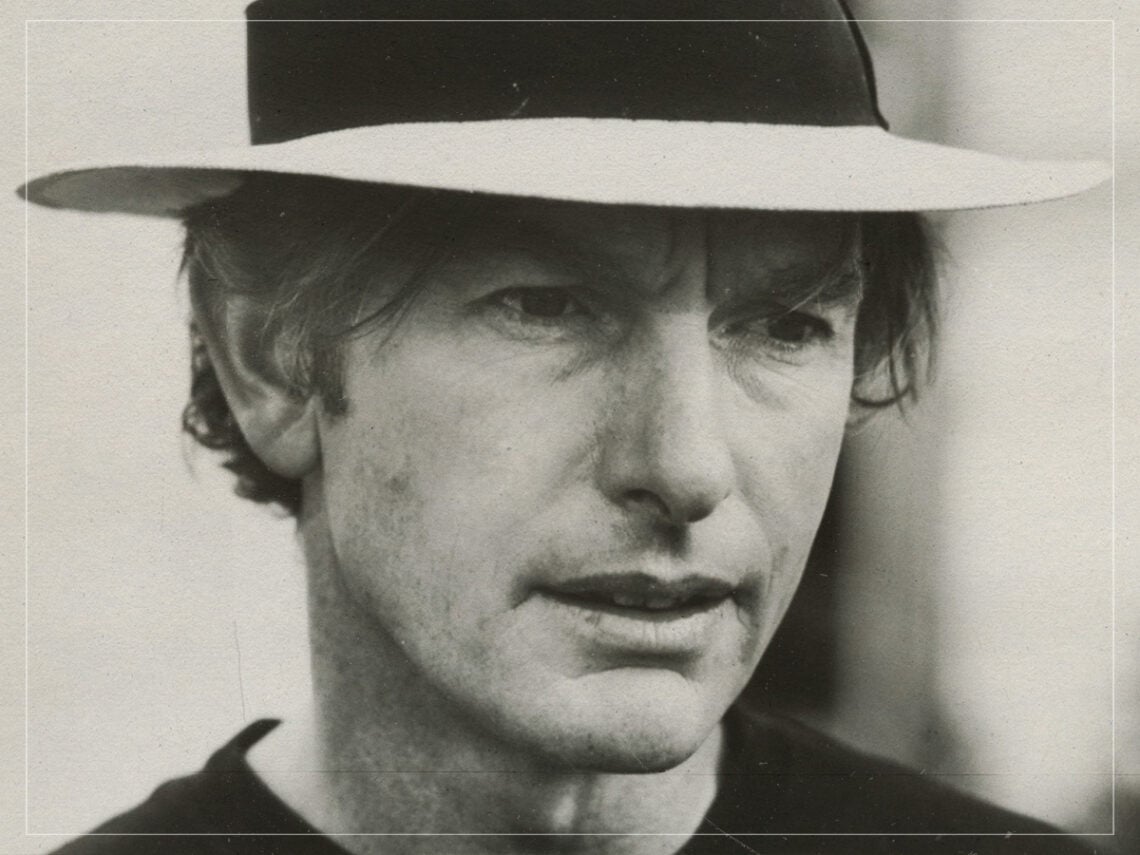
Why Peter Weir’s “least personal film” was his favourite: “The first time I had real confidence”

Before Peter Weir graduated to the Hollywood arena of movies like Dead Poets Society and The Truman Show, he was key to illuminating the potential that Australian filmmakers could bring to the mainstream, leading the Australian New Wave cinematic movement of the 1970s.
When the cinematic medium was still in the throes of conception at the turn of the century, Australia was a potential new hub for cinematic innovation following the release of 1906’s The Story of the Kelly Gang, one of the first narrative films. Unfortunately, the vast geographical distance between Australia and other cinematic powerhouses like France and America ultimately resulted in few noteworthy projects coming from down under for many years.
However, a new cinematic landscape eventually started to take shape in the 1970s when increased funding was made available to bolster the national artistic landscape. At a time when movements like the French New Wave and New Hollywood had laid some significant groundwork in the decade prior, it was time for Australia to finally prove itself.
As a result, Weir soon established himself with the dreamlike mystery of Picnic at Hanging Rock, an unsuspecting hit. Picnic at Hanging Rock charts the disappearance of several schoolgirls during a Valentine’s Day picnic at the turn of the 20th century, leaving many vital questions unanswered. Hollywood might deliver us with the answers to a film’s big questions, but Weir wasn’t about to succumb to mainstream convention.
While many viewers have found the film’s lack of decisive resolutions confusing or frustrating, I’d argue that the lingering sense of mystery that Weir crafted was a testament to his skill as a director. He wasn’t going to wrap everything up in a neatly answered bow – Weir wanted people to actively participate in the film, because sometimes there is no answer to life’s great mysteries.
Two years after Picnic at Hanging Rock, Weir returned to the mystery genre with The Last Wave, although it wouldn’t be long before he decided to stray from familiarity and throw himself into the cinematic deep end. How about a rom-com featuring the incredibly unexpected pairing of Gérard Depardieu and Andie MacDowell? A Harrison Ford thriller? Or a film about a psychotic plumber?
With such a diverse collection of works under his belt, it’s hard to tell which kind of movie Weir prefers best. Usually, you’d assume that a filmmaker is most proud of their most personal film – the one that made them revisit their deepest, perhaps painful, memories – but that’s not the case for Weir. Rather, he feels as though he reached a career high with a movie that was strikingly different from anything he’d done before.
In 1981, he teamed up with Mel Gibson – before he was the controversial figure he’s now come to be – to make Gallipoli, a movie about the futility of war. It was highly acclaimed, proving that Weir had it in him to make the kinds of movies that would guarantee him Hollywood success. It would be a few years until he immersed himself in the world of American cinema, but Gallipoli seemed to be the movie that cemented his place in the industry. In fact, Weir considers it a breakthrough moment.
Talking to interviewer Pat McGilligan, Weir revealed that despite the success of Picnic at Hanging Rock, he still felt woefully inept. Thus, “I had to teach myself how to make movies. I had made three features – but in some ways, the more I went on, the harder it became, the less I knew. I was like a primitive filmmaker. I stopped filmmaking in 1978 and put myself through a course I was sorely lacking.”
Thus, when it came to Gallipoli, Weir felt like a brand new auteur. He explained, “Gallipoli, which came after that film course. It was the first time I think I had real confidence in what I was doing, some understanding of craft, while still being an apprentice.”
Concluding, “I think my least personal film, and favourite film, is Gallipoli. It has the least to do with me, really.”
