


Revisiting the Valentine’s Day mystery ‘Picnic at Hanging Rock’

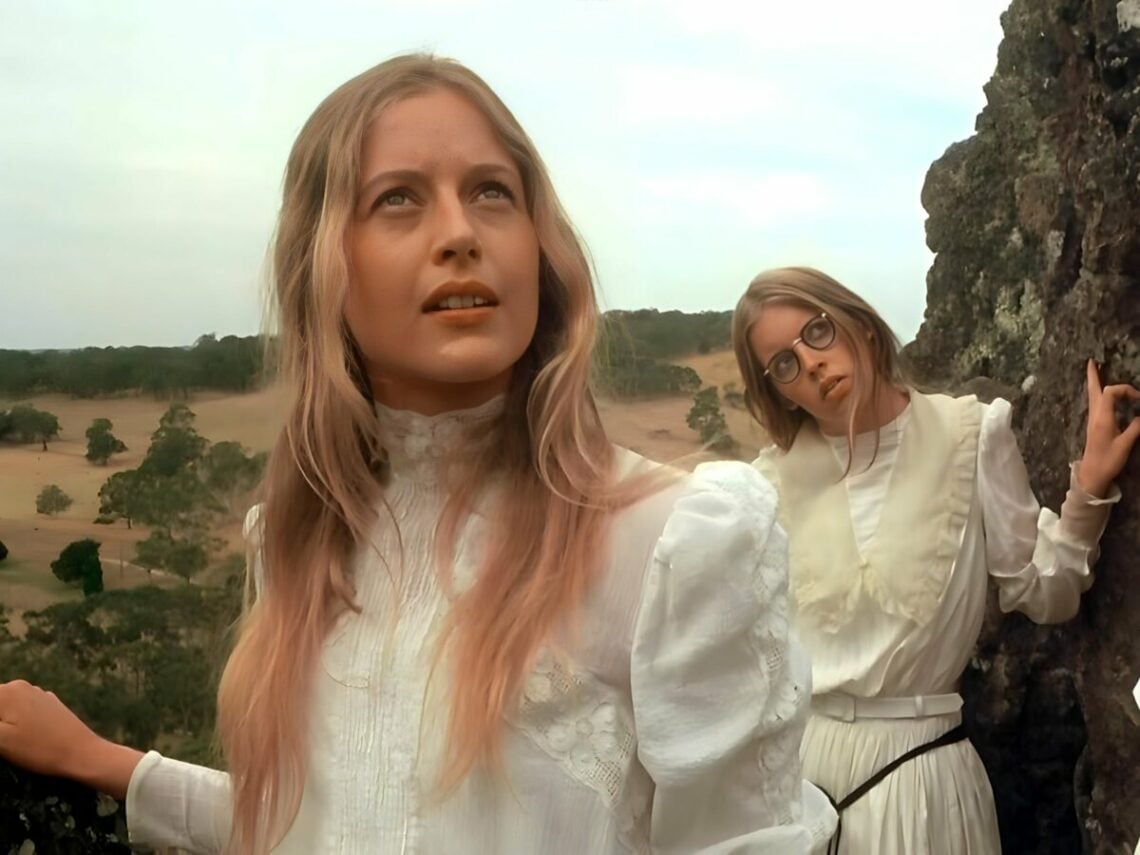
Peter Weir’s Picnic at Hanging Rock divided audiences upon its release in 1975. For many, the director committed a cardinal sin by refusing to provide an answer to the mystery he had meticulously crafted over the film’s one-hour and 45-minute runtime. Set in 1900, three schoolgirls and their teacher go missing during a Valentine’s Day picnic in the heat of Hanging Rock, yet the film ends without a resolution. Against typical cinematic notions, we are left to our own devices to fill in the gaps, which, for many viewers, is a frustrating experience.
Yet, this is what makes the movie – a cornerstone of the Australian New Wave – so great. Weir plays with the idea of fantasy and voyeurism exceptionally well by involving the audience in the girls’ disappearance. From the beginning of the film, the camera consistently invades the girls’ private spheres, with one of the opening shots depicting Miranda lying in bed, shrouded in white, virginal fabrics. Soon enough, we see the girls getting ready in white petticoats, washing their faces in the bathroom, and pulling each other’s corsets tight. Although this might appear to objectify the girls, Weir’s male gaze is consciously employed to convey that the girls are now becoming objects of male desire, the trip to Hanging Rock marking their shift from innocent schoolgirls to young women. The mysterious, evocative landscape of Hanging Rock serves as a backdrop for the burgeoning sexual feelings emerging in the girls as their repressed curiosity takes hold.
Sexual metaphors are rife within Weir’s narrative, from the sight of snakes skirting over dry rocks to the girls’ last sighting occurring as they enter a distinctly narrow passage. Moreover, a thick air of tension is created by an ominous score, distant screams, and the domineering Hanging Rock landscape, dry and hot, evoking a need for satiation. Beginning with the opening sequence in which we see the dusty terrain, and continuing as the girls lounge on the rocks in the sun, there is an overt sense of uneasiness created by Weir’s voyeuristic lens, often focusing his gaze on the large rocks, which assert themselves over the girls with a masculine quality, as if possessing forbidden knowledge.
It is this forbidden knowledge that the girls go in search of and inevitably lose themselves to. We don’t know why they disappear and where they end up, but we can only assume they have been ‘tainted’ in some way or another. Irma is one of the only girls to return, unable to recall any of the events of her disappearance. Yet, she is shown in a crimson-coloured cape and hat, starkly contrasting the pure white outfits of her peers. This suggests that she has attained some sexual knowledge that the others are not yet equipped to handle. The unexplainable is central to Picnic at Hanging Rock, which morphs its idyllic-looking pastel-coloured fantasy into a nightmare of girlhood. Horror creeps in slowly – a knife stabs a heart-shaped cake, and insects crawl across surfaces. Weir juxtaposes a girlish, dream-like aesthetic with themes of burgeoning sexuality and the transition from childhood into the sexual world, making it unsurprising that Sofia Coppola’s The Virgin Suicides bears a striking visual resemblance.
Picnic at Hanging Rock is quietly terrifying, reckoning with possibilities rather than definitive answers. Weir’s film would be considerably less enthralling and potent if he revealed the fates of the girls. Instead, the audience becomes partly responsible by being given the opportunity to project their darkest and most unsettling thoughts onto their fates. Weir’s voyeurism allows the audience to engage in fantasy, and whatever we choose to believe happened to the girls is the real horror of watching the film.
Discussing the ending, Weir revealed: “My only worry was whether an audience would accept such an outrageous idea. Personally, I always found it the most satisfying and fascinating aspect of the film. I usually find endings disappointing: they’re totally unnatural. You are creating life on the screen, and life doesn’t have endings. It’s always moving on to something else, and there are always unexplained elements.”
