


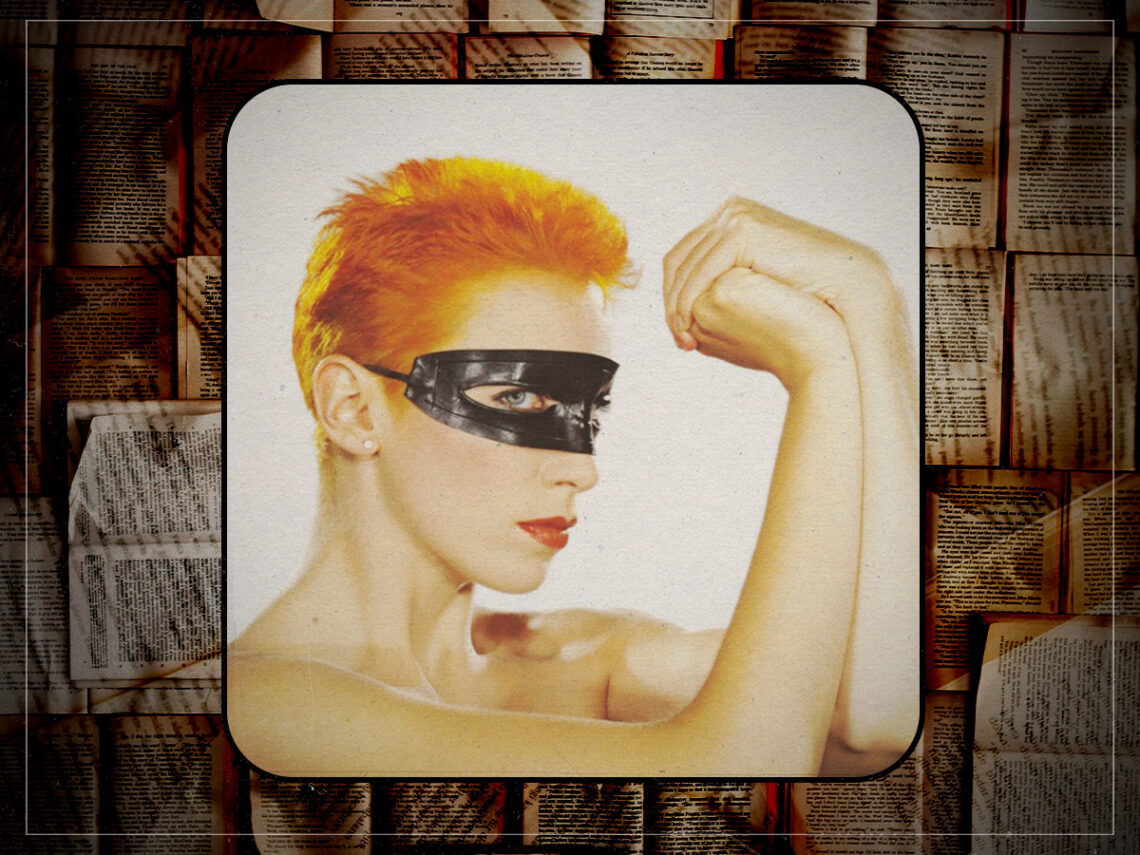
Why on earth is Annie Lennox reading books back to front?

She’s not an Arabic speaker, and manga’s not quite her genre, but the Scottish new-wave pop artist Annie Lennox, who used her soulful voice to characterise a decade, has now retired to writing and reading, the latter of which she tends to do anti-systemically.
The philanthropist from Aberdeen never shied from making a bold political statement in music or on Brexit, but her reading ethics are pure rebellion, about which, in a recent interview with the New York Times, Lennox explained why she starts reading from the end of a book and works her way back to the front.
“I think it might possibly have something to do with being left-handed. It also speaks to my curiosity getting the better of me, mixed in with general impatience and all-around quirkiness. I always want to see how things end, before wading through the pages to find out!” she exclaimed.
Since books are traditionally written with right-handed people in mind, and not many left-handed versions make it to the market, her visionary antics read like much more of a political statement than what may appear. Her reading is an act of resistance to all those left-handed people who are reminded there’s something wrong with them each time they pick up a book.
Moreover, she said, ”I’m not sure, but perhaps there are other neurodivergent folks out there, who recognise this unorthodox impulse!”
Apparently, a useful technique for revision, reading back to front was a popular topic of discussion on neurodivergent Reddit, but little information has been made available to science on the topic. As a nosy reader myself, I understand the general craving of wanting to skip ahead and spoil the ending for yourself, especially if the narrative drags on for longer than what the plot permits, but it’s definitely a surprise to read this about someone who is themselves a writer.
Lennox’s out-of-the-box thinking is given a centre-stage spotlight throughout her recent literary effort, Annie Lennox: Retrospective. Contrarily to what its title might imply, her long-awaited visual memoir doesn’t start from its back cover, but of course, she had to break the script somehow, and instead of a traditionally written autobiography, Lennox shook it up into a sort of scratchbook, collaging images of memorable moments throughout her career.
“I thought it might be interesting to collate some of the themes of a life lived through music making, songwriting, performance and recording,” she told the New York Times’ ‘By the Book’ section last October.
The iconic vocals behind ‘Sweet Dreams’ decided to minimise her voice for this coffee-table effort, but her page turner goes beyond the visual to a mosaic of hints and sentiments gathered by a distracted thread. It’s no short of iconic that a musical artist would resort to images and words to Patti Smith themselves, compiling all into being part of a very elite caste of multi-dimensional creatives, the rare people who reincarnate with each new branch of expression.
Whether the patchwork element qualifies this book as a possible back-to-front read remains up for debate, but maybe converting readers was the book’s master plan all along.
