


Echoes of Beatlemania: Why Oasis can’t be heard over their own legacy

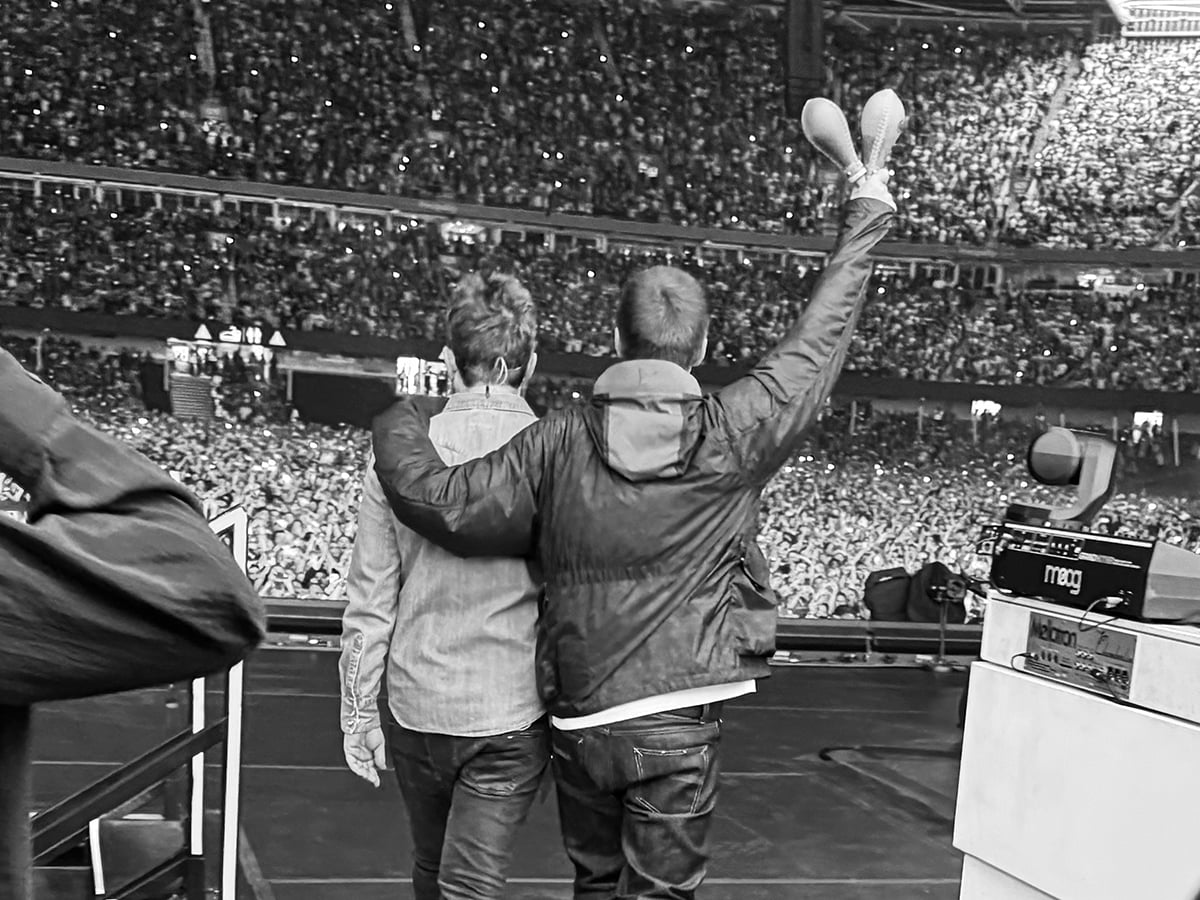
Ask anyone who has been to one of the Oasis reunion concerts, and they’ll all tell you: the best thing about the show was the crowd.
Far from detracting from the band themselves, the uproar of the audience has been a triumph that has defined the dazzling comeback. It’s not that the Gallagher brothers have been outshone. It’s just that they have facilitated something more vital than stealing the spotlight for themselves.
Back when the group first played Knebworth in 1996, house prices were at a prime affordability of 3.69x the average annual salary, compared to today’s unattainable 7.91x the wages. We’ve also seen the price of basket goods double since then, meaning our incomes don’t stretch as far either.
The poor have gotten poorer, the problems have become a permacrisis, and woe is all around, especially on the sapping devices we’ve become inadvertently addicted to. But for a few hours at any forthcoming Oasis concert, that will all be forgotten by everyone, as a buoyant mass screams in unison with songs that exemplify good times in spite of everything.
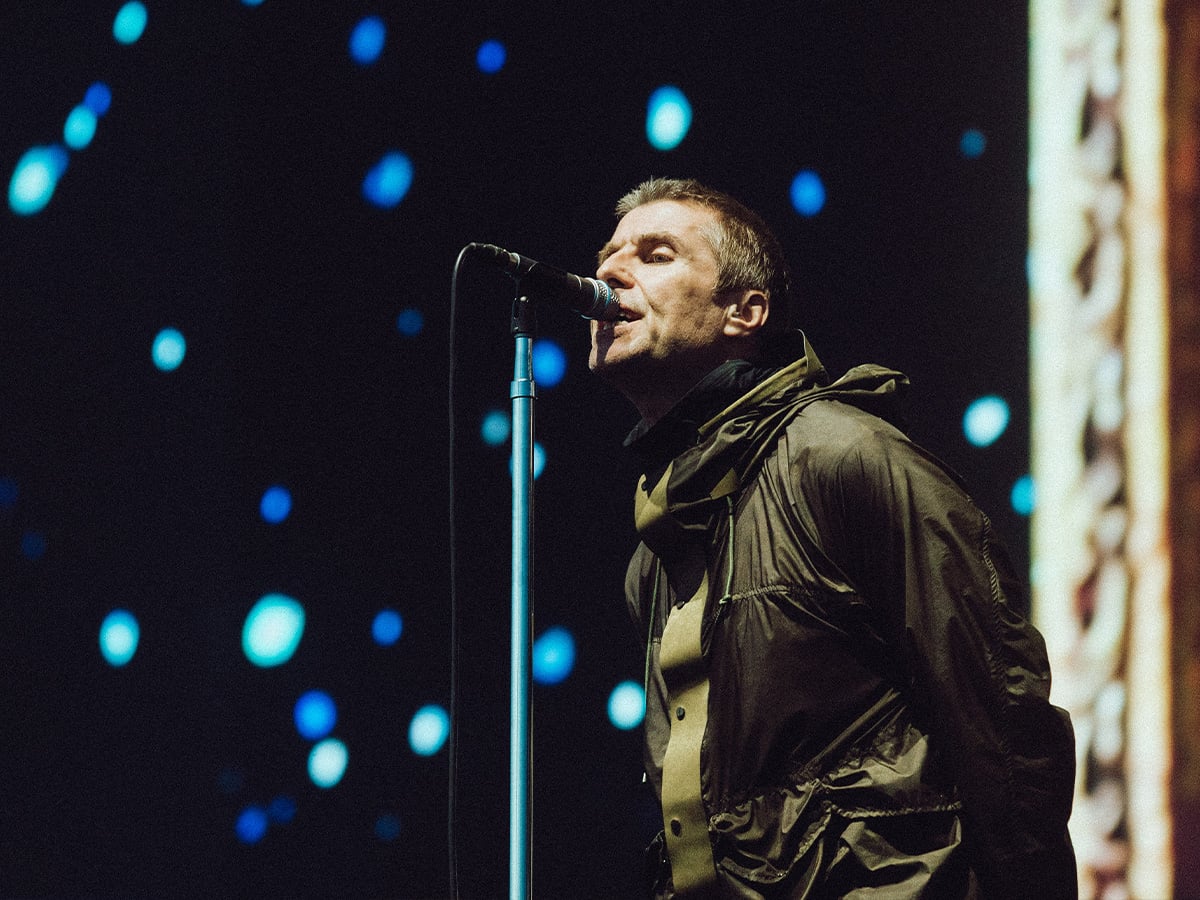
That has been the defining factor of the whistlestop Oasis reunion. The group have been perfectly tight, but amid the wail of thousands of bucket-hatted fans, with the stage a mere fleck in the distance, you might not have even noticed. If you’re obscured by the strapping six-footer standing in front of you, you’re more likely to hear a rendition of ‘She’s Electric’ by the sobbing accountant to your right than Liam Gallagher belting it out 200m away.
Why’s he crying, you wonder, sneaking glances at the weekend Adele of the accounting department? Is it the 15 pints? Yes, for the most part. But it’s also the transcendent nature of Oasis’ legacy. Even if you’re not an ardent fan, which, frankly, seems to apply to a swathe of the reunion’s audience, they are a band of rarefied size whose appeal eclipses their music. Love them, like them or loathe them, we all have memories tied to the group that are emotionally jostled loose by a mass sing-along.

So, rather than bemoan the blubbing accountant’s croon obscuring that of the band you paid top dollar to see play, you’re more than likely to join him and ‘sing it loud and sing it proud today’. Such is the prevalence of the party atmosphere at the raucous shows, it’s not a leap to hark back to the days of Beatlemania.
This is not the first time a band has been drowned out by the deafening roar of their own audience. When The Beatles quit touring in 1966, Paul McCartney would comment that the problem was, “We couldn’t hear ourselves when we were live. There was so much screaming.” But that was also, surely, part of the thrill? It’s long been noted that a sense of hysteria seemed to sweep over young women, in particular, when the Fab Four descended on the States. But ‘hysteria’ underplays a genuine reason for such an outpouring.
In many ways, the Fab Four represented their brothers, cousins, boyfriends and pals who were being shipped off in their droves to the perilous battlefields of Vietnam. So, when The Beatles exalted them from this haunting reality, it is little wonder that they bellowed beyond the capacity of the rudimentary sound systems of the era.
Unfortunately, the Fab Four saw this as an artless pantomime and pulled the plug on their live performances. But Oasis, knowingly or not, seem to be rewriting that narrative. Rather than recoil from the noise, they’re revelling in it, happy to simply play the hits that orchestrate the outpouring of cheer from fans who have their own reasons for being overcome with ‘hysteria’.
In fact, the very thing that silenced The Beatles has become the core appeal of the Oasis reunion experience. Rather than concerts where you come out able to recall the setlist and critique instrumental moments, little bits of nuance or discuss the merits of the deep cuts and rarities on display, they’re pissed-up karaoke nights that hark back to a time more promising than the present, as proven by the damning statistics I unfortunately dredged up earlier in the piece.
This, of course, is facilitated by technological advancements that The Beatles weren’t afforded, but it does also seem apparent that Oasis are also simply leaning into the spectacle of it all. As a plethora of sound engineers have recently espoused in backstage circles, pristine delivery is now shunned in favour of fostering an atmosphere.
The point is to sing along to ‘Live Forever’ in unison, forgetting yourself, your worries, and maybe even where you are, not quietly marvelling at the band on the stage. To be honest, commanding a hushed appreciation of artistry is not what Oasis are about now, if they ever have been.
Somewhere in this boozy, bawling communion, there has been a semblance of hope. In trying times, thousands of people singing ‘Live Forever’ feels so refreshing that it is hard for even the most snivelling naysayer not to be moved. Alas, there’s a hefty caveat to add to that which can’t be ignored: the concerts could have been even better.
A study by Barclays found that fans attending the shows are “expected to spend an average of £766.22 across tickets, travel, accommodation, hospitality and merchandise.” So, it’s certainly a hopeful communion marred by a lack of inclusivity.
This elephant in the room should not be drowned out by the boon of the booming shows. A commercial veneer has undercut the romance of the comeback. In rare sober moments, there’s a bitter irony to a band sneering at luxury while commanding it for themselves. When The Beatles played Shea Stadium, you might not have been able to hear them, but at least tickets only cost $5.65, around $56.25 in today’s money.
But as the crowd spills out of the Oasis shows, in a sense of rapture that is only marginally broken by a worried check of the bank balance, the message resounds of how rewarding live music can be, and how much we need that right now.
I recently spoke with sociological psychologist Dr Michael Swift about how live music attendance is only 89% of what it was before the pandemic. Of course, economic impacts factor into this figure, but with live podcast shows flourishing, he also explained, “Many people now experience socialising as more effortful than before, and they’re out of practice, or more sensitive to social dynamics.”
Adding, “More than anything, we’re seeing a recalibration of what feels good. Enjoyment is now tied to energy conservation. People are asking, ‘Does this feed me or drain me?’ and for a lot of people, high-energy events are now just too taxing to justify regularly.” But is there proof to match that conclusion, or are we simply slaves to scrolling?
The screaming mythos of Oasis indicates that these events can actually be highly recharging and emancipating. As a study undertaken by Goldsmiths University proves, as little as 20 minutes spent at a gig can increase feelings of well-being by 21%. While the study was admittedly commissioned by O2, it also found that regular attendance, defined as around one show every fortnight, can extend one’s life expectancy by nine years.
Moreover, the beneficial buzz of a live music event can persist for up to a week. So, if you’re reading this in the afterglow of Wembley, you still have the sing-along to thank for your mood. That’s the vital revelation of the reunion.
They might cop a few pleters from the cutting-edge pusrists, but we need bands like Oasis, bands who are big enough to portray this message to the masses, conjuring a generation out into a fabled field somewhere to scream away their woes, rabbiting on to a mate about how ‘we should book up to see the Maccabees at All Points East next’ without even once laying an eye on Noel Gallagher.
As Teeside noise band Benefits told Far Out, ”There’ll always be the ‘not as good as they used to be’ or ‘I was there when they played to ten people at the Dog and Duck’ crowd, but sod ’em, just enjoy it for what it is, sing your lungs dry.” That advice has certainly been heeded.
So, while some critics might have misinterpreted the understated, crowd-oriented show as “glorified karaoke”, when you’re in amongst the masses, swept up in the adulation and staring at the back of a swaying bucket hat, karaoke becomes the glorious point. In a fractured world and fraught music industry, Oasis have offered the radical chance to feel part of something massive and familiar again.
If The Beatles pulled the plug because they were being subsumed by their own ear-splitting legacy, Oasis are showing that crowd volume can now be the best part.

Never Miss A Beat
The Far Out Beatles Newsletter
All the latest stories about The Beatles from the independent voice of culture.
Straight to your inbox.