


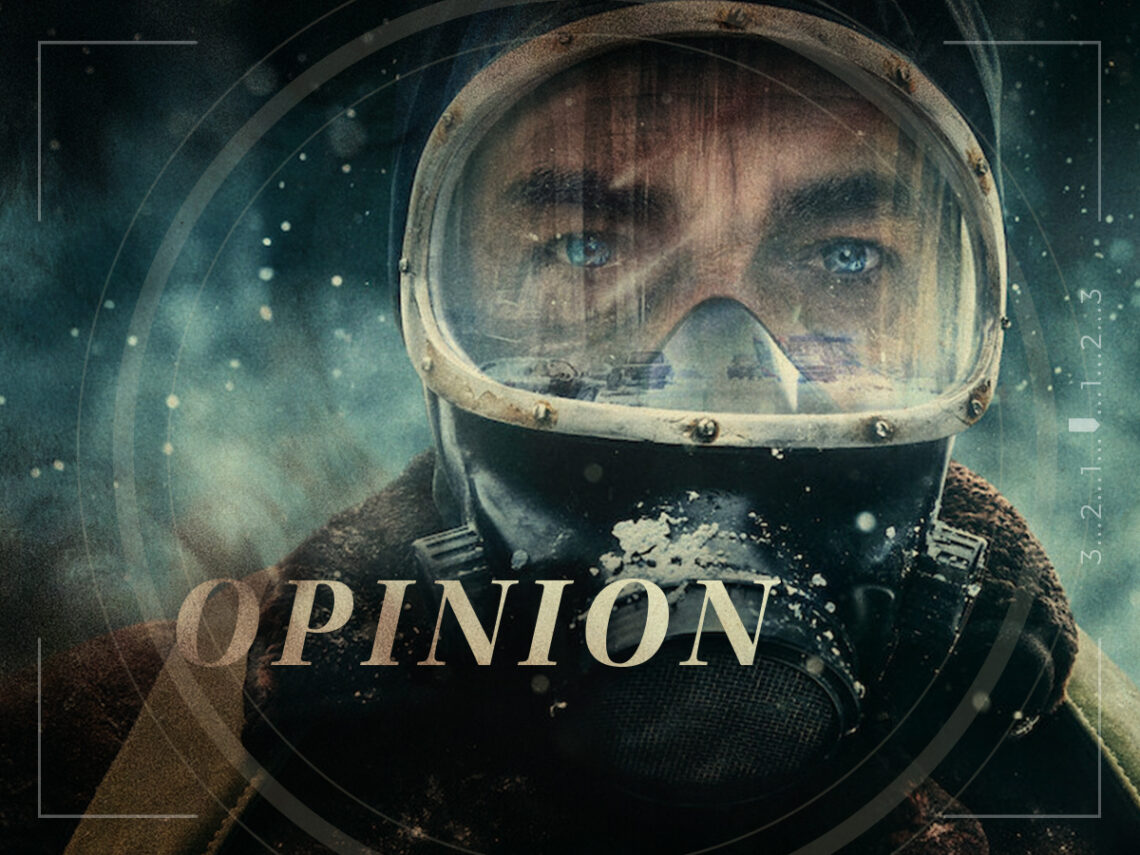
‘The Eternaut’: Why does the Netflix series look so much better than most Hollywood blockbusters?

On April 30th, 2025, The Eternaut debuted on Netflix and quickly rose through the ranks of the top ten charts. The Argentinian science-fiction series is set in a post-apocalyptic Buenos Aires, after a mysterious snowfall blankets the city, killing anyone who comes in contact with it. A group of survivors subsequently try to rebuild civilisation while dealing with the giant bug-like creatures that descend upon the city in the wake of the snow blizzard. It’s all very harrowing.
The show, based on Héctor Germán Oesterheld’s culturally significant comic strip that first began publication in the 1950s, quickly proved to be a force to be reckoned with, thanks to its excellent performances, intriguing story that builds in scope with each episode, and an ability to provoke genuine emotion in its audience. It is smart, compelling, and downright scary at times, which made immediately clicking ‘play’ on the next episode an easy task.
However, one thought kept buzzing in my head as I watched The Eternaut. I gazed in wonder at a snow-blanketed post-apocalyptic city, complete with abandoned motorways, dilapidated buildings, and dead bodies littering the streets and alleyways. I watched in amazement as skin-crawlingly realistic bugs began attacking terrified survivors, and sat goggle-eyed as a spectacular runaway train sequence tore across the screen. The whole time, I kept thinking, “Why does this look so much better than 90% of what Hollywood puts out?”
Too many times in recent years, I’ve found myself watching a big-budget Hollywood blockbuster or piece of highly regarded prestige TV and thought, “Argh, that looked a bit fake”. Marvel has been the biggest offender in this category, with so many of their movies and shows released after Avengers: Endgame suffering from the same visual issues, namely atrocious CGI, terrible greenscreen compositing, and an overall feeling that nothing you’re watching was shot in an actual location. Worryingly, even some scenes in these movies that were shot outside in the light of day still looked fake because of the post-production processes employed.
Marvel isn’t the only villain in this scenario, though. Tons of blockbusters in the last several years, with reported budgets of $100–$200million, look cheap and unconvincing. Even a beloved show like HBO’s The Last of Us has struggled at times with visuals that don’t quite land.

By contrast, I can honestly say that I didn’t once think anything looked contrived while watching The Eternaut. It was evident that the filmmakers, including director Bruno Stagnaro, his production design crew, and special effects artists, left no stone unturned when putting together the show. The world feels fully realised, lived-in, and believable, while also being visually spectacular in an understated way.
If reports are to be believed, The Eternaut had a budget of $15m – a fraction of what even a low-end Hollywood blockbuster would cost. It’s staggering what Stagnaro and his team achieved with that money. But the question still lingers: why? How is it possible to produce visuals on par with a Hollywood blockbuster, on a budget that would be considered tight even for an indie film?
Well, perhaps it has something to do with the fact that The Eternaut was shot using on-set virtual production, more commonly known as ‘The Volume’. This technique was popularised over the last five or six years by The Mandalorian, as well as films like The Batman and Top Gun: Maverick. It involves LED panels arranged as a backdrop to a real set, with computer-generated imagery projected onto them to “extend” the environment in which the actors are performing.
As with everything, ‘The Volume’ is only a tool, meaning it can be used well or poorly. The productions above are the best Hollywood examples of its use, and that is likely because their cinematographers still lit the sets traditionally, which goes a long way to removing any sense of artificiality that might otherwise crop up. The Eternaut was shot using this technology, and the visuals were then augmented by the work of visual effects companies from Barcelona, London, Amsterdam, and Stockholm.
Overall, it reminded me of the discourse surrounding Godzilla Minus One. That 2023 creature-feature was the Japanese Toho Studio’s 33rd Godzilla film, and on a reported budget of $10–15m, its special effects and CGI put the considerably larger-budgeted Hollywood Godzilla movies to shame. Its effects were accomplished by 35 artists painstakingly working at Shirogumi’s Chōfu studio for eight long months, and they were rightfully rewarded with an Academy Award for ‘Best Visual Effects’ for their troubles.
So, what was the key to ensuring The Eternaut could rival any Hollywood behemoth with its visuals? Well, I think it’s a combination of precision, care, and timing. The technology used for this show is the same as that utilised by many Hollywood films, yet the results differ so wildly. It’s a testament to what can be accomplished by a small, passionate group of people who are afforded the time they need to make something look the best it can be, as opposed to thousands of people in different departments and special effects studios working against the clock to meet a forced studio deadline.
At the core of the matter, there’s no reason The Eternaut should look so much better than the latest Marvel extravaganza, and it’s about time Hollywood bucked up with its ideas.
