


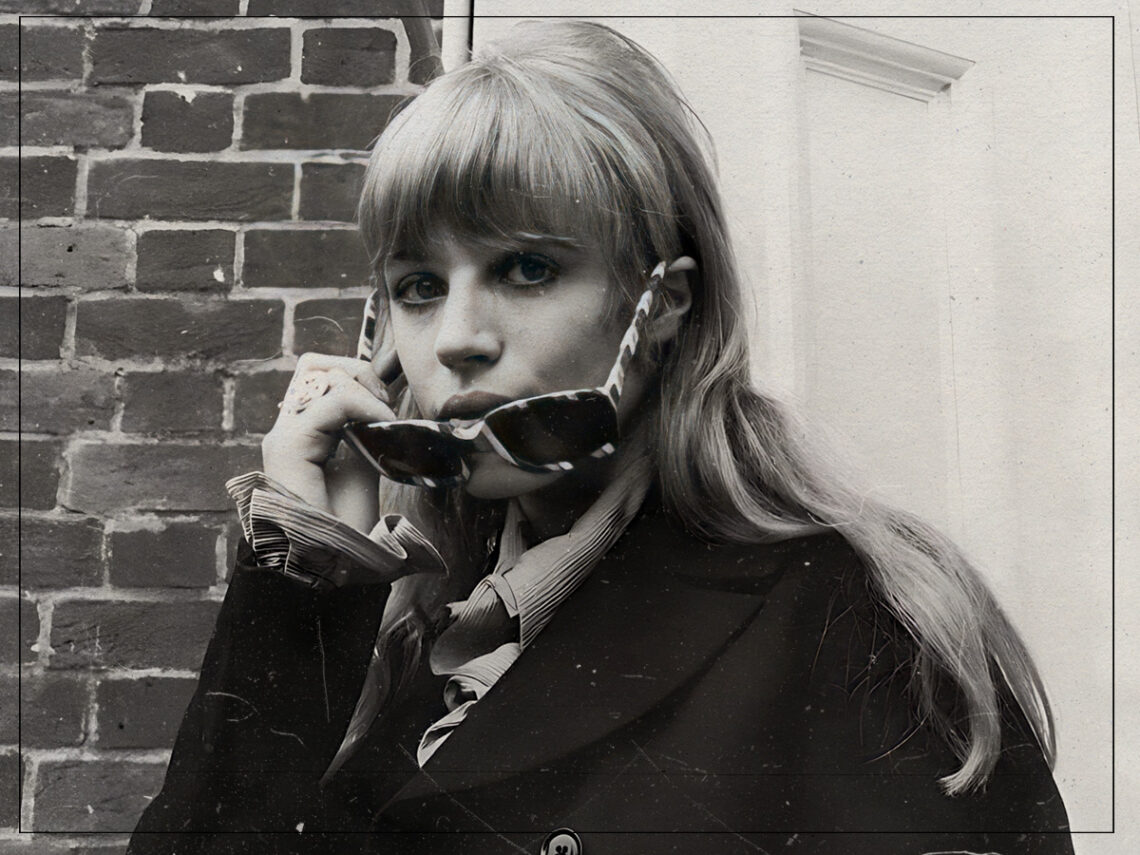
Why Marianne Faithfull believed Kenneth Anger had plagued her with a “terrible curse”

Connecting music with the devil is a tale as old as time. It seems every single genre had its moment, though rock got the brunt of it, with parents believing the sounds coming from their kids’ bedrooms were a sure sign they had sold their souls.
Kenneth Anger didn’t believe art to be a sign of the devil, not exactly. He believed in the occult and cast spells on people who annoyed him, but he was also intrigued by how art could be seen as some form of quiet coercion, influencing the way people thought and acted, which felt like it was from a place of free will, like the counterculture scene.
In his mind, counterculture musicians were the perfect example of, as he put it, “today’s new tribe” of “adolescent hippies” that got caught up in something that wasn’t necessarily real. And he saw this as a manifestation of the version of Lucifer he discovered in his muse, Aleister Crowley. Again, this didn’t mean he viewed art as inherently evil, but something that influenced you when you didn’t even know it. That if it were personified, it would be someone with the charisma to get anybody to do whatever they wanted.
With this being the premise for Lucifer Rising, finding the right person to play such a complicated character was the crux of pulling it all together. But as perfect for the role as Bobby Beausoleil turned out to be, it was all about the musicians involved.
Anger first met Jimmy Page when, coincidentally, they were both at an auction trying to get their hands on a Crowley piece. He eventually convinced him to help with the music for the film, and branched out into circles beyond counterculture to collect others, which led him to Mick Jagger and Keith Richards, and their girlfriends at the time, Marianne Faithfull and Anita Pallenberg.
Faithfull came on board, but she later said she wouldn’t have done it at all had she not been on drugs at the time, which changed her mindset so much that it clouded her opinion of Anger. “I don’t think I would have bought the whole Lucifer Rising thing if I hadn’t been so fucked up at the time,” she told Louder, saying that it made her believe Anger liked her when he really didn’t (a little like the characters he became obsessed with).
Another thing that made her feel weird about it all was that she wasn’t into the occult like Anger and some of the other musicians present were. But under the influence and lacking in self-esteem, she went along with it anyway. Although the effort to make him happy and do whatever he asked eventually came back to bite her, and he ended up cursing her anyway.
As she recalled, “Kenneth believes all that stuff. He laid a terrible curse on me when my book came out. I should have kept it. It was such an interesting document, all written out in blood—or maybe it was Max Factor. I just didn’t want it around, so I burnt it at a crossroads by a Lady Chapel. So far, the curse hasn’t worked.”
This was one of Anger’s oldest tricks in the book. If someone wronged him, he’d curse them. He did it to Page, too, when they had a falling out over him not working fast enough, probably something to do with the drugs he was on, which, according to the filmmaker meant he often thinks with no follow-through planned. Clearly, it was all a ruse anyway, especially as none of the curses Anger cast on his enemies ever actually worked out.
