


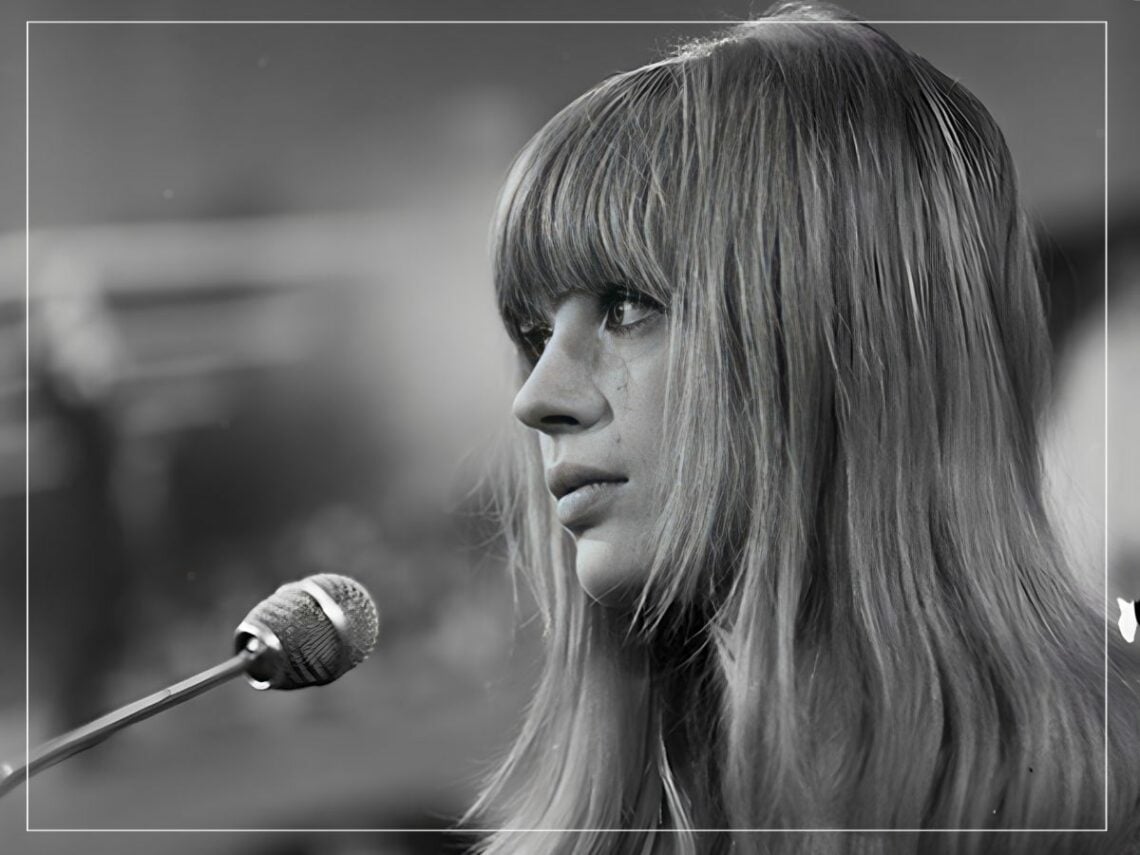
Marianne Faithfull: the legacy of a courageous British pop icon

You could argue that the 1960s, with its newfound sense of liberation and an ever-evolving cultural landscape, welcomed those who were easily prone to impulsivity and hugged them the tightest…before letting go. Swinging London was an enticing world full of new music, new fashion, and new attitudes, and Marianne Faithfull, barely an adult, was soon snapped up into the burgeoning world of British rock and roll – and subsequently spat out – after being discovered by Andrew Loog Oldham at a release party for the Rolling Stones.
Faithfull, who has just passed away at the age of 78, quickly became one of the scene’s most familiar faces. When she wasn’t recording music – her career beginning with the hit song ‘As Tears Go By’ – she could often be found partying and taking drugs, soon earning frequent media attention due to her relationship with Mick Jagger. She was even there when the Stones were busted for drugs at Keith Richards’ house, which caused even more scrutiny from reporters.
The singer soon felt the effects of the declining optimism and fading glamour of ‘60s London, becoming addicted to cocaine and then heroin, taking her into the deepest and darkest era of her life. In 1969, just a year after her miscarriage, she would co-write the haunting ‘Sister Morphine’, which would come to bear a striking resemblance to the next few years of her life.
“The scream of the ambulance is sounding in my ear/ Tell me, Sister Morphine, how long have I been lying here?/ What am I doing in this place? Why does the doctor have no face?” she sang. While the Rolling Stones would come to perform the song on their classic album Sticky Fingers, the song truly belonged to Faithfull. With her powerful, distinctive voice, Faithfull brought a painful sense of realism to the song, painting a vivid picture of addiction.
Despite the hardships Faithfull faced – her addiction led to several years of homelessness and anorexia – she found survival in music. Faithfull was so much more than an accessory in the story of the Stones and ‘60s hedonism; she took these experiences and moved forward through the pain and trauma into a new era of musical experimentation. She routinely returned back to art, helping her through the most challenging times of her life, and for this, she remains an inspiration to many.

Her unofficial comeback record, 1979’s Broken English, was a landmark moment in Faithfull’s career. Inspired by the burgeoning new wave scene and the freedom afforded by the punk movement, the album earned Faithfull a Grammy nomination for ‘Best Female Rock Vocal Performance’, cementing her status as an acclaimed musician.
She proved that while life can deal people an incredibly rough hand, it doesn’t have to stifle creative ambition. Faithfull had the voice and the talent to be an incredible singer, and she refused to throw that away. Pushing back against misogynistic criticism—“To be a male drug addict and to act like that is always enhancing and glamorising. A woman in that situation becomes a slut and a bad mother,” she once said—Faithfull proved her artistry, showing the world that she wasn’t just a muse or an addict. She was an artist.
The resonance in Faithfull’s voice was always present, even when it got raspier and thicker as she got older. From her early takes on classics like ‘Scarborough Fair’ to her wonderful collaborations with artists like Nick Cave, Warren Ellis, PJ Harvey, and even Metallica, Faithfull’s singing career spanned decades, and with each album, she proved to be a musician with endless ideas and creativity.
Faithfull was an actor, too, and her role in the erotic drama The Girl on the Motorcycle opposite Alain Delon was a daring highlight of her career. It became the first movie to be awarded an X-rating in America, and the film had a lasting legacy, defining the freedom and liberation of the ‘60s. She worked alongside some acclaimed directors in her time, from Kenneth Anger and Derek Jarman to Sofia Coppola, demonstrating her vast talents as both a singer and screen icon.
With the news of Faithfull’s passing, it’s high time that more people delve into her back catalogue of work, where her gorgeous voice can be found singing tracks that marked her bold entry into music and others that encapsulate the essence of an experienced and resilient artist. While she might be well-known for inspiring classic Rolling Stones songs and for holding a reputation as one of the 1960s’ wildest children, Faithfull was a versatile musician and actor who paved the way for female singers at a time when men dominated the industry. She made it through the toughest of times, leaving behind a legacy as one of British music’s most iconic figures.
