


“Won’t last”: why Louis Armstrong dismissed Elvis and rock stars

Some 70 years after he swivelled his hips on The Ed Sullivan Show for the first time, Elvis Presley now stands as arguably the single most recognised and celebrated American of all time; more charismatic than Marlon Brando, a better dresser than Ben Franklin, and certainly able to carry a tune way beyond what Mark Twain or Martin Luther King could muster.
There was once a time, of course, before his face was slapped onto every type of patriotic American kitsch produced in Chinese factories, that Elvis was a polarising character, seen even by many of his fellow Americans from the Deep South as a traitor to his Christian roots and a purveyor of ‘the devil’s music’. Others accused him of stealing Black music and profiting from it without uplifting his influences, and these detractors have always been an important part of the Elvis story, providing the controversy and self-doubt that the well-coiffed star had to overcome on his path to immortality.
There were other critics of the Elvis Presley phenomenon whose opinion probably carried a bit more weight, however, and they were his fellow musicians, the established jazz and pop stars of the wartime 1940s and pre-rock ‘50s, who were now faced with an existential threat in the form of a 21-year-old kid from Tupelo, Mississippi.
Inevitably, one after the other, these performers were asked for their own opinions on Elvis, and while very few of them were accusing the upstart of being a witch or working directly for Satan, a whole lot of them sure did find one reason or another to take him down a peg, usually in the form of a backwards compliment or passive-aggressive jab.
“He doesn’t have much of a voice, so he compensates with assorted gyrations,” said Rudy Vallée in 1956, one of the biggest pop singers of the 1930s, “But people say they enjoy his performances and who am I to question what someone else likes?”
“Presley has no training at all,” Frank Sinatra chimed in a year later, “When he goes into something serious, a bigger kind of singing, we’ll find out if he is a singer. He has a natural, animalistic talent”.
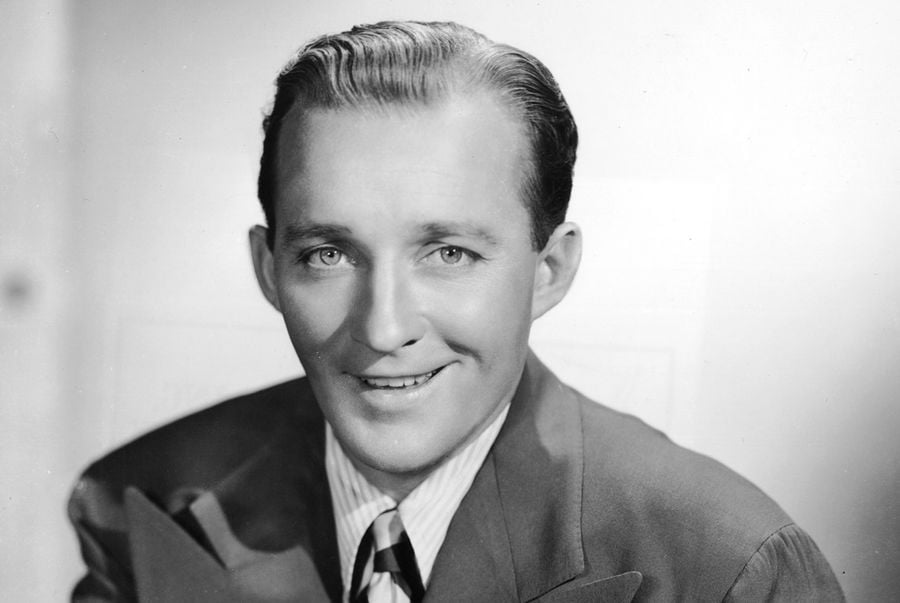
Bing Crosby told Variety that “Presley has a pretty good beat, and he sings in tune, but he needs more training and more diversified material… You can’t just sing ‘Hound Dog’ all the time, and his tunes all sound like it. I think he’s a sexy-looking kid…but he has to take those sideburns off.”
“Elvis Presley?” jazz legend Cab Calloway remarked dismissively, less concerned with being diplomatic, “I can’t see that he has any talent”.
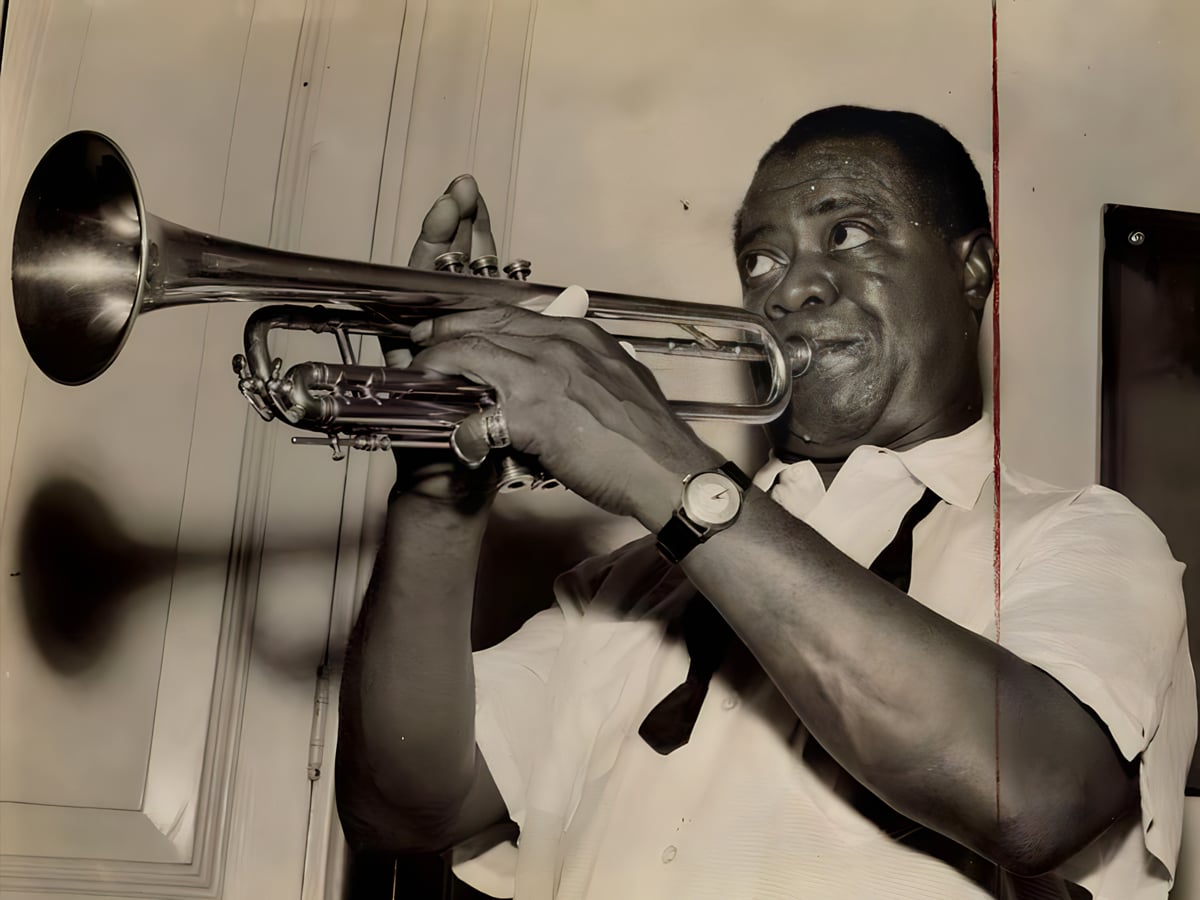
One of the most interesting, evolving perspectives on Presley from the 1950s into the ‘60s, however, came from the one man who arguably outshone ‘the King’ as a figure of influence in American music in the 20th century. This was Louie Armstrong, the great ‘Satchmo’, the jazz trumpeter and singer who’d seen his style of music rise up from the streets of New Orleans to the speakeasies of Chicago and out into the mainstream as the dominant form of popular music in the country for the better part of 30 years.
Armstrong was 55 years old in the autumn of 1956 when he was presented with the obligatory Elvis question. “Anybody can buy that many Cadillacs; he gotta be good,” Armstrong quipped, a response typical of his repartee with the press. “Presley is ‘king of the rock and roll’,” he continued, “but every day there’s a new rock and roller comes along because he’s got a strong voice. Presley and those types won’t last.”
That certainly sounds like the dismissive outlook of an older artist who doesn’t see that the tide’s about to change, but Armstrong actually had a unique and interesting view of rock and roll compared to a lot of his fellow jazz stars. “Rock and roll is our kind of music,” he explained, an open-ended comment that might have been intended to refer to jazz musicians or the African-American community that created the sound.
He added, “I used to play it as a kid in New Orleans, but we didn’t call it that… We still do it in churches and over dead bodies [at funerals], but these guys exaggerate; they’ve taken the spiritual out of it. You got to feel rock and roll, and these young kids who riot and tear up seats at rock and roll concerts is all wrong. I was a kid myself once, I know. You don’t have to hurt nobody to enjoy rock and roll. The rioting stuff is all fictitious emotion.”
It’s highly likely that many of the reports of rioting teens at rock concerts in the 1950s were overblown and pushed by conservative newspapers to turn parents against the musical trend. Armstrong was understandably concerned, nonetheless, at the idea that the vibrant spiritual energy that had birthed jazz, which he essentially considered no different than rock and roll, could be turned in a less positive direction. His scepticism seemed less selfish and bitter and more concerned with goodwill and authenticity, but just two years later, when ‘Satchmo’ was asked about the subject again, his position seemed to have hardened.
He was no longer looking at rock and roll as an extension of jazz or connected to those rebellious days of his own youth. It was now a clear genre of its own, and an inferior one to Armstrong’s, which saw him telling an audience in Boston in 1958, “Rock ‘n’ roll is making frenzied chumps out of today’s teenagers. Jazz makes people relax. About the only good thing I can say about r’n’r is that when kids grow up, they are so sick of that meaningless rocking they welcome jazz.”
By the late 1960s, when Elvis himself was trying to gain back his relevance in the midst of rock’s psychedelic era, Armstrong looked increasingly like a man out of sync with the realities of a changing world. He was in his late 60s, a veteran of the entire 20th century, and while he was still selling records and playing to adoring crowds, his insistence that Dixieland jazz didn’t need a comeback, that it had never fallen off in the first place, came with a hint of sadness and delusion; somewhere between Charlie Chaplin’s character in Limelight and Norma Desmond in Sunset Boulevard.
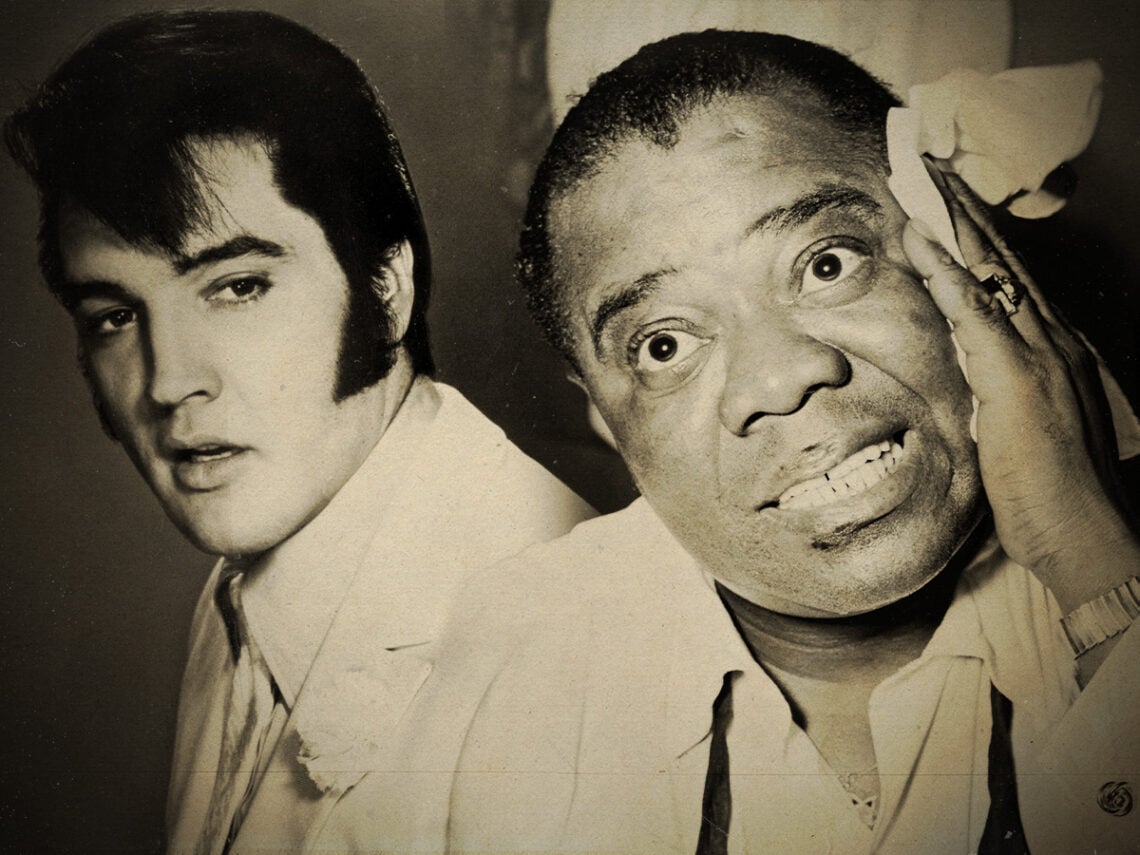
“We all go into the fads: folk music, rock ‘n’ roll, and gimmicks like that,” Armstrong told the Shreveport Journal in 1969, the same year he famously met Elvis backstage at a show in Las Vegas for an overdue photo op, “But how long can you stay around a fad? If it wasn’t for what started in New Orleans, we never would have had all that… Jazz never dies. That’s what furnished the world with the idea; they can go around Dixieland just so far, then they run into a brick wall cause they didn’t play nothing in the beginning.”
Armstrong certainly had a point; almost any style of beat-heavy dance music in America could be traced back to Black churches and early jazz, with the threads leading through blues and swing music, straight into 1960s rock. Armstrong was very open-minded about who could carry on that tradition, too, saying, “If it’s in you, it’s no problem. If you got to ask about it, forget it”.
By deciding to pigeonhole folk and rock as “fads”, though, ‘Satchmo’ seemed to lose sight of his own original argument: that it was all basically the same thing. Rock stars didn’t have to have short shelf lives any more than a jazz artist did, because musicians and genres almost always evolve.
Maybe Armstrong looked at the dip in Elvis Presley’s popularity in the mid-1960s and thought his prediction that he “won’t last” had been correct, but from a 21st-century view, the two are now essentially like-minded contemporaries, two great frontmen who got people on the dancefloor and pushed forward popular music for the generations that followed.
