


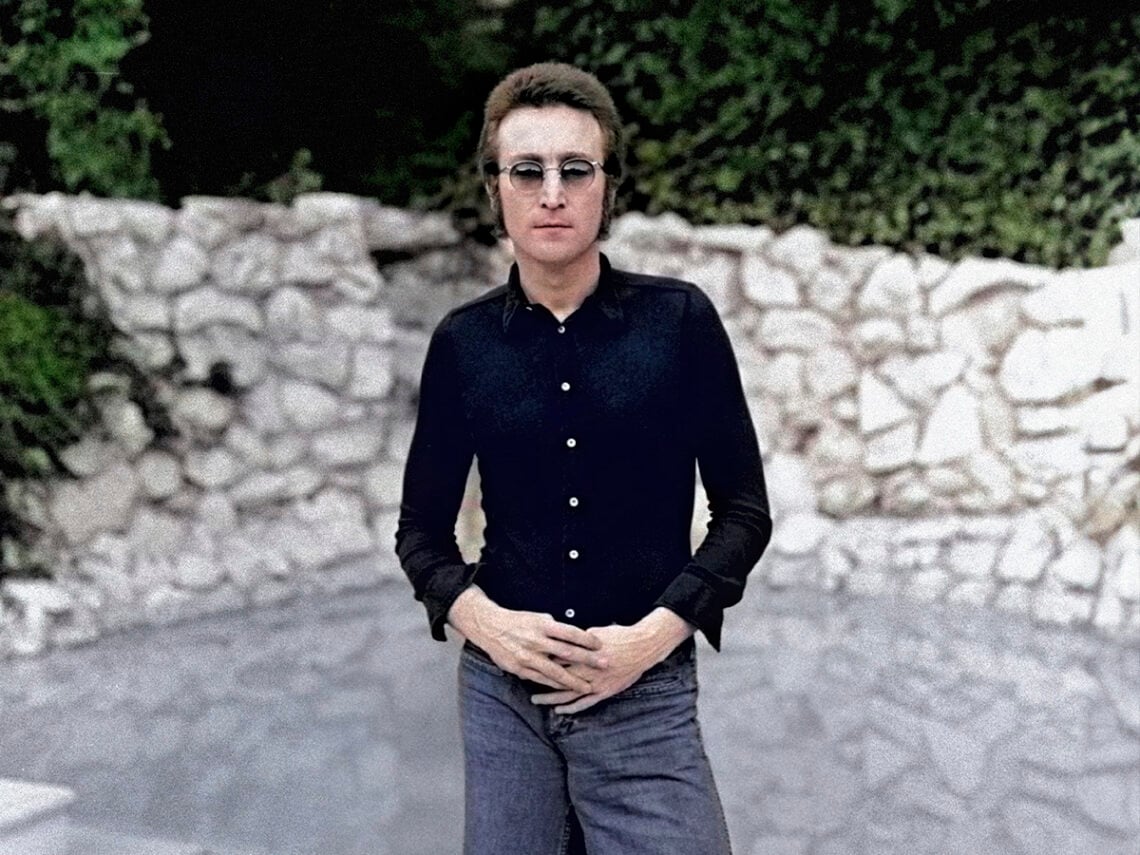
The reason John Lennon told Disney to “fuck off”

Aside from their America-breaking 1964 appearance on The Ed Sullivan Show, the most enduring imagery of Beatlemania at its peak is largely shaped by The Beatles‘ first foray into feature film-making with A Hard Day’s Night. Directed by 1960s comedy stalwart Richard Lester, the scenes of the Fab Four’s cunning evasions from screaming fans, diving into multiple cars, and irreverently jostling with the British class system are all shaped by the fictitious versions of themselves committed to the silver screen.
Inspired by the Elvis Presley vehicle movies of their youth, The Beatles were more than willing to embrace Hollywood—provided the right project came along. In addition to Help!, their experimental TV movie Magical Mystery Tour, and the animated Yellow Submarine, the group fielded numerous offers and even entertained several unrealised concepts of their own. Among these were plans for a Fab Four-styled western adaptation of Richard Condon’s A Talent for Loving, a Three Musketeers adaptation (despite the novel featuring four musketeers), and the more radical Up Against It, a “serious” countercultural exploration of cross-dressing and political assassination penned by playwright Joe Orton, which seemed better suited to The Rolling Stones.
In one of the greatest “what if?” scenarios in popular music history, there were serious efforts by The Beatles’ team to adapt JRR Tolkien’s The Lord of the Rings. Although Tolkien himself ultimately vetoed the idea, the project gained significant traction in 1968, with John Lennon and Apple Corps film producer Denis O’Dell enthusiastically championing it. They even approached Stanley Kubrick, fresh off the success of 2001: A Space Odyssey, to take on directing duties for the ambitious venture.
Lennon’s envisaged cast was himself as Gollum, Paul McCartney as the hero Frodo, George Harrison as Gandalf the wizard, and Ringo Starr as Frodo’s loyal companion Samwise Gamgee. A possible slice of ’60s camp fun or a disaster averted?
One major studio interested in recruiting The Beatles was animation giant Walt Disney, who reportedly met with the band’s manager, Brian Epstein, in 1965 to discuss their features in the development of The Junge Book project. Still smarting from the atrocious ABC network’s The Beatles Cartoon, an enraged Lennon let rip upon learning of Epstein’s talks with The House of Mouse: “There’s no way The Beatles are gonna sing for Mickey fucking Mouse. You can tell Walt Disney to fuck off. Tell him to get Elvis off his fat arse, he’s into making crap fucking movies.”
Managing a swipe at his beloved Presley’s career nosedive within his rant for good measure, the excess of gratuitous commercialism that had killed his heroes and began to dog the band became too much to bear. Not that he was averse to film ventures, period. Cavern Club performer and old Scouse friend Cilla Black often spoke of Lennon’s desire to be an actor pre-Beatles fame, and he eventually was cast in Lester’s black comedy How I Won the War. Candid about his childhood love for Lewis Carol’s The Walrus and the Carpenter and inspiring one of The Beatles’ most psychedelic cuts, there’s a much more interesting Lennon cartoon hypothetical to be mused with Lennon playing the titular walrus.
The Jungle Book became a box-office hit, renowned for its unforgettable songbook, including ‘The Bare Necessities’, which was the first Disney song to be nominated for an Academy Award. Among its standout casting choices was New Orleans jazz singer Louis Prima as King Louie, the king of the apes. While The Beatles turned down Disney’s offer to lend their voices, the vultures in the film—who perform the barbershop-inspired ‘That’s What Friends Are For’—are unmistakable Liverpudlian caricatures, with a few even sporting moptops. Decades later, with the partnership solidified by recent Disney+ documentaries, Disney finally got their slice of the Fab Four.
Jump to 2016, and director of the live-action remake Jon Favreau revealed to Radio Times his efforts to right the wrongs of The Beatles’ absence in The Jungle Book: “We don’t have the Beatle-vultures…I did talk about trying to get Paul and Ringo into the film because they wanted the Beatles for the original, but I couldn’t get them. We came to the idea too late. Maybe if there’s a sequel…”

Never Miss A Beat
The Far Out Beatles Newsletter
All the latest stories about The Beatles from the independent voice of culture.
Straight to your inbox.