


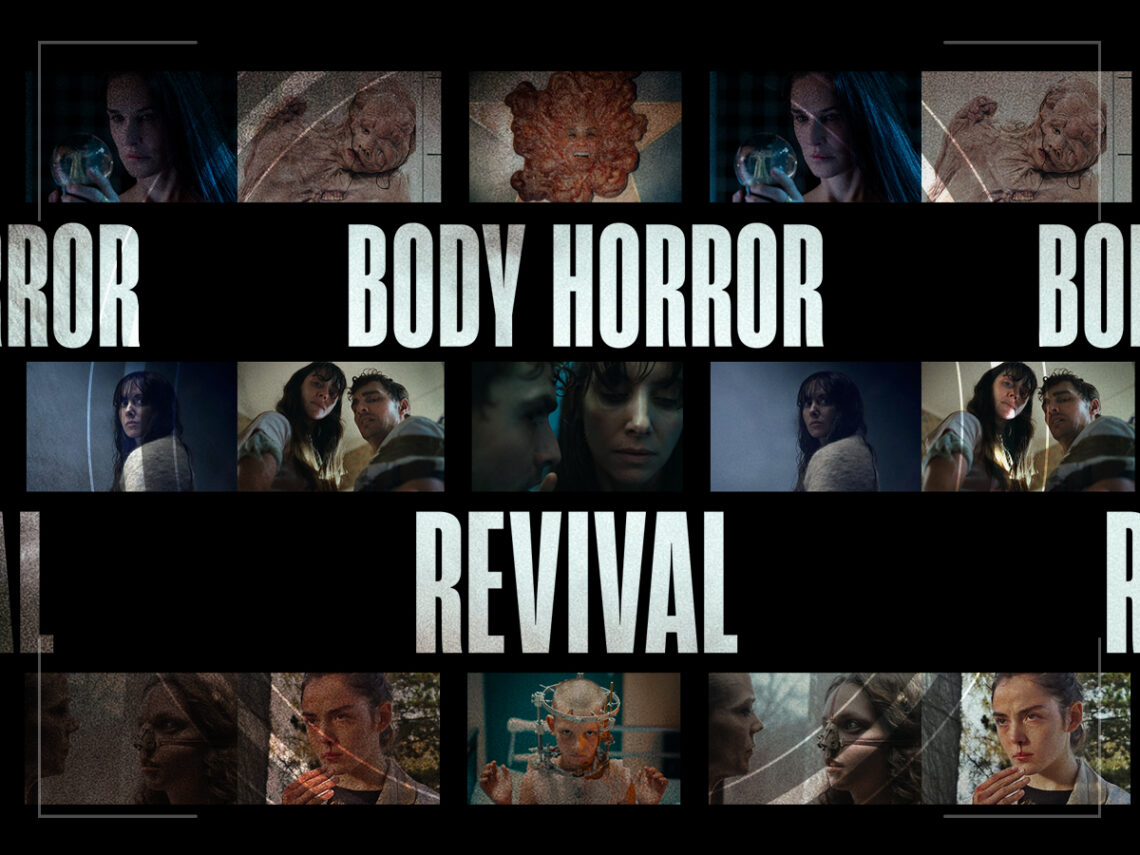
Why has body horror seen a revival in recent years?

Recently, the divisive body horror movie Together hit cinemas, exploring codependency in relationships to gory extremes. This is just one of several movies that fall into the blood-soaked genre that has emerged over recent years to significant discussion, which leads us to question: Is body horror enjoying a proper revival? And if so, why?
The Substance made body horror history in 2024 when it became the first of its kind to earn a ‘Best Picture’ nomination at the Oscars. Coralie Fargeat’s film took a well-known Hollywood star in the form of Demi Moore to create a meta commentary on female ageing in the film industry, and the shock of seeing an actor like Moore in such a transgressive and graphic film had people hooked.
There is little holding back from Fargeat, who gifts viewers with plenty of nudity and gore in the form of monstrous explosions, breaking bones, bloody wounds, and missing teeth. It’s truly an uncomfortable watch, even if you’re a body horror fan, but its popularity has proved that the genre is starting to be taken more seriously.
While Together hasn’t exactly hit the mark—the concept is cliché and the script subpar—other recent body horrors have proven more successful. Besides The Substance, movies like The Ugly Stepsister, Infinity Pool, Titane, Crimes of the Future, Swallowed, and Hatching have reflected an increase in horror films preoccupied with the corporeal, and you have to ask yourself why that might be.
The easiest answer of course relates to the pandemic. In 2020, lockdowns across the world to keep Covid-19 at bay truly felt apocalyptic at times. It’s the kind of thing you never think you’re going to experience, but soon enough, people were wearing surgical masks to leave the house, attending school via a laptop from home, and panic-buying loo roll. More than ever, we were aware of the fragility of our bodies, where people were getting seriously ill, even dying, from a virus that could be picked up anywhere, and from anyone.
The randomness of COVID-19’s effect on people saw some of us stricken with terrible symptoms, while others were unaware they were even afflicted with the virus, which certainly caused anxiety in most of us. Naturally, then, this period of feeling extra cautious of our health, and an era of fear and paranoia, has seeped into movies about the things that scare us. Whether these new body horror movies are consciously influenced by the pandemic era or not, it’s pretty hard for a filmmaker making movies about the body not to at least be subconsciously inspired by such a monumental time for humanity in regards to sickness and mortality.

However, more interestingly, it feels like there is an increase in female-led body horror films, most significantly reflected by the success of The Substance, which suggests that women are latching onto a gorier and more confronting depiction of female-specific anxieties these days. Look at Julia Ducournau’s Raw and Titane, which both explore female sexuality and coming of age through violent means—cannibalism in the case of the former and car sex (literal impregnation-by-vehicle) in the latter.
These films communicate the anxieties and viscerality of the female experience in a way that is open and unrestrained. They’re abject and nasty while also being beautiful statements on the messiness of being a woman, where discovering your sexuality can lead to depraved or unusual acts wrapped up in pain, confusion, and excitement.
Meanwhile, The Substance’s modus operandi was to communicate the violence of beauty standards thrust upon women by patriarchal systems, and, as a result, Hollywood, and to do so, Fargeat filled our screens with enough blood to keep a vampire’s thirst quenched for several centuries. It was a gore-fuelled response to the likes of Barbie and Promising Young Woman with their flimsy approaches to feminism. Here, feminist issues couldn’t be ignored because they were actively making us feel sick.
The past few years have been rough for the status of reproductive rights across the world, with the United States seemingly going backwards in their law-making. Following the Supreme Court’s decision to overturn Roe v Wade in 2022, more and more American states have been banning abortion, and this has naturally led to increased anxiety in regards to political and governmental control over our bodies.
Female body horror, then, feels like a reclamation or an act of protest against (male) politicians who want to control women’s bodies. These films show us just how violent and unpredictable the body can be: how dangerous and powerful. Again, while these recent body horror movies might not have anything to do with reproductive rights, there is a certain correlation between the heightened anxieties around our corporeal forms, especially the politicised female body, and the increase in women-led body horror movies.
It seems like the Oscar-winning success of The Substance has buoyed a new era for the subgenre, which was first truly pioneered by David Cronenberg in the 1970s. It’s likely that we’ll see more gory takes on the corporeal in the coming years as cinema continues to adjust to a societal landscape full of bodily worries, from deadly viruses to illegal abortions.
