


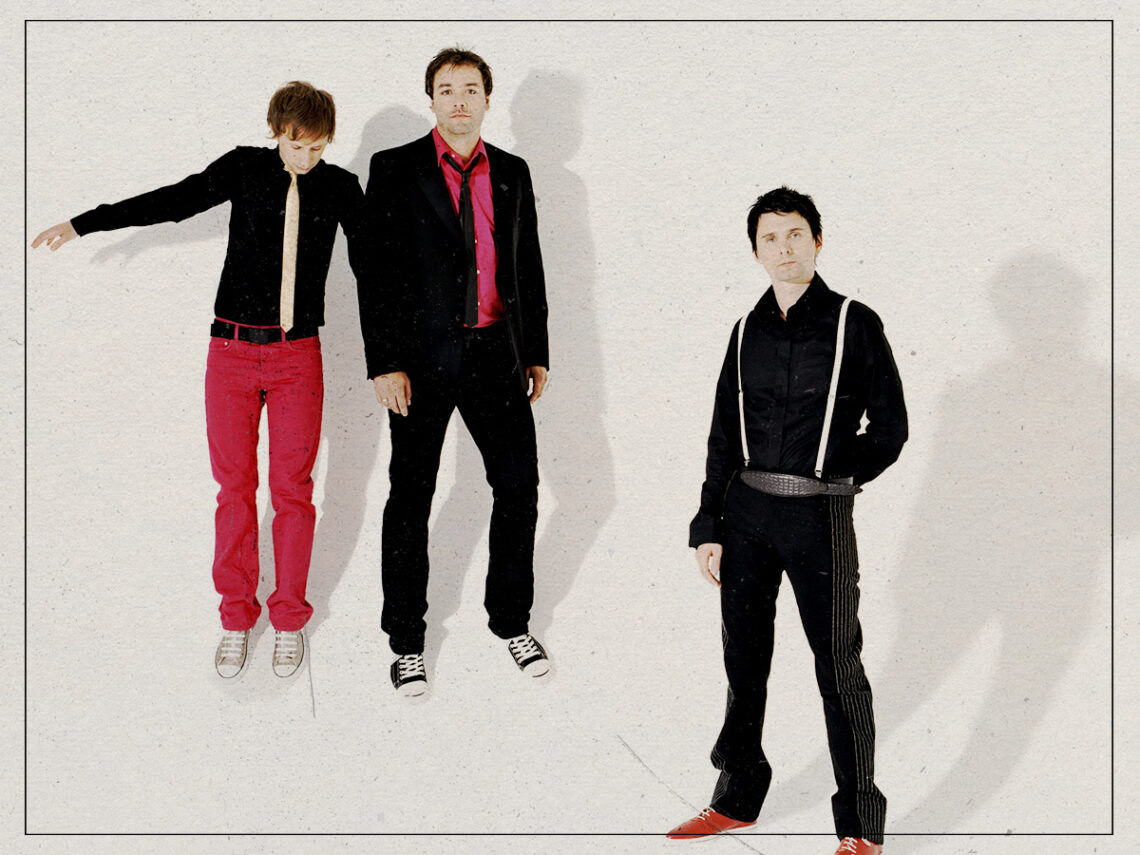
Why does everyone hate Muse?

No artist is meant to be in the good graces of the public forever. For as many people who like you, there will be even more who don’t, and it’s only a matter of time before one’s time in the sun starts to become a little too monotonous for people to hear. Even in an era when rock music tends to only make a marginal dent in the charts, though, there hasn’t been a band that has had the same backlash as drastic as Muse.
Because, really, what’s the problem behind most of their songs? Sure, they may have sounded a bit like Radiohead initially, but what band didn’t back in the 2000s? Everyone from Travis to Coldplay were making tracks that were adjacent to Thom Yorke’s merry group of musical art-rockers, but Matt Bellamy’s voice was a bit too accurate for some to take in, albeit with a hint of Jeff Buckley thrown in for good measure.
Listening to the band’s studio output throughout the 2000s, you can see that they were more than capable of making great music. Fitting somewhere between stadium rock and art rock, albums like Absolution, Black Holes, and Revelations should go down as masterful works of sonic art. They feature a shocking display of classic riffs across works like ‘Stockholm Syndrome’ and ‘Knights of Cydonia’.
It’s not like they were one-note, either. They may have had their signature way of writing songs, but they were always down to take risks here and there. Say what you want about other mainstream bands, but none of them would drastically switch to dubstep on The 2nd Law or have the musical cajones to take on the sound of Queen on an album like The Resistance.
When the 2010s rolled around, something strange happened once bands like Imagine Dragons started to take over. Rock was starting to get a different face, and it didn’t look like Muse had as much of a hold on the cultural zeitgeist as they thought, but why did they become so maligned?
So, why is Muse so hated?
Instead of following their muse, so to speak, the band spent most of the 2010s trying out music that was far too predictable for them. Although Drones was a breath of fresh air thanks to production magician Mutt Lange, there were a handful of songs on the record that felt like they were repeating the same formula they had started with, albeit with Bellamy’s croon becoming a bit more pronounced this time around.
By the time they hit Simulation Theory, fans could see what was coming from a mile away. Even though the sounds of 1980s nostalgia were all the rage at the time, seeing the band trade in their rock sound for something that felt like it was supposed to be in Stranger Things felt like it was too predictable a creative decision to take seriously.
This brings us to one of the band’s most reviled albums, Will of the People. Compared to other Muse albums that seemed to have a few lacklustre ideas, this felt like the album you would tell a bot to make after listening to every song in the Muse catalogue. Although there are more than a few shining moments, hearing tracks like ‘You Make Me Feel Like It’s Halloween’ and ‘Won’t Stand Down’ has made them look much more like trend chasers with guitars than proper musicians.
For all of the hate that has been thrown their way, though, should Muse be counted out just yet? Probably not. The band might be stuck in a creative dead zone that has left them as the bane of many a music critic’s existence, but it’s not like they can’t still deliver on record and onstage.
Their live shows have shown Bellamy to still have his pipes intact, and even tracks like ‘Kill Or Be Killed’ seem to contain flickers of the group we once knew beneath all the same empty platitudes about rising up against an imaginary dystopian society. Muse might not be the worst band in the world, but their willingness to make the same style of music with the same premise time and time again has gone from endearing to iconic to insufferable over the course of a decade.
