


Why do so many musicians despise The Doors?

We see this played out era by era, city by city, scene by scene; wherever you’re sitting right now, in your own local music scene, there will be a villain. There will be a frontman, or even an entire band, that the rest of the crowd almost unanimously hate, and in the 1960s counterculture, that was The Doors.
OK, maybe it wasn’t unanimous. The Doors obviously had a lot of fans, given that they were able to essentially start riots at their gig from the sheer amount of people there, caught somewhere between mania and hypnosis. They also had fans in the music world, and still do today, as Patti Smith has talked at length about her obsession with the group.
“I had a strange reaction watching Jim Morrison,” Smith wrote in Just Kids, recalling a moment when she was gifted a ticket to the band’s concert after already being hooked on their music. However, even her admiration comes from a strange angle as she added, “Everyone around me seemed transfixed, but I observed his every move in a state of cold hyperawareness.”
She explained, “I felt, watching Jim Morrison, that I could do that”.
So even Smith, who was a fan, didn’t quite see Morrison as the untouchable deity he acted like. Instead, she saw him as a figure that she could become, perhaps even only seeing him as the archetype or the blueprint for a star.
That is one of the major reasons why plenty of people from that period were anti-The Doors; they saw them as vapid. Lou Reed was a loud opponent because of that, once bitchily addressing him as merely a “silly Los Angeles person”. He said that The Doors, along with their LA peers, were “really, really stupid”, adding that he couldn’t enjoy their music because “it was purely a matter of brains” in that he had them, and they did not. Given that this is more a case of coast-to-coast rivalry between the New York crowd that he viewed as intellectuals and the California pack he saw as dumb hippies, perhaps it’s not exactly gospel when it comes to an accurate reading of the group’s worth and reputation.
But back in their own home camp, Jerry Garcia felt the same, seeing the band as hollow – so clearly that argument spanned the cities. “I found them terribly offensive…when we played with them,” Garcia said. “It was back when Jim Morrison was just a pure Mick Jagger copy. Not vocally, but his moves, his whole physical appearance was totally stolen from right around Mick Jagger’s 1965 tour of the States”.
There could be some weight to that, given that The Doors started up in 1965, right as the Stones were in the country, but then again, if we go down that route where any seductive singer with loose hips is merely a Jagger copycat, aren’t we wiping out a heavy proportion of rock and rollers?
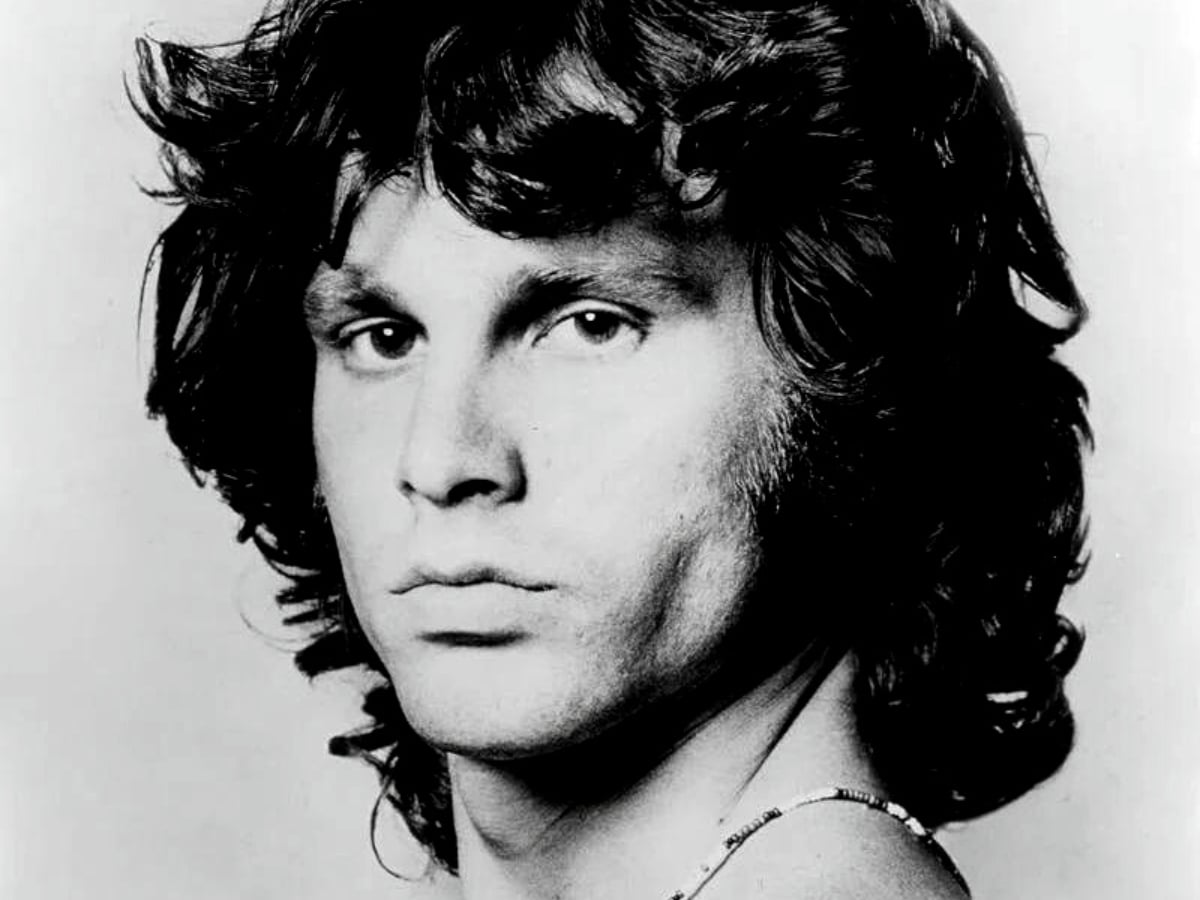
But to Garcia, that’s all he ever saw the band as. Refusing to give them any more validity than that, he added, “He used to move around a lot before he started to earn a reputation as a poet, which I thought was really undeserved. Rimbaud was great at 18, 19, and Verlaine, those guys were great. Fuckin’ Jim Morrison was not great, I’m sorry.”
Frank Zappa added to that chorus as he said, “The type of merchandising that was originally associated with Doors music I thought was really distasteful and stretching the boundaries of what it actually was beyond the realm of credibility.”
So, to a lot of people, they disliked The Doors because they had nothing to say. They saw the band’s hyper-seductive, hyper-moody, cult-leader-like behaviour as nothing more than theatre with little substance to it. That really all comes down to a matter of taste. Plenty of people would argue back that The Doors’ lyricism was rich and full of depth, or that Morrison’s individual poetry work proved that he did have more to him than merely being a frontman or even an illusion of a frontman like his peers argued.
To others, though, they simply hated the band because they were bad people – and that’s much harder to argue with.
“When Americans consume drugs, they are instantly transformed from regular, normal human beings into raging assholes,” Frank Zappa said, and Jim Morrison was often his ultimate example, as so much of his bad behaviour is chalked up to his addictions.
So, why did people hate The Doors?
Where to even begin with this? We could talk about the allegations of Morrison abusing past partners, or consider his connection to Charles Manson and their friendship that involved smashing up studios. How about the night when Janis Joplin was so tired of him harassing her that she smashed a bottle over his head?
“If you mentioned Jim’s name, she would say: ‘That asshole’,” a publicist from Joplin’s label remembered of her opinion on the singer, noting, “She was not going to put up with what she thought was his childish, disgusting, rude behaviour wherever she encountered it. It riled her.” So one night, when a drunken Morrison was jamming on stage with Jimi Hendrix of all people, Joplin lashed out.
Hendrix defended her as he, too, was sick of the man. “Ladies and gentlemen, you have heard the sound of Jim Morrison,” Hendrix said sarcastically into the mic that night, after The Doors singer had simply been drunkenly groaning rather than singing.
There are a few good reports. Just like in your own local scene, even if the villain makes incredible music, a bad reputation can ruin it all. No amount of amazing tunes can change a bad personality, and really, that’s what mired The Doors’ legacy amongst the class of their era. But outside of that, in the broader history books, their sins have been forgiven in the face of the hits, which undeniably loom larger than their poor social skills.
