


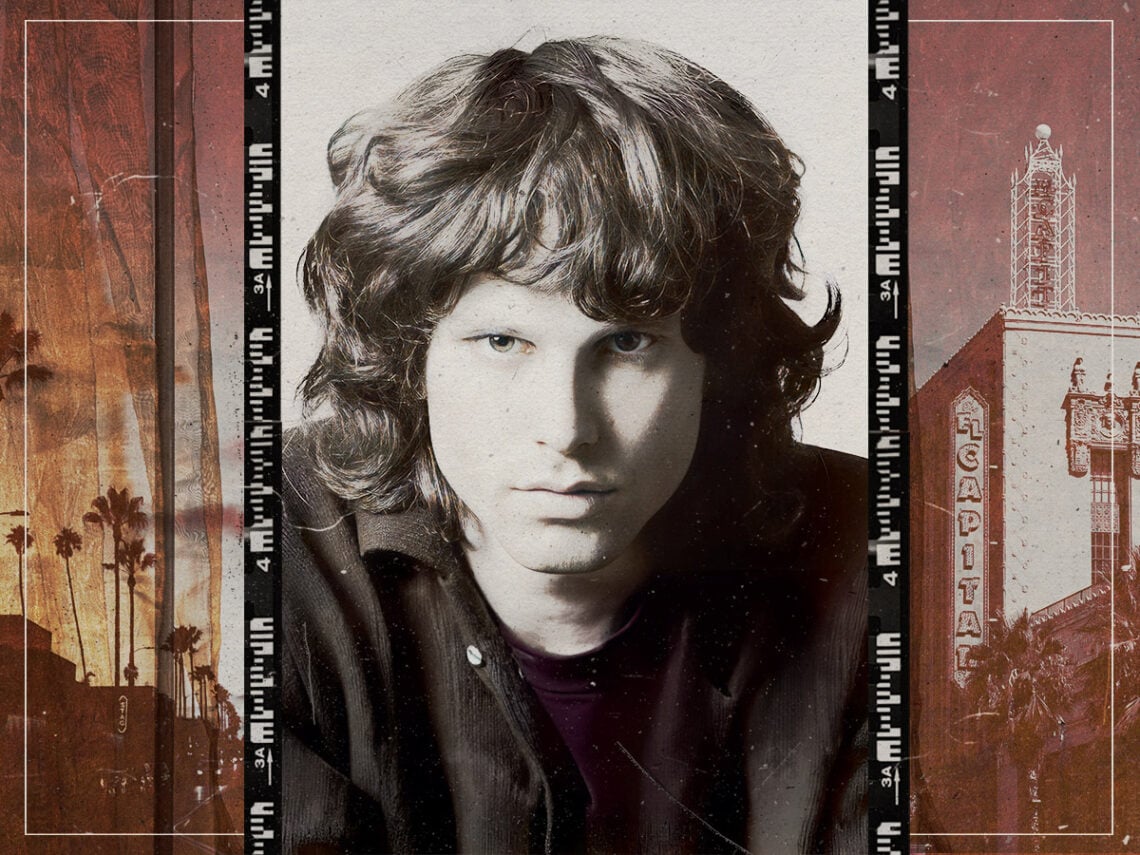
Five artists who hated Jim Morrison and The Doors

While The Doors might have been written into musical history, if it was up to their peers, they might have been missed out. Perhaps the ultimate example of the drug-fuelled hedonism of the 1960s music world or the tripping, hippie culture of Los Angeles at the time, Jim Morrison fancied himself the messiah of the scene. Other musicians, however, thought he was a cliché at best and an utterly terrible person at worst.
The Doors keyboardist Ray Manzarek once said Morrison “embodied hippie counterculture rebellion”. As the Lizard King, the frontman became the face of the decade’s hypersexual, free love, creative energy that merged music, poetry, sex and spirituality into one wild package. Maybe more so than any other act, The Doors represented the seedy and seductive spirit of the era with a frontman that the girls wanted to be with and the boys wanted to be.
Other musicians, however, weren’t so sure. While Morrison has been heralded as an icon for his lyricism and crazy live performances, his personality wasn’t so reviled. Instead, it’s well documented that the musician had a lot of enemies and a character that seemed to make that list long with each passing month. Despite the 1960s supposedly being a period of peace and love, The Doors were hated by a fair few other artists, mostly down to Morrison’s behaviour.
While some of it came down to differing tastes, there are plenty of tales of other bands feuding with The Doors for my personal reasons. Morrison’s drug-fuelled antics regularly seemed to dip into violence or abuse, mistreatment of his partners or a total disregard for how seriously other musicians took their craft. It’s not exactly the kind of attitude that lends itself to friendship-making. Instead, these artists, in particular, had some choice words to say about the band and their difficult leader.
Five artists who hate The Doors:
Lou Reed
While they were coming up at the same time, Lou Reed and Jim Morrison existed in two very different spheres. On the West Coast, in the sunshine of Laurel Canyon, Morrison led the hippies. Across the country on the East Coast, Reed was the new leader of New York’s art scene alongside Andy Warhol and the avant-garde crowd. The two figures were polar opposites in many ways, so it seemed unlikely that they would ever get on.
In general, Reed disliked most of the California scene. He deemed his own band, The Velvet Underground, “really, really smart”, while the hippie scene were “really, really stupid. It was purely a matter of brains”. The two scenes, for a while, were wrapped up in a kind of West Side Story turf war, utterly misunderstanding the purpose and sound of one another as New York saw LA as shallow while LA heard the New York music as drab and depressing.
The feud got personal, however, when Andy Warhol’s crowd thought Morrison had ripped them off. A few months after The Doors’ saw the Velvet Underground perform in Warhol’s Exploding Plastic Inevitable with the dancer Gerard Malanga, Morrison seemed to steal this leather-clad vibe. Warhol recalled, “[Gerard] flipped. ‘He stole my look!’ he screamed, outraged.” He then proceeded to have a tumultuous affair with Nico, adding to the band’s dislike of the frontman that all came to a head after his death when Reed said, “Somebody got a phone call saying Jim Morrison had died in Paris in a bathtub. And I said: ‘How fabulous, in a bathtub in Paris!’ I had no pity at all for that silly Los Angeles person.”

Jimi Hendrix
The feud between Jimi Hendrix and Jim Morrison was all born out of perhaps one of the wildest music history stories ever heard as the two got together for a jam session turned fistfight. In a club in New York in 1968, Morrison, Hendrix and Janis Joplin found themselves in the same room at one of The Scene’s infamous jam sessions.
You might think the result would be an epic piece of music or a fascinating conversation, but no. Instead, the result was violent carnage as Joplin smashed a bottle over Morrison’s head for being abusive and borderline sexually assaulting Hendrix on stage. “Jimi was very different from Morrison,” an audience member remembered of the night. “He had a lovely vibe about him. He was very shy and reserved. He was the same soft-spoken guy when he talked to women. Morrison was very abrupt, he said whatever he wanted to say.”
Even before the fight broke out, Hendrix wasn’t impressed by The Doors’ leader. As he attempted to sing into the microphone, instead sounding more like a dying animal, the guitarist retorted, “Ladies and gentlemen, you have heard the sound of Jim Morrison”.

Frank Zappa
Despite being one of the trippiest and weirdest figures in the Los Angeles scene, Frank Zappa was actually very against drugs. While the rest of his generation seemed to subscribe to the “turn on, tune in, and drop out” LSD lifestyle, Zappa found the whole sentiment pretty worrying. “Well, it’s not just that drugs kill you. It’s that when you take them they turn you into a type of person that I don’t like to hang around with,” he explained, “I mean, people…their personalities just mutate, their value systems change, and generally – this is not a hard and fast rule all over the world – but it has been my observation that when Americans consume drugs they are instantly transformed from regular, normal human beings into raging assholes.”
“Raging asshole” is probably a turn of phrase a fair few of Morrison’s peers would use to describe him, and Zappa is one of them. Standing as a perfect example of his point, Zappa saw Morrison as the personification of his anti-drug argument.
But beyond drugs, he also saw Morrison as a phoney in a lot of ways. As The Doors got big, Zappa found the heavy marketing of the band obnoxious, stating, “The type of merchandising that was originally associated with Doors music I thought was really distasteful and stretching the boundaries of what it actually was beyond the realm of credibility.”

Jerry Garcia
By all accounts, the Grateful Dead leader Jerry Garcia was a nice guy, known for his friendly spirit and humble attitude as the group got big. But when it came to The Doors, he wasn’t shy about dishing out some hate.
“I never liked The Doors,” he said matter-of-factly in a biography. His issue with the band came down to a lack of originality, claiming they simply stole bits from other groups around them to become a cheap amalgamation of the talent of others. “I found them terribly offensive…when we played with them. It was back when Jim Morrison was just a pure Mick Jagger copy. That was his whole shot, that he was a Mick Jagger imitation. Not vocally, but his moves, his whole physical appearance was totally stolen from right around Mick Jagger’s 1965 tour of the states,” he said.
But then, when Morrison tried to mature into a more demure, artistic era, Garcia hated that too. “He used to move around a lot before he started to earn a reputation as a poet, which I thought was really undeserved. Rimbaud was great at eighteen, nineteen, and Verlaine – those guys were great. Fuckin’ Jim Morrison was not great, I’m sorry.”

Dennis Wilson
The connection between The Beach Boys Dennis Wilson and Jim Morrison is a dark one involving an even darker figure. In the middle of their connection lies Charles Manson, the murderous cult leader who seemed to haunt the 1960s music scene.
“[Morrison] picked Charles Manson up hitchhiking one day. Yeah. Him and the Beach Boys drummer Dennis,” The Doors’ keys player explained. “The two of them were driving down Sunset Boulevard. They picked up Charlie with his guitar and he was going up to see Terry Melcher to play his demo for Terry Melcher, who he later was trying to kill because he didn’t like it.”
By all accounts, Wilson and Morrison were good friends in the mid-1960s. The Beach Boys were a known influence of Morrison’s, while The Doors undoubtedly inspired tracks like ‘Wild Honey’. However, the friendship soured quickly when Manson got involved. After the Manson murders, Dennis Wilson was in a bad state, falling into alcoholism and addiction. Morrison was getting bad, too, as his bandmates said, “He was a mean drunk.”
Whether it was the overflowing of their upset and fear following the Manson situation or simply a case of a friendship that got sour, it ended in violence. One night in the late 1960s, Wilson caught Morrisson heckling bands at the Whiskey A Go Go and jumped the singer, causing a bust-up between the old friends.

