


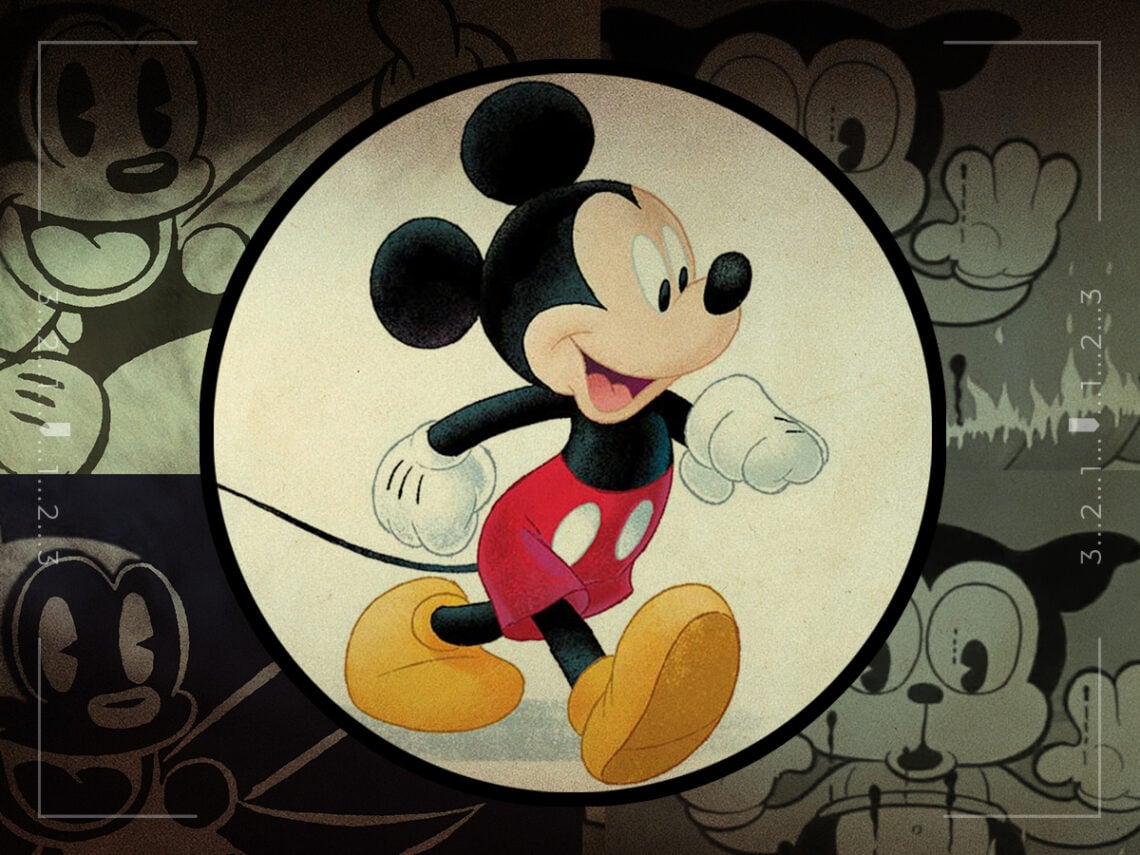
Why do cartoon characters wear white gloves?

When casting your mind back to the archetypal aesthetic of cartoon characters in their 1920s infancy, it’s likely two giant, white gloves on the end of thin black arms spring to mind.
Whether it’s Mickey Mouse’s The Orpy House, Looney Tunes’ first cast member Bosko, or Fleischer Studios’ Bimbo puppy, the gallery of animation stars nearly a century ago was all marked by a consistent drawing style popular at the time, cementing in the collective memory the enduring visual form of black and white rubber hose limbs and elasticated surreality that typifies the work pumped out of the nascent cartoon industry during the art form’s early Golden Age.
But why the gloves? Often, the reasons are assumed to make life easier for the animators working with a lack of colour, affording their subjects an extra dimension of hand expressivity that would be lost with black fingers poking from an inked noodle limb. Such a detail can be seen in Mickey Mouse’s official debut in 1928, Steamboat Willie, looking much more rodent-like and missing those signature gloves.
“We didn’t want him to have mouse hands, because he was supposed to be more human,” Walt Disney once stated. “So we gave him gloves. Five fingers looked like too much on such a little figure, so we took one away. That was just one less finger to animate”.
The classic four-fingered glove would dominate cartoons for years; the likes of Bugs Bunny or Woody Woodpecker, both performed by legendary voice artist Mel Blanc, never took them off for decades after their pre-war premiere. While a hallmark of cartoon style, the white puffy gloves reach back into US political history deeper than you may realise.
So, why do cartoon characters wear white gloves?
With much of animation hailing from the vaudeville tradition of the day, the early cartoon characters were shaped by the era’s blackface minstrel shows.
Just as white gloves would stand out against Mickey Mouse’s black arms, so too would theatre entertainers wear white gloves to differentiate themselves from their greasepainted black faces. Blackface parody would also make its way into imbuing the characters’ personalities, evoking the racial tropes of the tricksome minstrel that would inform the likes of Felix the Cat or Bosko’s happy-go-lucky guile.
Blackface would dominate Hollywood for years, and feature as a perennial punchline while the painful realities of Jim Crow segregation blighted the American South.
Across Disney’s Silly Symphonies, the Looney Tunes and Merry Melodies series under Leon Schlesinger, and MGM’s Tom & Jerry, certain gags were excised or revised as popular attitudes shifted, scrubbing former instances of minstrel visual jokes from their cartoon catalogue. Whole episodes were withdrawn from circulation, the ‘Censored Eleven’ including 1941’s All This and Rabbit Stew, swapping Elmer Fudd with a Sambo stereotype in the Bugs Bunny short.
Years later, Ralph Bakshi would deploy blackface design for 1975’s Coonskin, an adult animated satire on race relations in Hollywood and the US at the time. Before long, the ‘darky’ minstrel look had all but vanished from film and TV save in the UK, where BBC’s The Black and White Minstrel Show aired until 1978, the official live show carrying its final performances in various Butlins resorts as late as 1989.
