


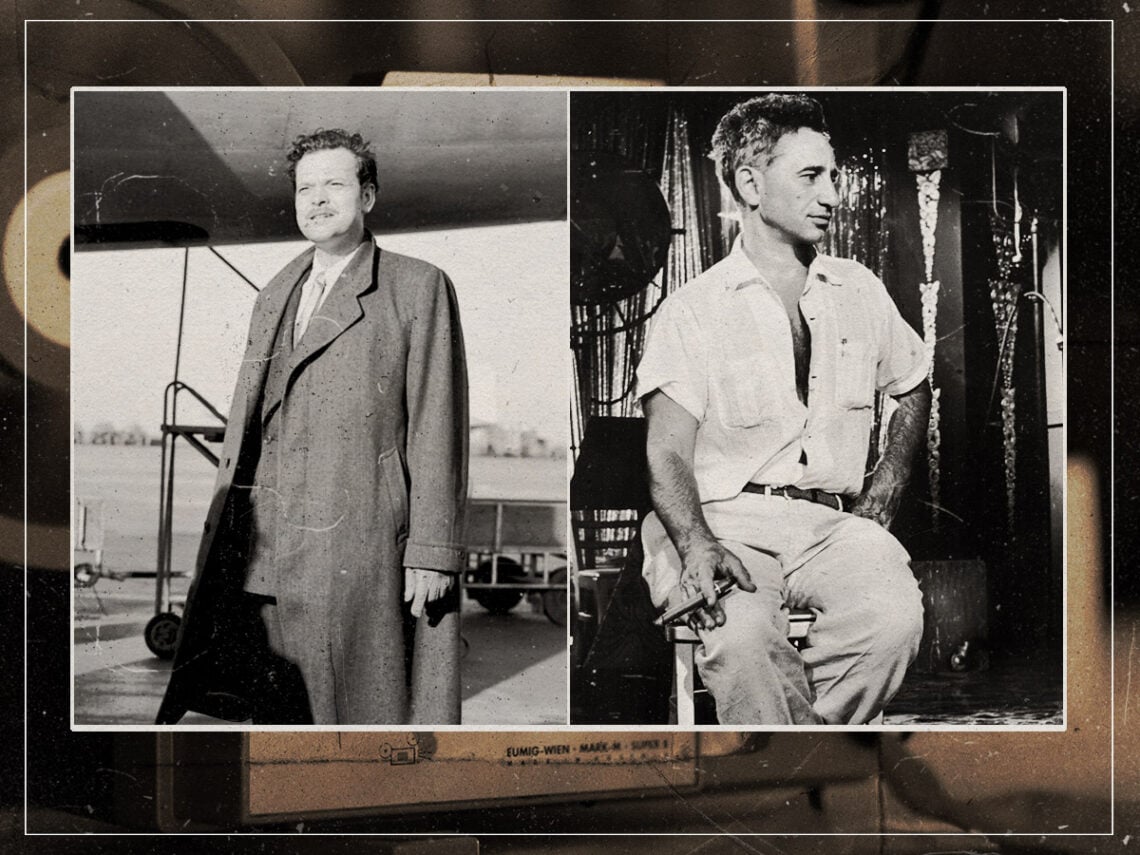
Why did Orson Welles hate Elia Kazan?

Being one of the greatest directors of all time is about the only thing Orson Welles and Elia Kazan had in common, with the bad blood between the two icons of cinema exacerbated by the frosty political climate under which they spent a large part of their respective careers.
Welles burst onto the scene and gained worldwide attention as the wunderkind responsible for the legendary 1953 radio production of The War of the Worlds before making his Hollywood debut in as spectacular a fashion as anybody ever has before or since after co-writing, producing, directing, and starring in Citizen Kane, which was released when he was only 25 years old.
Kazan’s own feature-length debut wouldn’t arrive until 1945’s A Tree Grows in Brooklyn, but a filmography that yielded Gentleman’s Agreement, A Streetcar Named Desire, On the Waterfront, East of Eden, and A Face in the Crowd, among others, would solidify him as a generational talent, one who would be named ‘Best Director’ twice by the Academy Awards.
In 1952, Kazan would testify in front of the House Committee on Un-American Activities, having previously been a member of the American Communist Party himself for around a year and a half during the period between 1934 and 1936. When called upon to identify known communists he was aware of during that period, Kazan initially refused before outing eight members of the Group Theatre.
Naming names burned a lot of bridges both personally and professionally for Kazan, but Welles would never forget his contemporary willingly offering up the details. During a Q&A session at a Paris film school in 1982, Welles had no issues telling everyone in attendance that “Elia Kazan is a traitor”.
“He is a man who sold to McCarthy all his companions at a time when he could continue to work in New York at high salary,” he elaborated. “And having sold all of his people to McCarthy, he then made a film called On the Waterfront which was a celebration of the informer. And therefore, no question which uses him as an example can be answered by me.”
McCarthyism was a dark cloud that hung over Hollywood for years and drew several of Tinseltown’s biggest names into its orbit on either side of the divide, but Kazan hardly held Welles in particularly high esteem, either. In fact, in his book Kazan on Directing, it was revealed he’d been critical of the rising star as far back as 1938 when he was still performing on the stage.
“Mr. Welles admits that his chief preoccupation is STYLE in his productions. He stars in an ‘Orson Welles Production’. If you ask any of the actors who appeared in these works they tell you that all Welles is interested in is production,” he wrote. “Mr. Welles is only interested in HOW he does a production. He is a little vague as to what Caesar meant (in Welles’s fascist themed production of Shakespeare’s Julius Caesar), or whether Danton was ‘revolutionary’ or ‘counter-revolutionary,’ but he knew what he wanted from the lights in each case.”
Clearly, there was no love lost between the future Hollywood heavyweights before either of them had made it big, but Welles could never forgive Kazan for his testimony during the peak of McCarthyism.
