


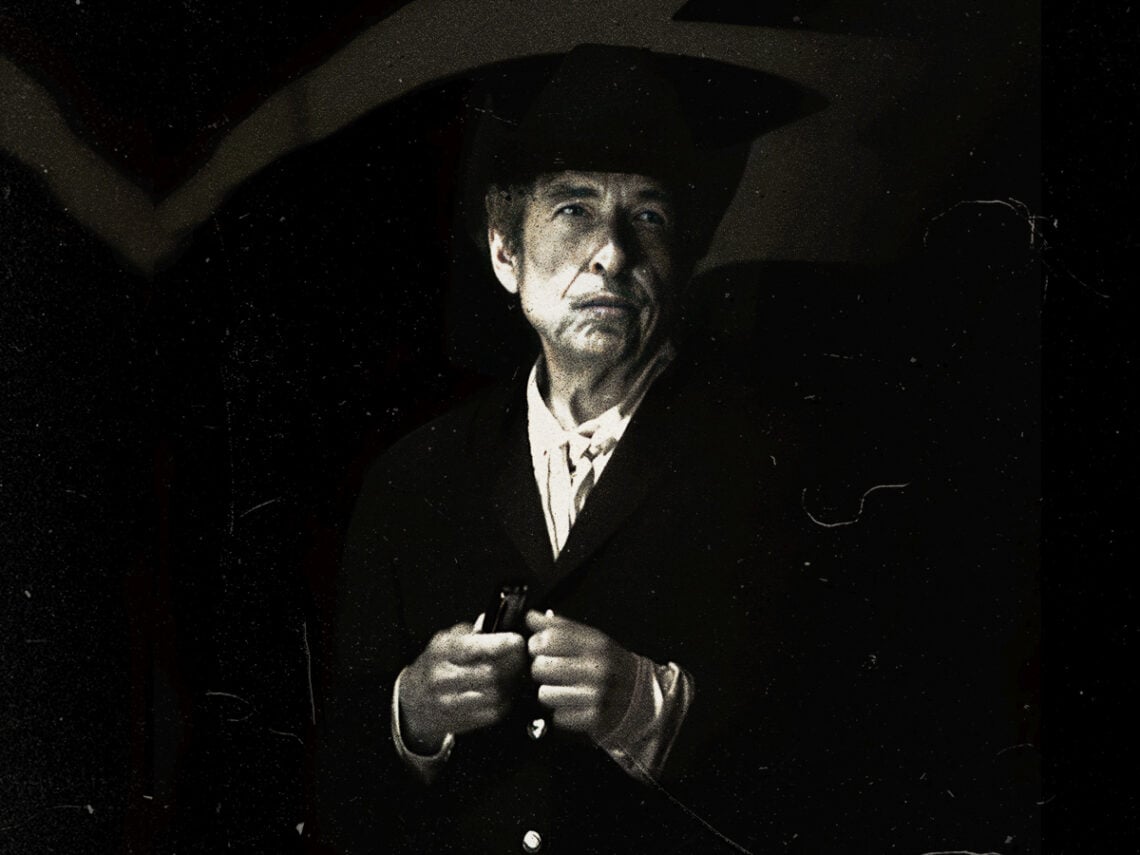
Why did Bob Dylan stop playing the hits?

When Bob Dylan was announced as the second headliner for Willie Nelson’s Outlaw Music Festival this year, many fans assumed it signalled the end of his ‘Rough and Rowdy Ways World Wide Tour’. Given the festival’s diverse audience—largely comprised of other artists’ fans—speculation arose that Dylan might abandon his recent strict adherence to performing newer material and instead dip into his catalogue of older hits for the occasion.
This is Bob Dylan we’re talking about, though, so of course, he didn’t exactly do what everyone expected. Opening in Alpharetta, GA, Dylan surprised the outlaw crowd by opening with Willie Dixon’s blues classic ‘My Babe’ and went on to play songs by Chuck Berry (‘Little Queenie’), Hank Williams (‘Cold Cold Heart’) and The Fleetwoods (‘Mr Blue’) and only interspersed these with a few of his own songs, such as the 1990 deep-cut ‘Under the Red Sky’ and four songs from his 2012 album Tempest (‘Pay in Blood’, ‘Early Roman Kings’, ‘Scarlet Town’ and ‘Long and Wasted Years’).
As the tour went on, Dylan introduced some more familiar songs to his setlist, like ‘Highway 61 Revisited’, ‘Ballad of a Thin Man’, ‘Visions of Johanna’ and ‘A Hard Rain’s A-Gonna Fall’. On the same day that John Mellencamp busted out a cover of Dylan’s ‘All Along the Watchtower’, Dylan decided to dust the song off himself and opened his set with his first performance of it since 2018. Later, at his final festival appearance of the tour, Dylan delighted fans with a version of ‘Desolation Row’ which included him rhythmically whacking a little wrench and alternately a harmonica against his mic stand.
Since then, he has been back on the road with his ‘Rough and Rowdy Ways World Wide Tour’, winding his way through Europe to conclude with three triumphant shows at London’s fabled Royal Albert Hall. The setlist for the tour remained largely the same for the entire three years that it lasted, focusing mainly on his most recent album of the same name and interspersing those songs with deep cuts and covers. Still, the most recent leg did see the addition of such classics like ‘All Along the Watchtower’, ‘It Ain’t Me, Babe’ ‘Desolation Row’ and ‘It’s All Over Now, Baby Blue’ to the set.
It shouldn’t have come as any surprise to his audiences that Dylan’s show was focused on his latest work rather than his older songs. For his whole career, he has been more interested in engaging with the present moment than reflecting on or reliving the past. His legacy speaks for itself, but he is constantly striving to add to it and continue his work rather than rest on his laurels.

Whenever he releases a major album, and he releases more than his fair share, Dylan has signposted this to his audience in his live work. He immediately began experimenting with arrangements and rewrites of the best songs from Blood on the Tracks on both legs of his legendary Rolling Thunder Revue tour and jettisoned all of his old work from his setlist entirely in 1979/80 in order to only play the songs from Slow Train Coming and its excellent, vastly underrated, and under-appreciated follow-up, Saved.
In the early 1990s, his setlists were filled with folk songs and standards, reflected in his two solo acoustic albums of similar material. Later in the decade, his live shows were filled with songs from his comeback classic, Time Out of Mind.
Early in the new millennium, Dylan added a new batch of songs to his show, this time from his latest masterpiece, “Love and Theft”, and supplemented them five years later with the songs from his next one, Modern Times. The songs from Together Through Life got less of an airing, but he rebuilt his live act around Tempest and his Frank Sinatra tribute trilogy over the next six years.
While his contemporaries from the 1960s and ’70s, like Paul McCartney, The Rolling Stones or Fleetwood Mac, rely largely on their legacies to sell tickets, Dylan is more interested in engaging an audience with his newer material. He is as restless, creative, hungry, and audacious as ever. Of all of the writers from his era, he is one of the very few to have continued to write and release music of the same level – and which sometimes surpasses – the songs from his back pages.
How has Bob Dylan’s voice impacted him?
More than singers like Paul McCartney or Mick Jagger, his voice must be a factor, too. Dylan’s voice has been a malleable instrument throughout his career and has changed to suit the style he’s searching for as much as any aspect of his music has, but he can’t sing the songs in the same way that he could when he was in his 20s or 30s like McCartney and Jagger can, so he has had to write new songs to suit all of his current form.
Even when he does play older material, he updates the old songs to suit his new style. His new voice, coupled with his restless genius, means that he wouldn’t want to play them in the same way as he used to, even if he could. If you want to hear ‘Like a Rolling Stone’ how Dylan sang it in 1965, you can put Highway 61 Revisited on your turntable. He has always updated his songs, even as early as 1966, introducing ‘I Don’t Believe You (She Acts Like We Have Never Met)’ to an audience by saying, “It used to go like that, but now it goes like this”.

Sometimes, Dylan changes the arrangements of his most famous songs so much that fans haven’t even realised they’ve heard them. Other times, he changes the arrangements from one night to the next. On its most recent outing of 2,011 live versions, ‘Like a Rolling Stone’ sounded nothing like the recorded version and included a new stop-start, part spoken word and part crooned arrangement. It’s just one of many new arrangements the song has had, and this is a track he has tinkered with less than some of his other heavy hitters. Dylan recently told The Wall Street Journal that “I find the religiosity and philosophy in the music”, but when it comes to his live shows, he doesn’t treat his own songs as sacred. He wants to break them apart and find out what makes them work, like a child disassembling a clock to see what it’s made of and trying to put it back together again in a different order to see if it still works.
Another reason Bob Dylan doesn’t play his hits is that he doesn’t really have any. ‘Rainy Day Women #12 & 35’ from Blonde on Blonde is his highest-charting single, reaching number two. It wasn’t until his 17-minute single ‘Murder Most Foul’ that he climbed to the top of any singles charts.
Perversely, this is the only song from Rough and Rowdy Ways that didn’t make it to the stage on the ‘Rough and Rowdy Ways World Wide Tour’.
Dylan has had a much stronger showing in the album charts, though. He first hit the top of the album rankings with Planet Waves in 1974 and returned to the summit with Desire, while Slow Train Coming later got to the second spot. Each of “Love and Theft”, Modern Times, Together Through Life, Tempest, and Rough and Rowdy Ways have either been to number one or at least in the top five of the album charts in both America and the UK. So, in that sense, considering that he has filled his live shows with songs from these albums in the last 25 years, he has really been playing his hits all this time, after all.
And it’s not like he hasn’t done his old songs to death, either. He has written and released over 600 songs in his time, so he has needed to make room for as many of them as possible in his setlists. Even still, across the 4,000 shows that he’s played, he has found the time to play ‘All Along the Watchtower’ a staggering 2,255 times in concert, ‘Highway 61 Revisited’ a grand total of 2,051 times, ‘Tangled Up in Blue’ at 1,711 shows and ‘Blowin’ in the Wind’ at a further 1,573. He’s played a total of ten songs over 1,000 times each and 35 over 500 times.
Let’s be honest, he probably feels like he has played his hits plenty enough.

Never Miss A Tale
The Far Out Bob Dylan Newsletter
All the latest stories about Bob Dylan from the independent voice of culture.
Straight to your inbox.