


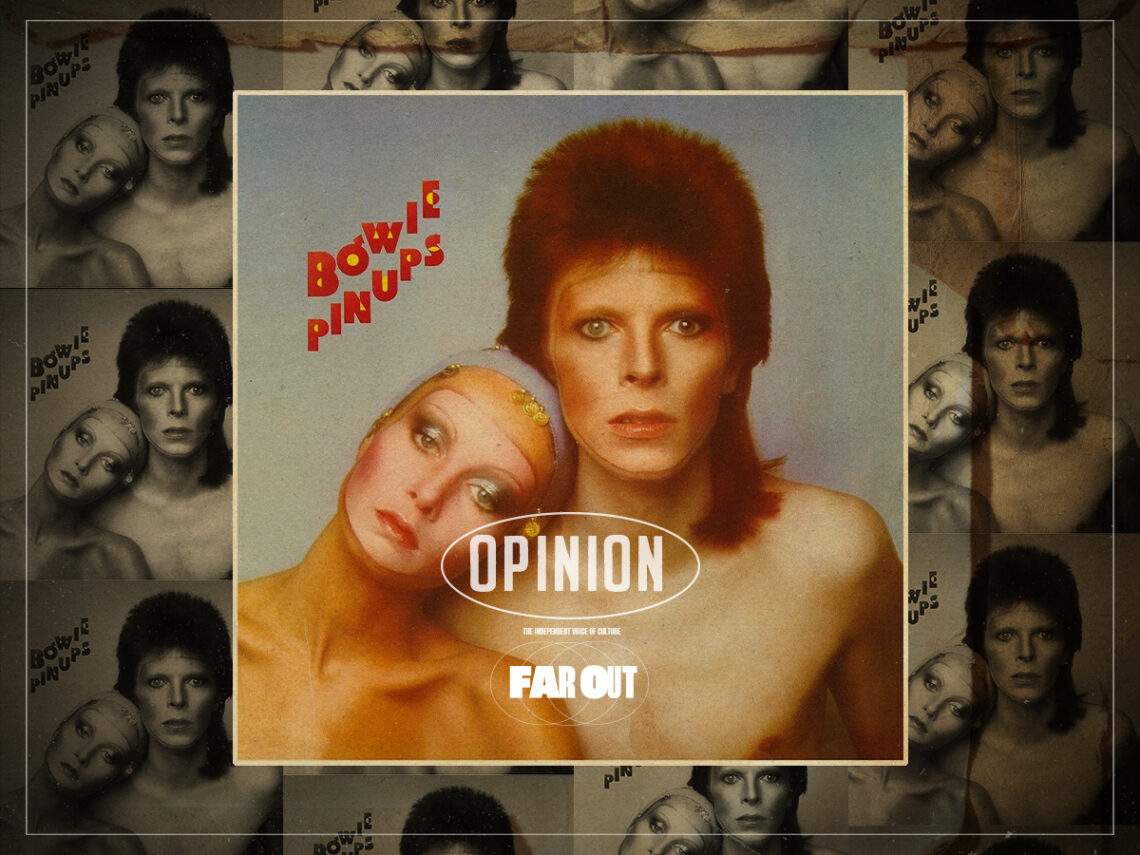
David Bowie’s ‘Pin Ups’ should have never existed

Every step David Bowie ever took was about moving himself forward in some way.
No matter if it was a failed experiment or another delve into a strange new musical adventure, Bowie would happily jump into any new musical idea as long as he could pick up a few musical tricks along the way. But whereas ‘The Starman’s worst albums usually revolve around an experiment that went terribly wrong, the true disappointments come from albums that feel like a gigantic step backwards.
But it’s not like Bowie wasn’t great at making old-fashioned music, either. His self-titled debut is a little bit awkward knowing what was on the horizon, but it’s far from bad, and even though his arm needed to be twisted to work with Bing Crosby for his Christmas song, his voice balances out perfectly with the old soul crooner. No, if we’re talking about a true step in the wrong direction, it all comes back to Pin Ups.
Granted, it’s hard to be too harsh on this kind of record. In the grand scheme of any artist’s discography, covers albums always have an asterisk next to them. Metallica fans aren’t judging them on the merits of Garage Inc, nor are John Lennon fans holding Rock ‘n’ Roll to the same standards as his other albums, but the problem with Pin Ups has everything to do with the kind of artist Bowie always was.
‘The Starman’ loved challenging the status quo, and while he does take a few liberties with his versions of Pink Floyd’s ‘See Emily Play’ and The Easybeats’ ‘Friday On My Mind’, it’s not like he’s breaking any new ground for the genre or anything. But perhaps that lack of enthusiasm has more to do with the fact that Bowie didn’t actually want to be in the vocal booth for most of the record.
You see, Pin Ups was made more as an obligation album than anything else. His label had wanted him to make an album that could introduce songs to the American market, and Bowie at least seemed open to the idea, saying, “These are all bands which I used to go and hear play down the Marquee between 1964 and 1967. I’ve got all these records back at home.” It’s not like it isn’t a neat idea, but the problem is right there in Bowie’s explanation as well.
A lot of the tunes feel like listening to the classic version of Bowie trying to channel the nostalgia of his youth, but all it does is sound like rock’s resident alien trying to deliberately make a handful of his favourite tunes weird for the sake of being weird. But the most tragic element of the record has less to do with the songs themselves and more about how it fits into Bowie’s discography.
Any artist needs to ride their momentum every now and again, and since this was coming off of records like Aladdin Sane, hearing Bowie go back to his old stomping grounds feels more like a sidestep as he tries to figure out where he wanted to go next. They are brilliantly performed most of the time, but when going through his discography, this is the one record in his catalogue that doesn’t feel like it should really count with the rest of his records.
It’s an interesting curiosity for Bowie fans who want to explore further, but anyone looking to see what one of rock’s greatest eccentrics brought to the world, this is the last album from the 1970s that you absolutely need to hear. Because for all of the detours that divided Bowie’s fanbase, like Never Let Me Down, it’s much better to hear an artist taking a swing on something and missing than to watch them going through the motions.
