


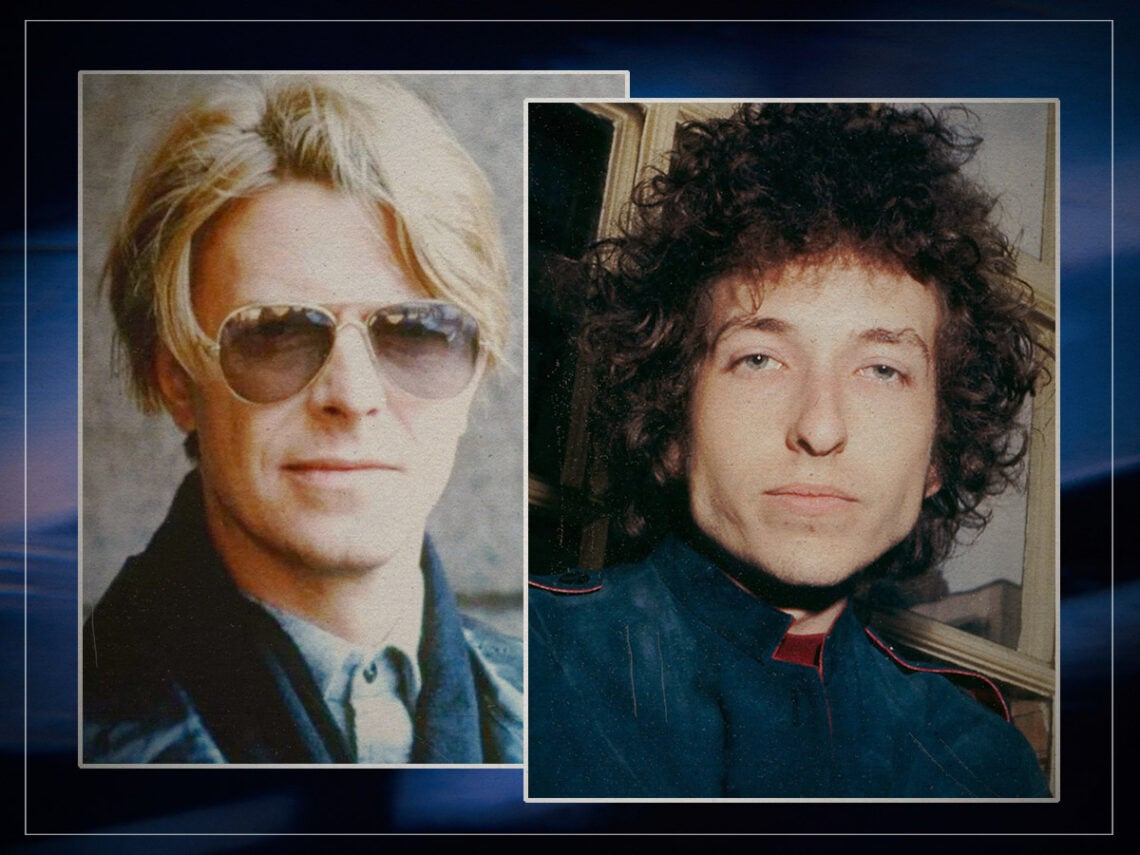
“He’s the same”: why David Bowie aligned himself with Bob Dylan

It’s hard to imagine any of music’s great icons harbouring a sense of insecurity. While you may push back and tell me that insecurity is merely a natural part of human life, I’m convinced Bob Dylan is the one true anomaly in this regard.
Since the day he burst onto the Greenwich Village scene, he’s been unwaveringly self-assured. Whether it be plugging his guitar in and turning his back on folk or going on a controversial political tirade at the 1963 Bill of Rights dinner, he simply hasn’t cared about what anyone thinks.
As such, he’s built up a steely reputation that strikes fear into the heart of the average person. While we can all agree that David Bowie wasn’t your average person, he also wasn’t immune to intimidation. In fact, he was convinced that underneath Dylan’s piercing gaze was a harbour of hatred for the British genre-bending icon.
“I saw Dylan in New York seven, eight months ago,” Bowie told Playboy in 1976, “We don’t have a lot to talk about. We’re not great friends. Actually, I think he hates me.”
Bowie elaborated on the encounter, claiming that Dylan’s mere presence seemed to draw out a sprawling monologue on nervousness. “I was in a very, sort of… verbose frame of mind. And I just talked at him for hours and hours, and whether I amused him or scared him or repulsed him, I really don’t know. I didn’t wait for any answers. I just went on and on about everything. And then I said good night. He never phoned me.”
Despite Bowie being an icon in his own right, he desperately wanted Dylan’s respect. In artistic circles, Dylan was the master of all professional realms. His commercial success never came at the whim of critical acclaim, and he mastered both, fearlessly ripping through several artistic chapters with a growing sense of authenticity every time.
Ultimately, it was a path that Bowie followed. He quickly became a global legend, yes, but on his own terms, complete with a fresh sense of creative fearlessness that would go on to inspire decades of esoteric artistry. As such, Bowie similarly straddled the line between commercial and critical success, removing himself from the confines of one-hit wonders while lapping up the champagne showers of chart-topping albums.
But as he grappled with what it meant for him as an artist, it inevitably brought him back to Dylan and how he compares. He said, “I’ve had a few singles that have been quite popular, but I haven’t had that many hits. I’ve had a couple of number ones, but I’m better known for albums.” He added, “The Beatles or The Rolling Stones or Springsteen have hits, I sort of have well-known songs. So I’ll align myself with Dylan on that one: he’s the same, he doesn’t sell records either, but he’s really well known.”
Unsurprisingly, Dylan never publicly responded to the accolade, and there is little evidence of him adopting the method of trying to align himself with artists. Sadly for Bowie, an artist who seemingly conquered everything in music, Dylan’s respect was the only thing left on the bucket list, for it’s rumoured that the latter told peers he “hated” Bowie’s 1975 album Young Americans. Nevertheless, Bowie continued to publicly share his admiration for Dylan, even making covers of his songs like ‘Maggie’s Farm’.

Never Miss A Tale
The Far Out Bob Dylan Newsletter
All the latest stories about Bob Dylan from the independent voice of culture.
Straight to your inbox.