


Why Bob Dylan deliberately tried to provoke audiences in 1979: “Make people jump on any level”

As any fan will know, Bob Dylan isn’t one to just ‘play the hits’.
It’s hard to know whether he’s driven by sheer artistic intuition or cantankerous iconoclasm. Probably a little of both. Throughout his nearly 70-year career, Dylan has pursued a haphazard series of stylistic fancies that certainly won a new audience at the cost of alienating the longtimers.
Incurring the wrath of the folkies with his plugged-in heresy during the ‘electric’ era, keeping his countercultural reputation at a distance with his rootsy Americana during the late 1960s’ psychedelia, or playing an honorary member of the Rat Pack with his Frank Sinatra swing era in the 2010s, the songsmith has ensured he’s never stuck in the nostalgia dead end.
Patience wore its thinnest in the late 1970s, however. The decade in general had been an uneven one for Dylan, charting the bumpy ride of career highs like Blood on the Tracks and the Rolling Thunder Revue tour to the cluttered Self Portrait LP and cumbersome Renaldo and Clara feature film. Despite such erratic ups and downs, no fan, veteran or newcomer alike, was expecting a jump into Born Again evangelicalism.
The ‘Light’ first found its way in 1978’s World Tour. Reportedly, during a show in San Diego, a small silver cross flung on stage began to serve as an essential talisman during the live shows’ physical demand on Dylan, which just so coincided with the Christian influence of his then girlfriend, Mary Alice Artes, and the Vineyard Fellowship’s teachings on some of the touring band. Before long, the Jewish Dylan was praying, attending Bible class, and working overtly Christian songs into the set.
Old and New Testament subtext had always existed in his work as a source of poetic imagery, but never had Dylan waded into a worship sermon before. The ‘phase’ would last three albums, Slow Train Coming, Saved, and Shot of Love, and surround the 1979-1980 Gospel Tour, marking a complete severance of his earlier material and only featuring his new Christian celebrations.
It was a big ask for ticket holders. For extra dogma, Dylan would spend lengthy segments discussing his newfound faith, as well as frequent monologues from band vocalist Regina Havis, plus the ensemble performing gospel numbers while Dylan stood on the sidelines basking in its musical awe.

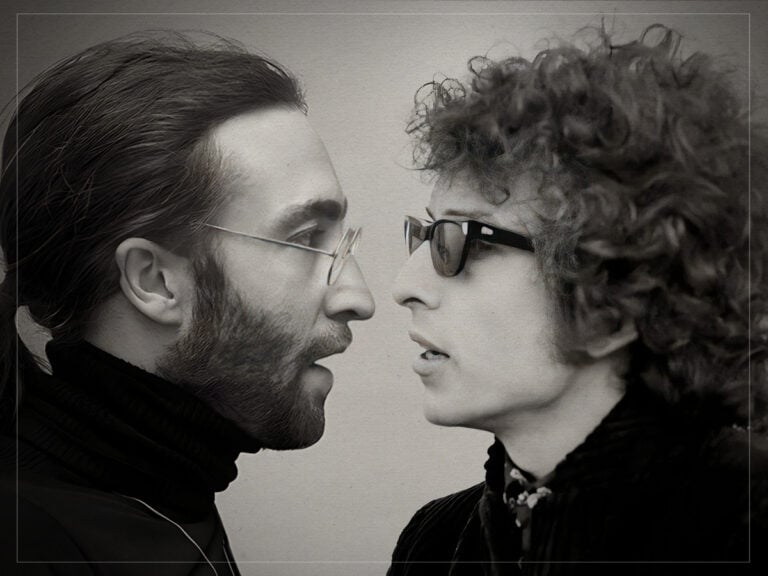
It’s safe to assume there were few converts during those shows, a fatigue setting among fans and the music press. Dylan wryly noted a few years later to the Los Angeles Times in 1985, “If you make people jump on any level, I think it is worthwhile because people are so asleep,” reflecting on the Gospel Tour’s wrong way rub with a smirk.
There’s no doubt that Dylan harboured some sincerity in his evangelical chapter, but it’s also perfectly in keeping with his fickle character to shake off the Christian worship just as he seemed at his most devout. Whatever the case, it’s likely something deep in his being was stirred in ensuring expectations were defied, for himself and the world.

Never Miss A Tale
The Far Out Bob Dylan Newsletter
All the latest stories about Bob Dylan from the independent voice of culture.
Straight to your inbox.