


Why are we currently so obsessed with legacy acts, comebacks, and reunion tours?

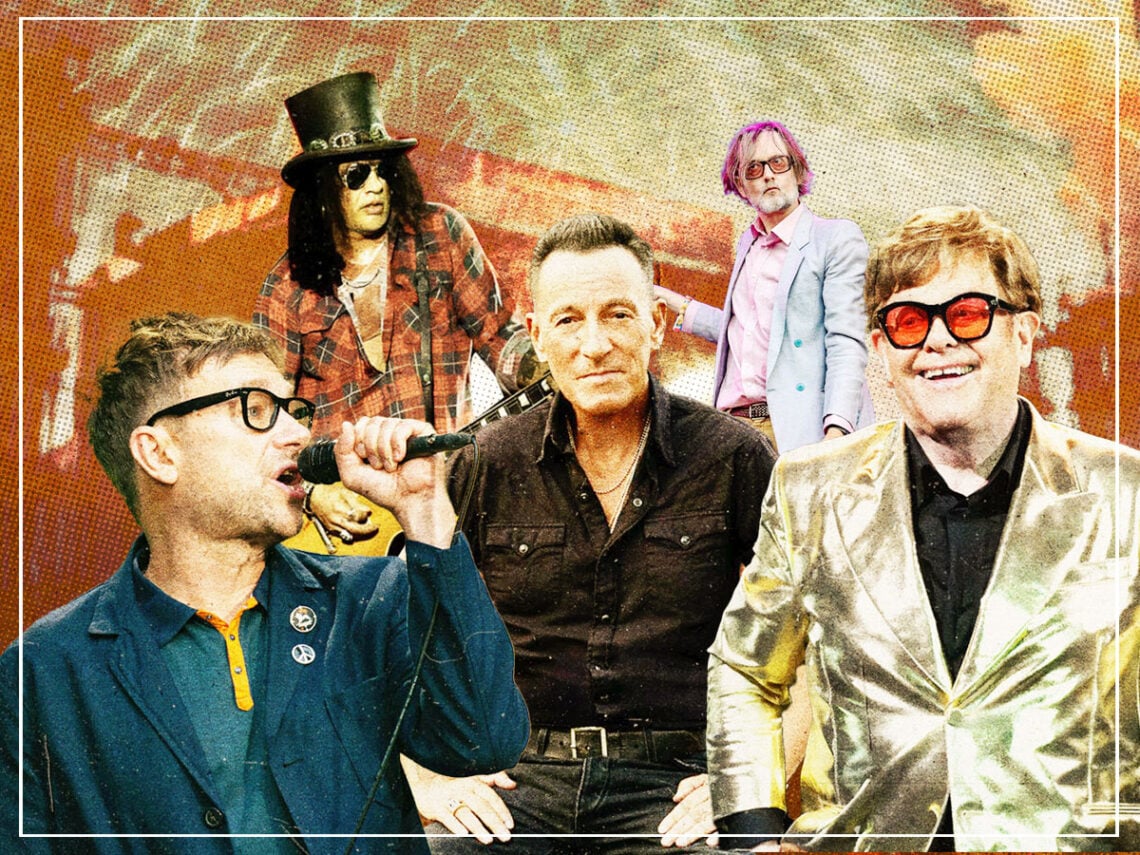
Earlier this year, chins were set a-wagging in their masses regarding the all-male Glastonbury Festival headline selection. This discussion wasn’t helped by the fact that one of those acts was Guns N’ Roses, who took to the Pyramid Stage at the same time that Lana Del Rey, a far more contemporaneously relevant artist with stats to prove this outstripping, was relegated the Other Stage. While this obviously kicked off a societal debate regarding female artists, it was also indicative of a trend that has resulted in Blur and Pulp becoming the talk of the summer with their beloved comeback concerts.
By no means is this a slight against the bands in question, but it does seem curious to see how society has become so obsessed with legacy acts, comebacks, and reunion tours. While it is natural that your old favourite band magically making a return for a few huge shows will get people excited, it isn’t always people who loved the band in the first place who are speeding to the ticket line. In a hankering for nostalgia and the buzz of the ‘big show’, millions are being drawn towards the lure of legacy, and this is also evidently increasing the cache of certain acts in the eyes of festival organisers.
This phenomenon can partly be explained by a study published in the Journal of Personality and Social Psychology. Using various methodological devices, researchers found that those exposed to more negative news stories become inclined to indulge in greater levels of nostalgia. In essence, the study found that we use nostalgia as a form of escapism. Thus, it seems quite easy to draw the conclusion from a musical point of view that we are not currently just buzzed to have great bands come back from the dead but to slip away from the current barrage of bad news and revel in what we perceive to be the glory days of gluttonous Britpop.
Further amplifying this is the fact that it seems that the internet has also influenced how we view modern artists and those who arrived before everything moved online. The Psychological Science journal has found that individualism has risen by 12% in recent times. This societal shift impacts everything within it, including seemingly trivial things like the level of esteem that bands are able to attract.
It used to be the case that collective scenes would drive bands to new heights, with unmistakable trends like Beatlemania impacting society at large. Now, there is a gaping chasm between mainstream media and its digital counterpart so that TikTok can catapult stars like Bad Bunny to the lofty status of one of the most heard artists in human history while simultaneously, many people have literally never heard of him. This means that many huge artists are tethered to a divided domain, and although they might have vast global listenerships, they are unable to achieve a level of localised ubiquity that creates the ‘buzz’ that sells out tours a la Sam Fender’s recent huge homecoming shows at St. James’ Park.
Without mainstream media dictating any wider angle, culture has become far less homogenous so that while Britpop may have ruled the waves and column inches of culture in the 1990s, now there is no dominant trend. As a result, dominant artists are also hard to come by, barring a few notable exceptions like Taylor Swift, who has managed to tap into something similar to Beatlemania.
However, even Swift’s rise has an aura of nostalgia about it. As well as her own re-treading of released material with her run of ‘Taylor’s version’ of re-releases, last year in the US, one in every 25 vinyls sold was a Taylor Swift record. This throwback to the vinyl format also typifies the same sense of alternate-era escapism that is driving the current legacy act reverence.
Of course, it seems pertinent to reiterate once more that there are other obvious reasons behind this love-in with heritage – I, for one, can’t wait to see The Walkmen for the first time this summer; a band I have loved for decades, and now can catch in their relative pomp, as though I drew them out of hiatus through the law of attraction alone – but that doesn’t explain why there are other dates in people’s gig calendars that outstrip the buzz for a contemporary band even if they don’t really love the ‘legacy act’. There are many incidents when album sales and monthly listens on streaming sights are dwarfed by a reuniting band’s capacity to sell out huge gigs.
And it is this that seems to have perhaps hit a turning point as we adapt to the post-pandemic world. Def Leppard and Mötley Crüe put on a tour in 2022 that grossed $173.5million. However, their recent attempt to replicate this resulted in a Wembley Stadium show that looked to be less than half full based on photos.
Weezer were also recently forced to cancel shows citing low ticket sales, so perhaps it would seem that we are willing to cash out in a cost of living crisis only if the show is imbued with a sense of one-off immediacy and nostalgia loses its grip if we delve into it in a sustained fashion like that VHS player you bought and had fun with for a weekend before realising, ‘You know what, streaming is actually pretty good when you think about it’.
This final point has a distinct crossover with the faddish nature of flippant modern society too. With enough financial cache to take lengthy spells off, legacy acts have the luxury of being able to hang up their boots and then come back with a bang for a short, beloved stint. However, if they had to go through the same gruelling tour and promotion schedules of up-and-coming artists, the novelty of their return might eventually result in the erosion that many artists face with increased exposure. Therefore, maybe a little bit of mild cynicism about these comeback shows does, indeed, help to level the playing field a touch, even if it is also only human to bask in the beauty of nostalgia’s balm for a few glorious youth reclaiming hours in a field or see an epic act for the first time.
