


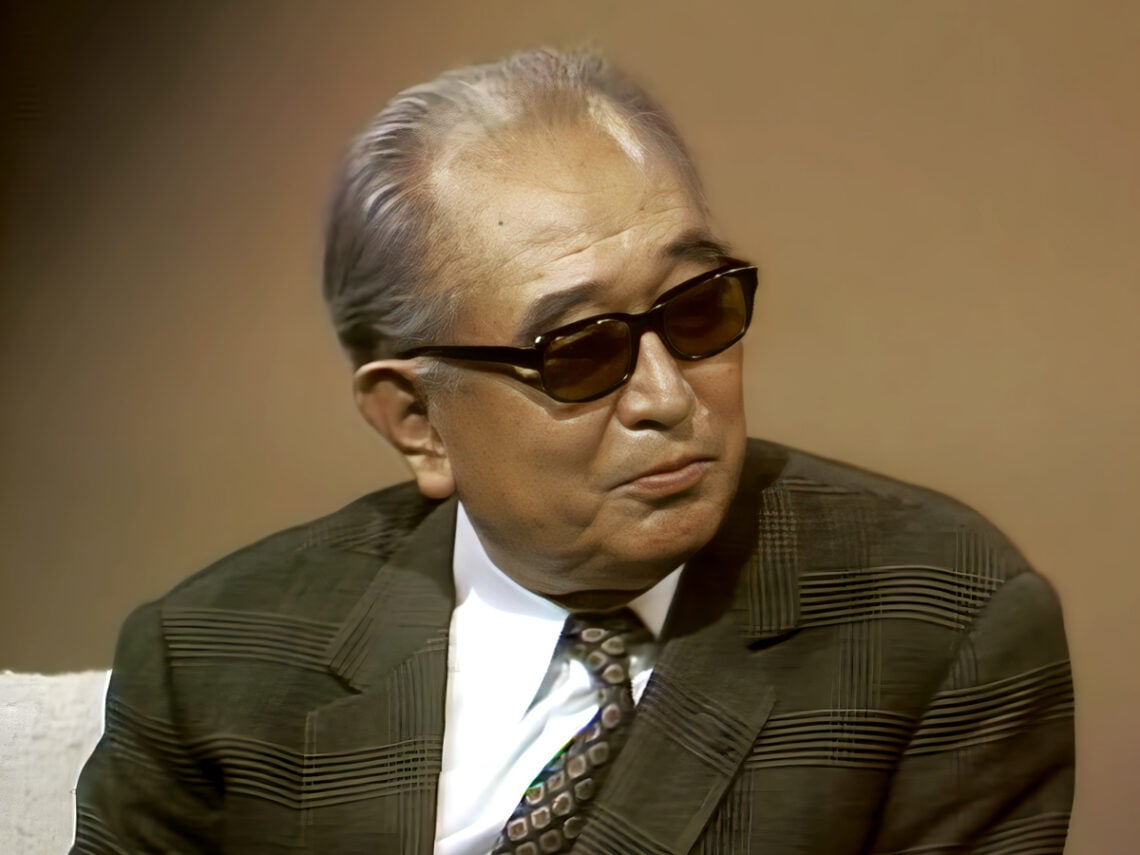
Why Akira Kurosawa hated being called a ‘Western’ director: “I just don’t understand that”

The legendary Japanese filmmaker Akira Kurosawa, responsible for such classics as Seven Samurai, Rashomon, and Throne of Blood, over a career that spanned several decades, remained baffled when film critics seemed to misunderstand his style.
Loads of modern filmmakers have name-dropped Kurosawa as a major influence, but he wasn’t shy about showing admiration for his peers, either. Kenji Mizoguchi was his favourite, though he once said in a 1980 interview with Donald Richie that he never quite got why critics were so eager to draw lines between his work and Mizoguchi’s – they never seemed all that different to him.
“People always say that his style is purely Japanese and that mine is foreign,” he said, confused, “I just don’t understand that.” While Kurosawa praised both Mizoguchi and Keisuke Kinoshita for their abilities to “create a film that is purely Japanese”, he grew irritated that international critics would often refer to him as a filmmaker who worked in the “Western” tradition, as to him, the difference in style had nothing to do with cultural heritage.
“That is what makes me so angry about the critics,” he said, “Of course, they don’t know anything, in Japan or elsewhere, for all I know. At least, I haven’t read one foreign review of anything I’ve done which hasn’t read false meanings into it, but the Japanese critics go on and on about how Western I am, and mainly just because I do my own cutting and happen to prefer a fast tempo and am really interested in people.”
One of the primary reasons that the director was so ahead of his time was his involvement in every level of the filmmaking process, including cutting, editing, producing, and writing, and although he worked at a rapid rate, often making one film a year, Kurosawa was seen as a very empathetic filmmaker who put a great deal of emphasis on his characters. In his eyes, this may have been why his work would occasionally be mischaracterised as Western.
“That’s the thing about most Japanese films,” he complained, “They don’t really give a damn about people. Then, when they get done, they call it ‘artless simplicity’ and terribly Japanese, well, that certainly isn’t my way, and, of course, that is why they call me Western. That, come to think of it, is why I don’t like period films, at least not the ordinary ones.”
While the humanistic style that Kurosawa developed may not have been common at the time, it did end up becoming the basis of a new movement in Japanese cinema that was ushered in within the next several decades, and saw him simply redefine what a “Japanese movie” could be.
As much as the criticism may have stung, he wasn’t able to shake the fact that his films became highly popular in the West, and specifically in America. In fact, some of his most famous films were actually remade as legitimate westerns, wherein Seven Samurai was remade as The Magnificent Seven, and Yojimbo inspired the Man With No Name trilogy from director Sergio Leone, which starred Clint Eastwood. More recently, Ikiru was remade as the British drama Living with Bill Nighy, and Spike Lee unfortunately “reinterpreted” High and Low as the New York City crime drama Highest 2 Lowest.
Kurosawa’s influence on English-language cinema hasn’t waned, but he’s also been continuously cited as one of the most critical figures within the advancement of Japanese values around the world, and not just within cinema, so if there’s anyone to thank for the admiration other nations have for Japanese films, it’s him, and only because his vision was unique as well as approachable.
