


Who wrote ‘In Heaven’ from David Lynch’s Eraserhead?

The undisputed king of contemporary surrealist cinema, filmmaker David Lynch has crafted an essential body of work that wanders our collective dream states more than any other Hollywood director in the near last half-century. Imbued with his distinctive alluring mysticism, key pictures such as Blue Velvet, Mulholland Drive, and the seminal Twin Peaks TV series explore the latent dark energy that lurks underneath Americana’s rosy facade and the metaphysical intersections between reality and the universe’s strange, unknowable netherworlds.
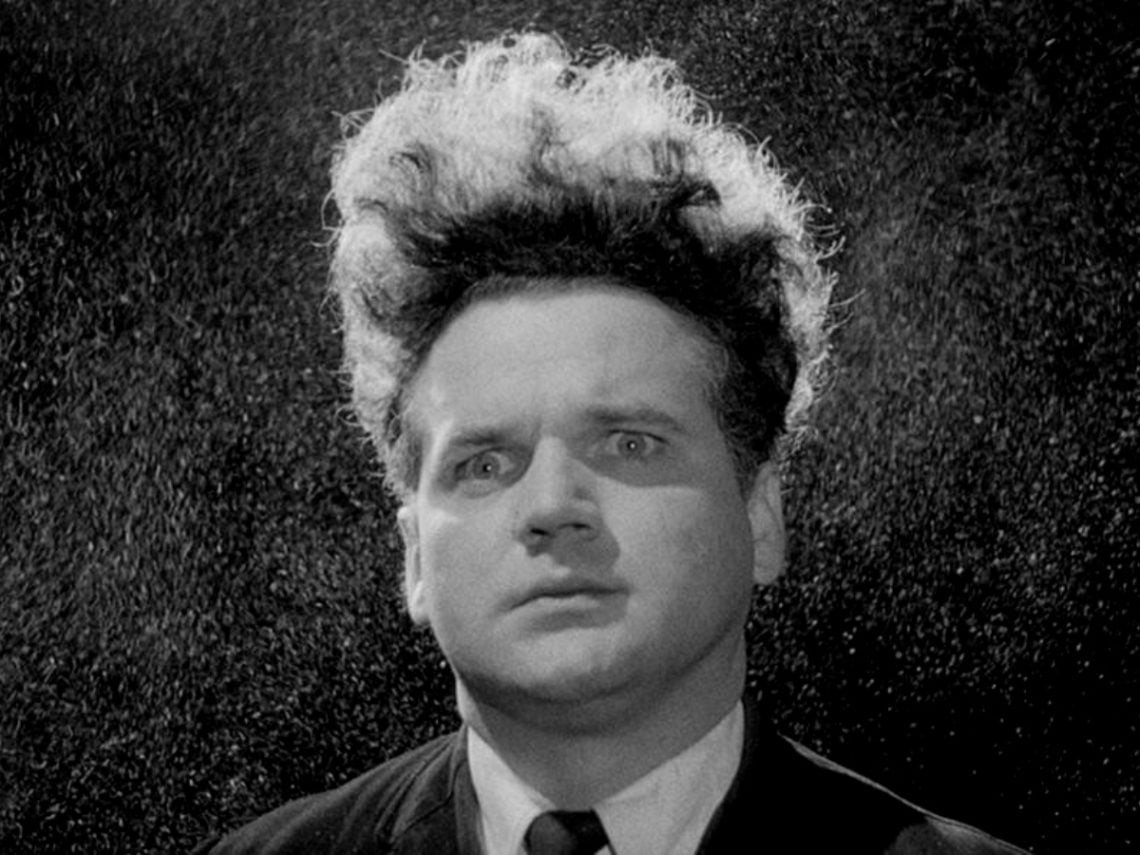
His one picture, which towers over the rest with its sheer alien energy and stirring pull of nightmarish atmosphere, is still his 1977 debut feature, Eraserhead. Shot on and off across five years, Eraserhead depicts the eerie story of Henry Spencer’s anxiety over the deformed bab, which omits troubling energy in his tiny apartment after the infant’s mother is driven mad by its incessant mewling and crying.
Heavily inspired by Philadephia’s industrial landscapes, Spencer’s anguished navigations around the desolate factories and scrapyards all capture the stricken malaise of the city’s insecurity during a period of crime rise and urban decay.
Equally as memorable is its haunting sound design. Other than the weathered, distant whirrs of Fats Waller’s ‘Lenox Avenue Blues’, Eraserhead is coated in a near-constant din of disquieting white noise and vacuum oppression. Amid this wall of aural radiation, one brief, simple song has endured as one of the film’s most indelible moments, and is covered by artists from Devo, Pixies, and even Pantera.
After being plagued with visions from the ‘Man in the Planet’ and a sexual encounter with the ‘Beautiful Girl across the Hall’, Spencer is visited by the ‘Lady in the Radiator’. Complete with a blonde hair bob and puffed-out crusted cheeks, she coyly begins to sing the almost nursery-like song ‘In Heaven’, before Spencer’s disembodied head falls from the sky. Speculated to symbolise his private desire to kill his mutant offspring, her gentle embrace after having stabbed the tiny creature glowed with reassuring validation for having succumbed to his violent urges.
So who wrote ‘In Heaven’?
While Lynch provided the lyrics, cult Massachusetts singer-songwriter Peter Ivers composed the musical vignette and, gifted with a voice like Neil Young sucking on helium, was able to sing the character’s childish, disquieting vocals. An enigmatic nucleus between disparate strands of Los Angeles’ entertainment world, the Harvard-educated art rocker cut a string of highly eccentric glam pop that anticipated new wave years before its arrival, including the retrospectively acclaimed Terminal Love, and was good friends with the cast members from National Lampoon and Saturday Night Live, reportedly introducing John Belushi to punk band Fear and unwittingly gifting the show its most chaotic moment.
It’s as a presenter on the 1980s cable show Night Flight that Ivers is best remembered. Hosting its New Wave Theatre segment, Ivers would open and close the loose, variety document of punk, alternative comedy and DIY theatre with his own irreverent stream-of-consciousness musings on art and life in general. Tragically, Ivers was found bludgeoned to death in his apartment in 1983 at the age of 36, a shocking crime remaining unsolved to this day.
An utterly unique character possessed with an authentic eccentricity that hovered over all his creative work, his Hollywood magnetism for celebrity attention and inconclusive violence feels lifted straight from Lynch’s imagination.
