


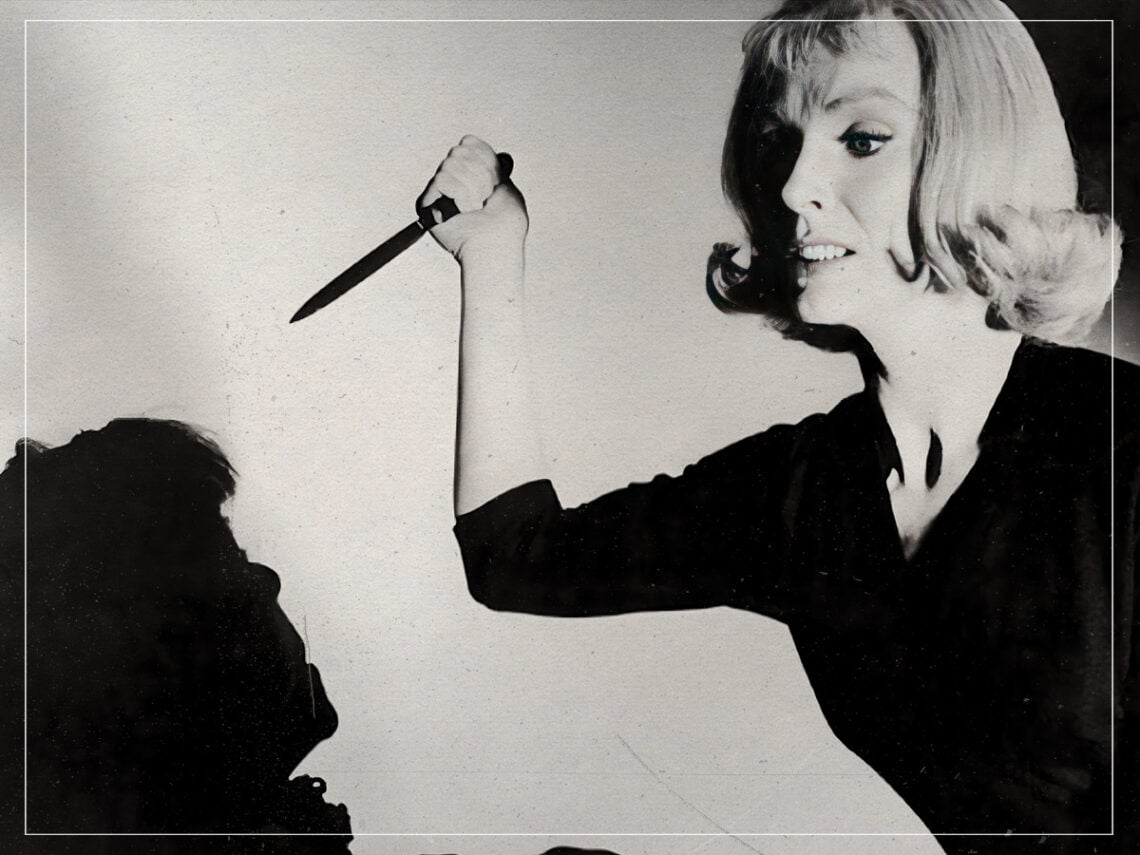
Who was the first-ever female killer in a horror movie?

When we think of traditional horror conventions, we typically associate female characters with being the targets of a killer, who is usually male. The existence of the popular final girl trope proves this, with iconic characters like Laurie Strode and Sidney Prescott becoming some of horror’s most recognisable survivors. Meanwhile, male killers like Leatherface, Michael Myers, Freddy Krueger, and Jason Voorhees are the most well-known horror movie villains.
Yet, there have been many female killers in movies, dating all the way back to the genre’s most primitive days. While few have taken on the same level of notoriety as the villains listed above, it’s about time we pay more attention to the female characters who have revealed themselves to be terrifying killers, too.
The horror genre owes a lot to these women, who paved the way for other deranged and frankly unhinged female characters that have graced our screens in more recent years, as demonstrated by movies like May, Under the Skin, Pearl, and Raw. Even quite a few of the killers revealed to be Ghostface in the Scream series have turned out to be women.
Back in the 1970s, Carrie White from Brian De Palma’s Carrie became one of the earliest mainstream female killers in a horror movie, while Pamela Voorhees from Friday the 13th became an early example of a female serial killer in a popular slasher film. Yet, before the ‘70s, there were various lesser-known films that featured female killers, although it is hard to identify the very first.
So, who was the first female killer in a horror movie?
Still, we can look at certain cinematic movements from the 1960s, such as Japanese horror cinema, American B-movies, and Italian giallos to find early examples of female killers. In Japan, many horror movies from the ‘60s featured supernatural themes based on folklore, with many of these narratives centring around female suffering and the fight for autonomy and survival. Onibaba, released in 1964, sees two women kill and steal from male soldiers, while 1968’s Kuroneko follows the murderous ghosts of two women who were raped and killed.
However, in various low-budget American horror movies, filmmakers often played with expectations. In William Castle’s 1961 movie Homicidal, the killer is revealed to be a woman named Emily, who was brought up as a boy named Warren to please her father, who wanted a son. Living as a woman overseas, she used her Warren identity to kill those who knew the truth so that she could go back to living as a woman and secure her father’s inheritance.
While the movie is technically one of the earliest examples of a woman being the killer, this is complicated by the fact that she is also given a male alias. Still, the trailer for the movie asserts, “introducing the homicidal girl…”
Shortly after Homicidal, the Italian giallo, The Girl Who Knew Too Much, was released in 1963. The film revealed a woman to be the killer, a feature that came to define various other giallos, like Deep Red. It made for a shocking twist, especially since the murderer killed her sister and her husband. Yet, it proved, like many other movies with female killers, that women are capable of being villains, too.
