


Who was horror’s first ‘final girl’?

The final girl trope was first coined in 1992 by Carol J. Clover in her book Men, Women, and Chainsaws: Gender in the Modern Horror Film. In her analysis of gender in horror, Clover found a reoccurring theme where a specific kind of female character would always survive the film, whilst other female characters that expressed a tendency towards promiscuity and engaged in drinking and reckless behaviour were killed.
Clover looked at films from the 1970s and 1980s, such as Halloween, to identify how the remaining female victim is often deemed “worthy” of survival due to her virginal and ‘untainted’ status. This trope can often appear empowering on the surface – we watch a woman fight off a domineering man and succeed. However, the trope is firmly rooted in sexist beliefs of the ‘correct’ way to perform femininity. Women that concealed their sexuality and chose to do ‘the right thing’ whilst their friends partied and had sex were almost always the ones to survive.
The trope says a lot about patriarchal attitudes towards women. The ‘good ones’ are allowed to survive, but they must always be tortured first. The final girl walks away with heaps of trauma and injuries, having narrowly lost their life, watched all their friends die, and potentially committed murder out of self-defence. As the final girl fights for her life, her purity is corrupted, playing out as a male fantasy.
In earlier examples of the final girl, Clover identified that she was often portrayed as a damsel in distress and saved by a male figure, such as a police officer. She also identified that many final girls end up dying in the sequel, such as Alice Hardy in Friday the 13th Part 2. However, since Clover’s seminal text, many horror films have shifted away from the sexism of the final girl trope. In the Scream series, protagonist Sidney Prescott, despite her initial portrayal as ‘frigid’ and well-behaved, eventually has sex with her boyfriend and still survives not just one film but five.
Neve Campbell, who portrays Sidney, stated that her character is “someone who takes over and holds her own and won’t allow life to get away with her.” As horror films slowly move away from the voyeuristic lens that dominated the ‘golden age’ of slashers, we are seeing much more innovative and progressive characterisations of female characters.
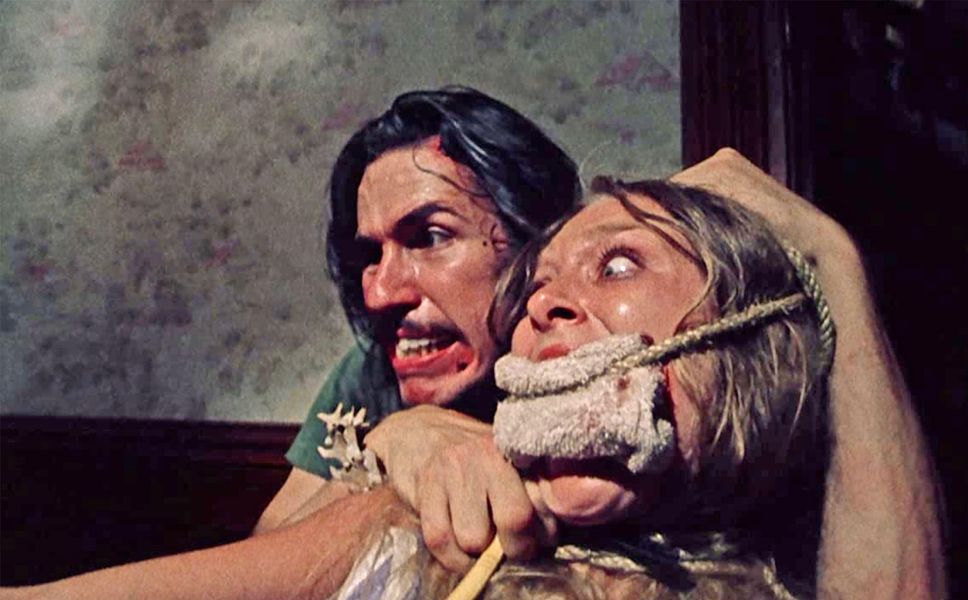
But who was the first ever final girl? Some critics suggest that Olivia Hussey’s character Jess Bradford from 1974’s Black Christmas represents an early final girl. She is headstrong and holds her own against a series of antagonistic men; however, her fate is left ambiguous after she is left sedated in the house whilst the killer is still in the attic. Instead, a more commonly accepted example of the first final girl is Sally Hardesty from The Texas Chainsaw Massacre.
Sally is the only one of her friends to escape Leatherface, who, alongside his cannibalistic ‘family’, tortures her incessantly before she escapes with the help of a passing driver. However, writer James Rose argues that Sally is not “a true Final Girl” because she never fights back; she just happens to get lucky and escape. Although he also writes, “this is not to disagree with Clover’s positioning of Sally as a Final Girl, as she does indeed endure, and it is this that makes her so noteworthy.”
Other examples of early final girls are Laurie Strode in Halloween and Ellen Ripley in Alien. Recent final girls include Maxine in X, Tree Gelbman in Happy Death Day, Dani in Midsommar, and Samara in Ready or Not. It seems as though the trope is far from fading away, instead, it has become modernised and often gets subverted, as identified in the characterisation of Sidney Prescott.
