


Who sang the backing vocals on David Bowie’s ‘Young Americans’?

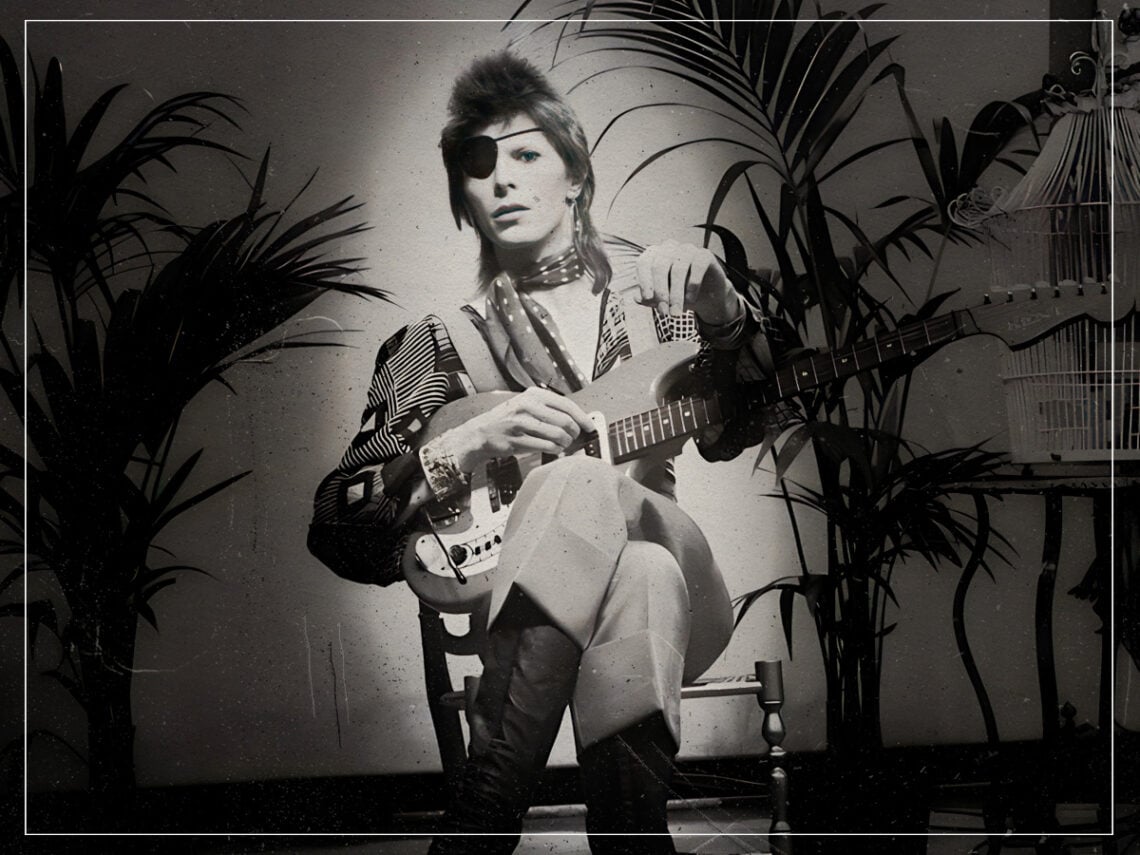
Since his death in 2016, most discussions of David Bowie’s chameleonic nature have focused on his appearance, his penchant for ch-ch-changing his persona through theatrical stage characters like Ziggy Stardust, Aladdin Sane, and the Thin White Duke.
Had he merely put on different makeup and continued to record the same kind of music, however, we wouldn’t still be talking about him in 2025 with the same level of reverence. When it came to his songwriting, Bowie was really more of a magpie than a chameleon; constantly picking up new, shiny objects from other musical genres and other parts of the world, then pulling off the tricky act of making them part of his own counterintuitively “authentic” sound.
Part of the reason he was rarely accused of blatant appropriation or theft is because, as a naturally curious person, Bowie tended to invite his influences directly into his orbit, rather than just trying to imitate what they were doing. Whether he was working with Lou Reed, Nile Rodgers, or Trent Reznor, the goal was to go directly to the source of his latest inspiration. In some cases, that inspiration could also pop up right under his nose.
While working on his 1975 Philly-style soul album Young Americans, for example, Bowie’s guitarist Carlos Alomar put together a stellar group of young backing vocalists, including Ava Cherry, Robin Clark, and a certain future star who immediately made an impression. He was a 24-year-old New York R&B singer named Luther Vandross.
Vandross had done a little bit of noteworthy work up to this point, including some backing vocals for Roberta Flack, but working on Young Americans completely changed his career, as Bowie quickly recognised that Luther was gifted with not only a great voice, but a great mind for arrangements and song craft.
It was Vandross, according to longstanding Bowie lore, who devised the key vocal arrangements on Young Americans’ title track—the most soulful recording of Bowie’s career up to that point. As a result, when a corresponding ‘Young Americans’ tour was announced, Luther was invited to join it as a performer, his first time leaving New York.
“I was aghast at the production values of [Bowie’s] show,” Vandross recalled to the Chicago Tribune in 1993. “I wanted a show just like it—not that I wanted to be Ziggy Stardust, but I wanted it to go that extra amount he did.”
Bowie seemed to sense Vandross’s ambition, and gave him the unusual task of warming up the crowd on the ‘Young Americans’ tour, giving him his first opportunities to sing centre-stage, albeit to a not-always-receptive audience.
“Bowie told me to go out there and sing five original songs every night with the band before he went on, and for 45 minutes each night I’d hear, ‘Bowie!’,” Vandross said with a chuckle. “I said to him, ‘Listen, man, if you want to kill me, just use cyanide, but don’t send me out there again.’ And Bowie just said, ‘Hey, I’m giving you a chance to get in touch with who you are. Their reaction isn’t the point. What you do is the point.’”
Bowie was dispensing wisdom, but also cashing in on his new pal’s talents, as he famously also adapted an early Vandross-penned song, originally titled ‘Funky Music’, into the track that became ‘Fascination’ on Young Americans.
“Bowie heard me doing [‘Funky Music’] with the band during rehearsals, and he asked me if I would let him record it,” Vandross recalled. “And I said, ‘What do you mean, let you record it? I’m living in the Bronx in a building with an elevator that hardly works and you’re asking me to let you record one of my songs?!”
Suffice it to say, a financial arrangement was worked out. And soon enough, Luther Vandross was living in a significantly nicer house.
