


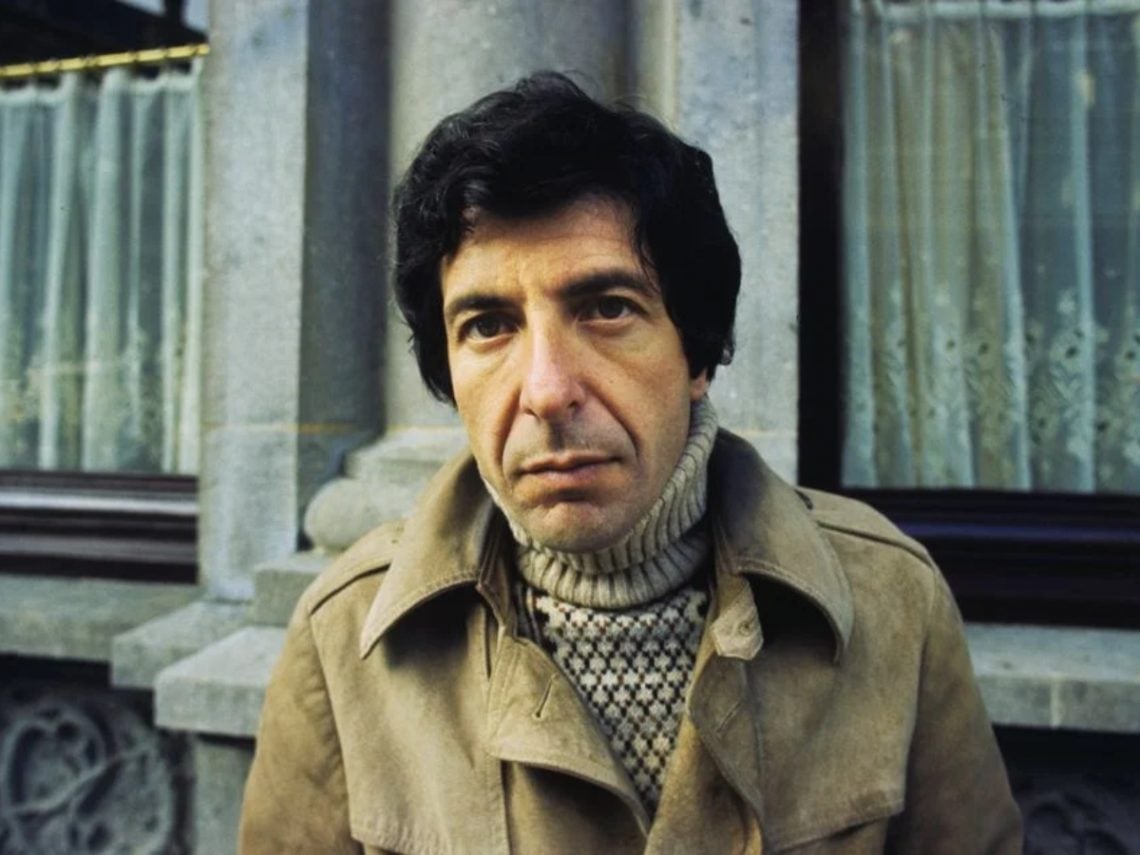
Who did Leonard Cohen write ‘Suzanne’ about?

The gravel-voiced Leonard Cohen came late to the music industry, having published a number of poetry collections and novels before bursting into song. And it was through his poetry that he began his music career at the age 33, as he turned his 1966 poem ‘Suzanne Takes You Down’ into the lyrics for his debut single.
‘Suzanne’ is a ballad quite unlike anything that had been heard in folk or rock music to that point. Even Bob Dylan’s most poetic turns of songcraft didn’t to that point tally with the single stream of consciousness Cohen accomplishes, gradually intensifying line-by-line, ascending step-by-step, like water flowing downriver in Montreal.
The track describes its singer being taken by the eponymous ‘Suzanne’ to “her place near the river”, where she makes him “want to travel with her”. She manages to get answers about love from the river, and find heroes amid the seaweed, so to speak.
It’s a song imbued with the inspiration the singer has received from his subject, which moves him to some form of love despite his ambivalence about it. He claims he has “no love to give” but Suzanne makes him give it anyway. What exactly this love means is itself unclear, as it appears to lie somewhere between the “perfect body” and the “mind” mentioned in each chorus refrain.
Who inspired Cohen to love, then?
Was Suzanne a real person? She was indeed. And interestingly not a lover of Cohen’s, at least in any physical sense.
Suzanne Verdal, who was known as Suzanne Vaillancourt by marriage at the time, was the wife of Cohen’s friend Armand Vaillancourt. In an interview with BBC Radio 1 in 1994, the singer explained how the husband and wife were “a stunning couple”. He added that “everyone was in love with Suzanne”, but no one would ever contemplate actually trying to seduce her on account of her marriage.
However, it is entirely true that Suzanne Verdal took Cohen to her place by the river one evening. “She had a space in a warehouse down there,” he explained. “And she invited me down, and I went with her.” What followed was the sort of sacrament that warranted Cohen’s poeticism.
Verdal, who is a dancer, choreographer and costume designer, remembered the evening fondly in a later radio interview, and suggested that it was far from a one-off. “I would always light a candle and serve tea and it would be quiet for several minutes,” she described. “Then we would speak. And I would speak about life and poetry and we’d share ideas.”
Just a platonic muse?
And so, she certainly was a muse for Cohen, even if it was more on a platonic and literary level than a physical one. Cohen did admit to fantasising about her body, though. And Verdal has claimed she even danced for him once in a show many years later, but that he may not have recognised her.
Leonard Cohen famously performed the song with another famous folk muse Judy Collins in 1976. Collins was a longtime friend of his and recorded many of his tracks. She was also the inspiration behind the Crosby, Stills and Nash piece ‘Suite: Judy Blue Eyes’, which was written by Stephen Stills about their failing relationship.
