


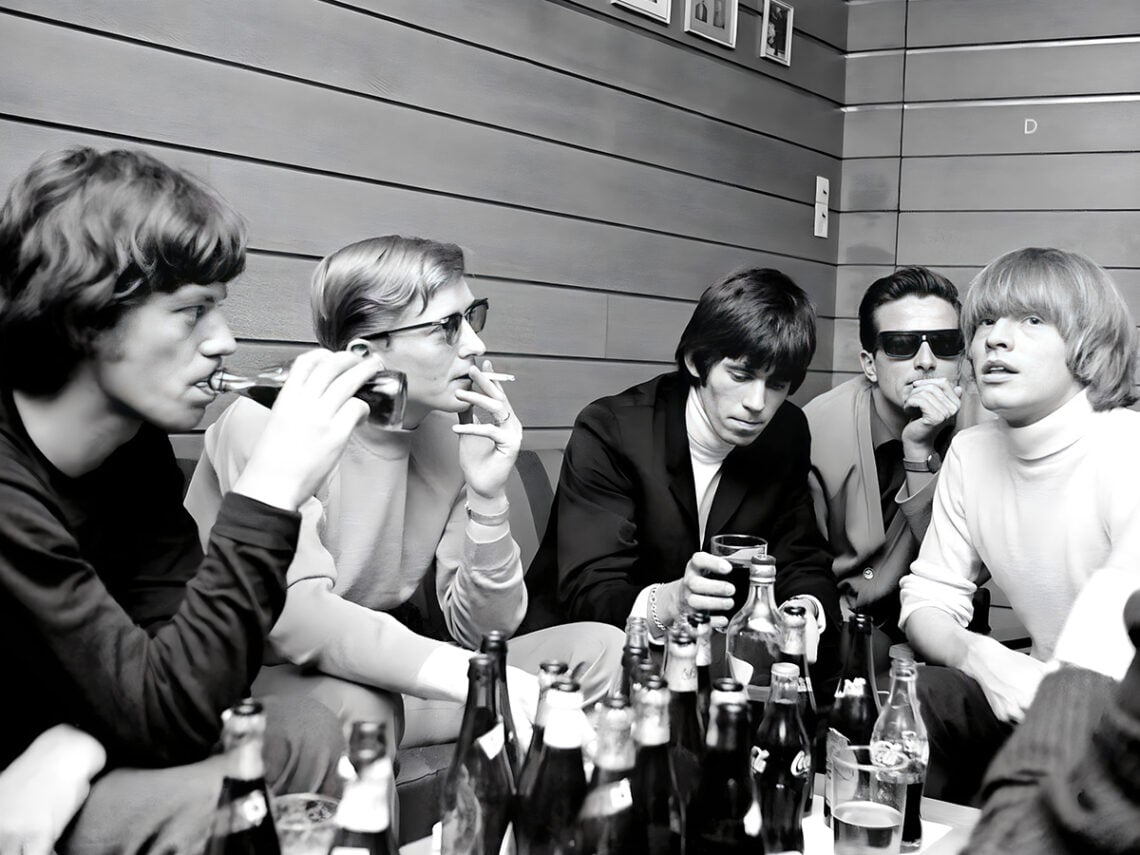
Who founded The Rolling Stones?

Throughout the last six decades, The Rolling Stones have been ripping up rulebook after rock and roll rulebook, fronted by the scowls and howls of Mick Jagger and guided by the gritty guitar sound of Keith Richards. Jagger and Richards have written most of the band’s material since their first songwriting effort, ‘Tell Me’, in early 1964. And for almost all of that period, Jagger has, by default, been the group’s main spokesman.
The songwriting duo are now the last ones standing from the original lineup of The Rolling Stones, as well, since the passing of Charlie Watts in 2021. It would be logical to assume, then, that the Jagger/Richards partnership at the core of the band was also its starting point. Much as The Beatles began with Lennon and McCartney, and The Kinks formed around Davies brothers Ray and Davies.
But that wasn’t how The Stones started out. It was another member of the original line-up, often forgotten in the shadow of Jagger’s charisma up front and Richards’ now-legendary status as a guitarist, who first had the idea to start a new English rhythm and blues group in London.
Back in May 1962, an advert appeared in the Soho music bulletin Jazz News calling for anyone interested in forming an R&B band to audition at the Bricklayers Arms, a pub that still exists in the area today. Scottish jazz pianist Ian Stewart turned up and was swiftly recruited. Jagger and Richards joined later the same year after meeting the band’s founder at the Ealing Jazz Club.
So, who was the founder?
His performance of Robert Johnson’s standard ‘Dust My Broom’ had impressed the future songwriting partners, who already knew each other from school. Here was a serious blues aficionado. He went by the name Elmo Lewis at the time, combining the name of his blues guitar idol, Elmore James, with his original given name and played with a band he’d called The Roosters, after the Howlin’ Wolf song ‘Little Red Rooster’.
But after getting together with Stewart, Jagger and Richards, he soon reverted back to his birth name, Brian Jones. Jones was the undisputed leader of The Rolling Stones’ first incarnation, possessing a great deal of natural musical talent and an unrivalled knowledge of R&B. He was responsible for the group’s name, which is adapted from the title of the 1950 Muddy Waters single ‘Rollin’ Stone’.
Before Jagger and Richards had made their first serious attempt at writing a song, Jones had already written four of his own. ‘Wake Up In The Morning’, ‘Sure I Do’, ‘I Want You To Know’ and ‘Dust My Pyramids’ were all recorded by The Stones, but none of them made it onto a record in the end.
Despite Jones increasingly fading from view as the band’s frontman and lead guitarist increasingly usurped his position at the head of the group, his influence remained pivotal in the group’s best work. His understanding of the blues and virtuosity with a variety of instruments made him indispensable for the best part of seven years.
From his inimitable slide guitar performance on The Stones’ recording of ‘Little Red Rooster’, to his iconic sitar riff on ‘Paint It, Black’ and his gorgeous alto recorder part on ‘Ruby Tuesday’, Jones’ presence can be felt across the band’s output up to 1969. The year of his tragic demise in the swimming pool of his country estate.
For some Stones fans, the band was never as good without its founder, whose role was far greater than the sum of its instrumental parts. Brian Jones was the man who created The Rolling Stones. And made them the first British blues band to cross over into the mainstream.
