


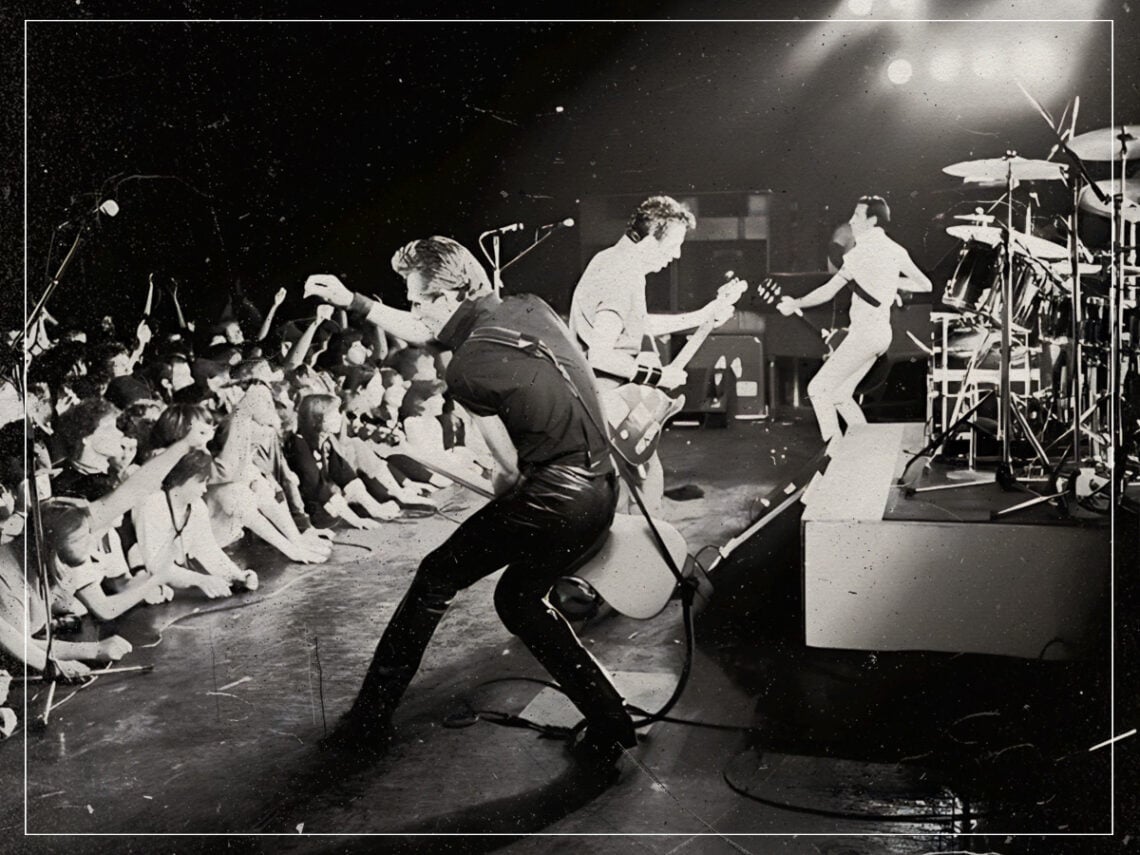
‘White Riot’: The Clash’s finest punk moment

Trends come and go within the music industry, but the advent of punk rock changed things indefinitely. Suddenly, artists were rejecting the complacency of the mainstream charts, reaching for something more abrasive, experimental, and subversive. In the UK, groups like the Sex Pistols and The Damned rose from the sweat-stained stage of The Roxy Club to spread the anarchic gospel of punk rock across the nation. At the heart of that revolutionary period was The Clash, whose eclectic sound and staunch political songwriting typified the attitude of the era.
Punk was bubbling away in the backrooms, squats, and art schools of London for a fairly long time before the scene officially kicked off in 1976. During those very early days, guitarist Mick Jones was playing in a group named London SS, while Joe Strummer was performing with the pub rock outfit The 101ers. Jones’ group dissolved in early 1976, but after witnessing a gig by the Sex Pistols, the songwriter was determined to establish a new group. So, once he had recruited Paul Simonon and poached Strummer from The 101ers as a frontman, The Clash was officially born.
Those early days were spent living the archetypal lives of spotty young punks, hanging around squats, getting wasted, and, crucially, playing live shows at The Roxy in Covent Garden. This venue was ground zero for punk in the UK, producing everybody from the Pistols to The Jam. Pretty immediately, it became clear that The Clash were a little different from their punk peers, boasting an expansive and diverse sound which incorporated a vast range of influences.
Simonon’s ska and rocksteady influences were particularly prevalent, inspiring the band’s legendary cover of Junior Murvin’s ‘Police and Thieves’. However, another way in which The Clash differed from the rest of the scene was their unwaveringly political songwriting and consistent calls for direct action. All of punk was critical of popular society and often targeted the political institutions of the United Kingdom, but The Clash were one of the only mainstream punk outfits advocating for genuine political change and uprising.
This defiant political songwriting was immediately evident in the band’s discography, with debut single ‘White Riot’ arguably capturing the spirit of punk rock better than any other track from that era. A call to arms for Britain’s disenfranchised youth to stand up for themselves and push back against the authoritative arm of the establishment, ‘White Riot’ was a revolution born from adrenaline and anger.
Written by the group after Strummer and Simonon were caught up in the Notting Hill Riot of 1976, the song calls for racial and class unity, arguing that Black people “don’t run from a brick” while white people are afraid to stand up for their rights. Of course, the 1977 single was quickly misunderstood or coopted by the rising prevalence of the far-right in England, but The Clash were always crystal clear about their anti-racist, anti-fascist standpoint on political issues.
‘White Riot’ certainly isn’t The Clash’s most profound record, but it is an undeniable highlight on their debut album and certainly captures the zeitgeist of Britain’s punk scene during the mid-1970s. Its anger and revolutionary spirit continued to be built upon by the band throughout their discography, but it was ‘White Riot’ which first introduced audiences to the punk rock mastery of Strummer and the band.

Never Miss A Beat
The Far Out Punk Newsletter
All the latest Punk content from the independent voice of culture.
Straight to your inbox.