


Which session musician has played on more songs than anyone else?

Session musicians have been a part of the music industry since the inception of recording as paid professionals who punched a clock every day and made music as their trade.
Many of the greatest songs of the past century wouldn’t exist, or at least wouldn’t sound anywhere near as good, without them, and yet, until fairly recently, most listeners rarely gave them a second thought. Fortunately, a definite shift finally did start to happen toward the end of the 20th century, as music journalists, having already mined nearly every available anecdote about the rock stars and pop stars of the 1960s, were finally forced to look underneath the hood at where all those other wonderful, unidentified sounds had been coming from.
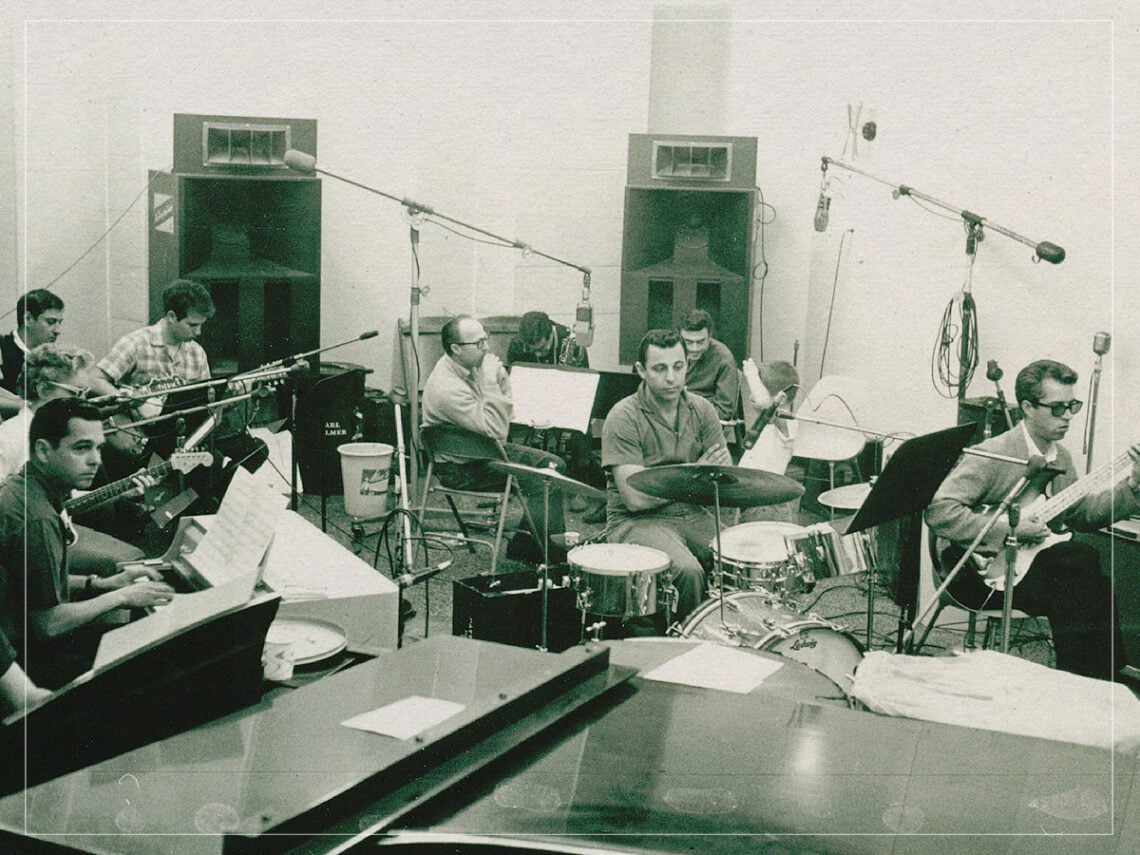
These archaeological digs into the old studio logbooks culminated in a golden age of retroactive fascination with the great session players, highlighted by a series of successful documentaries on some of the hitmaking studio supergroups of the ‘60s and ‘70s, including the Funk Brothers of Detroit in the form of 2002’s Standing in the Shadows of Motown, the Swampers of Alabama in 2013’s Muscle Shoals, and the Wrecking Crew of Los Angeles in 2008’s The Wrecking Crew.
The Rock and Roll Hall of Fame has been doing its part, as well, inducting a lot more session players in recent years, with Wrecking Crew bassist Carol Kaye and longtime Rolling Stones collaborator Nicky Hopkins entering the hall just this past year. For all the new attention, though, the enormity of the bodies of work for many of these session musicians still makes it extremely difficult to get any kind of complete sense of their contributions.
In many cases, even the musicians themselves can’t clearly remember if they played on certain iconic songs. Jimmy Page, for example, is pretty sure he played the secondary guitar part on The Who’s first big hit ‘I Can’t Explain’, but Roger Daltrey has said that Page is actually playing the lead, while some other folks from that session think Page’s part didn’t survive into the final version at all.
Unlike the convenience of researching sports history, there are no statistics to confirm or disprove these things, so if we were to try and name the session player who has appeared on the most songs, it couldn’t be more than an educated guess. As one out-of-the-box nominee, I’d be tempted to mention a little-known jazz pianist named J Lawrence Cook, who spent 50 years as a session player in the player-piano industry, adapting an estimated 20,000 popular jazz and pop songs into master piano rolls, a very popular method for listening to music in the first half of the 20th century.
If we’re focusing more on the era after the emergence of rock n’ roll, though, Wrecking Crew drummer Hal Blaine seems like a good shout for this imaginary award. Not only did he play with everyone from Elvis and Sinatra to The Beach Boys and Simon & Garfunkel, he was also a defining part of Phil Spector’s classic Wall of Sound in the ‘60s girl group era, and was basically the LA percussionist on-call at all times. “I replaced over 175 drummers for groups,” Blaine told the Press Democrat newspaper in 1992, “because I had the technique and experience to do it and do it quick”.
Even after his heyday with the Wrecking Crew was over, he played on a lot of movie soundtracks you’ve heard endlessly, including Back to the Future, Gremlins, and Dirty Dancing, so by the time of his death in 2019 at the age of 90, it was estimated that Hal Blaine had taken part in 35,000 recording sessions, and that he could be heard on at least 150 top ten US hit singles and 40 number ones.
“I came along at a time when there weren’t many drummers,” he said in 1992, “Now there are thousands. And it’s almost all electronic now. The human factor has fallen out”.
