


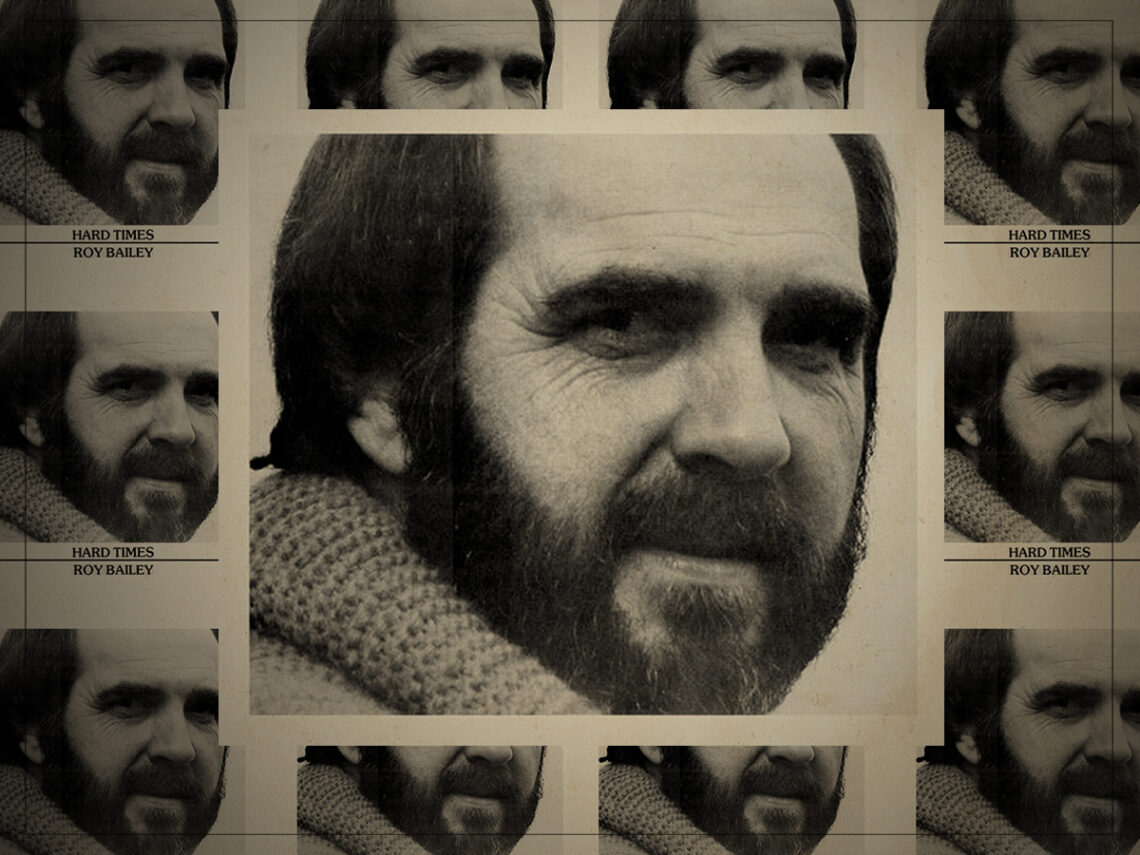
Roy Bailey: The story of a folk musician who returned his MBE

Let’s not beat about the bush – the British royal honours system is a contentious issue at the best of times, depending on your political persuasions. Subsequently, when you add folk musicians into the mix, who have never been shy of voicing their thoughts, it’s only bound to get worse.
In some ways, it is rather oxymoronic when you consider the concept of musicians, who built careers on the very genesis of being mouthpieces for the everyman, suddenly lavishing in the awards and praise of the titles bestowed from the highest echelons of society.
If there’s anything that rings pretty out of touch, it’s that. The more principled stance is to turn it down, or at the very least hand the honour back, which is exactly what one man did.
Roy Bailey may not be remembered among the most prolific elite of British musicians, but his impact on all areas of culture, from sociology to folk music, was anything but intangible. Representing the absolute authentic crux of grassroots folk music from as far back as the early 1960s, Bailey was a constant stalwart of the scene right up until his death at the age of 83 in 2018.
But what made the man stand out above the rest, aside from his steadfast commitment to using music as a vehicle for change in society, was that his morals and politics never waned, and came into full force in the moments where it fundamentally mattered the most.
Although he was awarded an MBE for this work in 2000, Bailey only kept the honour for six years before returning it, as the principles of those who had recognised him in the first place fell flat compared to what he was fighting for.
Why did Roy Bailey return his MBE?
Bailey’s decision to revoke his own MBE was not one made lightly nor on a whim, because it centred on the issue of oppression and destruction enforced by the British, which was at the heart of the very principles he spent his life vehemently opposing. He was forced to take action due to the British support for the Israeli invasion of Lebanon in 2004, marking a watershed moment in the landscapes of war and peace across the world.
Of course, it doesn’t take a genius to see how this unerringly mirrors the geopolitical situation of now, two decades later, and you would imagine Bailey’s position on the Israeli invasion of Palestine would be largely similar if he were here to see the atrocities unfolding. As such, it sharpens the absolute necessity for the power of music in times like these, not only to carry the legacy of Bailey forward, but to honour all those who marched in the fight alongside him.
Some may not consider a royal honour to be of any major political importance, and as such, its role in fighting oppression may be easily dismissed. But it’s from figures like Bailey that the honoured musicians of today should learn a thing or two, because without taking a stand when it matters the most, no history or change will ever be fully made.
