


Which album knocked ‘Whatever People Say I am’ from the top spot?

Every time a culture critic comes around to profess that the future of rock and roll is dead, a band are ready waiting to answer with a record that proves otherwise.
Most recently, in 2025, it was Geese, with Getting Killed, while Fontaines DC punctuated the air of dreary 2010s pop with their debut Dogrel, but it was Arctic Monkeys who kicked off the century of rebellion with their triumphant debut album Whatever People Say I Am, That’s What I’m Not.
Because let’s remember, the turn of the millennium was supposed to bring modernity with it; it was supposed to be a brave new chapter where analogue worlds were left behind, and art would become ubiquitously electronic, so naturally, with that idea came the terminal diagnosis of rock and roll’s illness.
However, emerging through the sludge was Alex Turner and his scruffy-haired legion, who were ready to revive rock and roll, with their new twist on punk rock. Turner’s observational lyrics were pointed and confronting, jarring the outlook of a nation crying aloud for someone to call out the growing air of millennial pretence.
Close behind were the bulletproof three-piece that made up the rest of the band: Andy Nicholson’s bass rolled along with the unrelenting power of Matt Helders’ drum kit, while Jamie Cook frenetically played the barre chords necessary to platform Turner’s spitfire diatribe, making for a raw and unapologetic, and subsequently an album of the times.
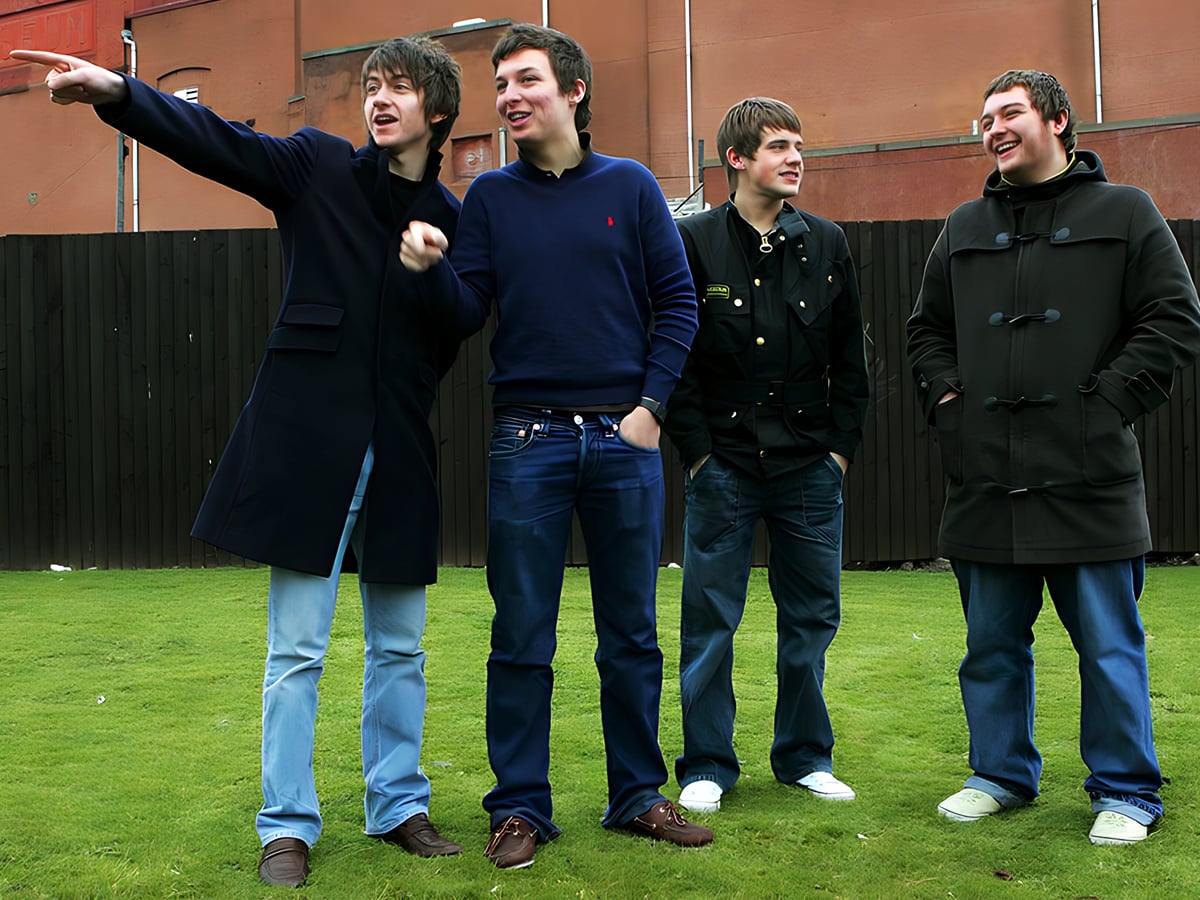
“It’s only when I look back at all the stuff around the first album now that it seems crazy,” Helders recalled, “We were always on tour or recording, so there wasn’t time to sit around and think about what was happening. For me, when I started noticing things were taking off was the first time we did a gig, and people knew the words to all our songs because our demos had been out there. That was a weird one. I don’t think people realise, looking from the outside, how many gigs we played to zero people.”
That relentless DIY approach to gigging translated to the record. It felt unpolished and free, reflective of a band not bogged down by the bureaucratic expectations of the big labels swarming their hype.
Helders felt that too, explaining, “I didn’t feel any pressure going into record the debut album, but I don’t know if, again, that’s because we were in the eye of the storm. I remember we had a friend who came into the studio and he said, ‘I bet your first single goes top 10’. We were like, there is no way that will happen, we’re just an indie band. I said to him, ‘If we ever get to number one, I’ll play a gig in just my football shorts and nothing else.’ It comes out and goes straight to number one. I did it, I kept my end of the bargain up.”
So as Helders sat on stage, in a pair of shiny football shorts cladding the leg that powered one of the most effective kick drums in indie, the expectation of this glossy new millennial world had been flipped and rock and roll was saved, for four whole weeks in 2006, where following the album’s release on January 23th, 2006, the band sat at the top spot.
But who finally knocked them off the top spot?
While Arctic Monkeys fought off a swathe of pop music to revive the state of rock and roll in the early 2000s, perhaps the most ironic part of their triumph was their defeat of The Strokes. The band made no bones about their admiration of the New York band and labelled them pivotal in the curation of the sound on their 2006 debut album.
But in succeeding in doing so, they dominated The Strokes’ third album, First Impressions of Earth, which enjoyed just one week on top of the charts after its release on January 3rd. Shortly after, the Monkeys came in and stole the show, not to be toppled again by The Strokes, but instead, by Jack Johnson and his record In Between Dreams.
