


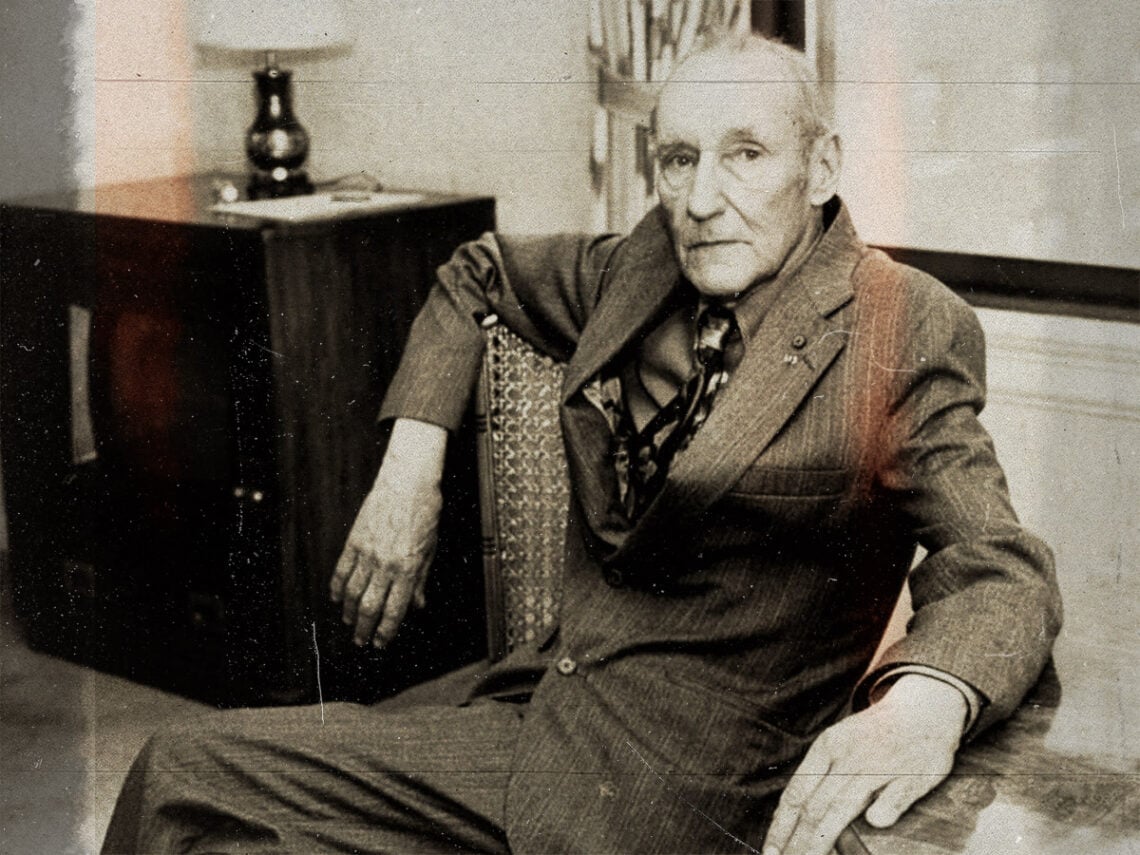
When William S. Burroughs met Bob Dylan

Every Bob Dylan classic tends to read like pure poetry. Throughout his days in the beat scene in New York, Dylan was known to go down different avenues with his wordplay, merely using his guitar as a vehicle to get some of his powerful messages into the world like ‘Blowin’ in the Wind’ or ‘Like a Rolling Stone’. Though most rock stars might have wanted to meet their heroes like Chuck Berry or Keith Richards around that time, nothing would compare with Dylan meeting William S. Burroughs.
Arriving a few years prior to Dylan, Burroughs had already gained traction as one of the biggest wordsmiths to come out of the scene, crafting works such as The Naked Lunch and Junkie. As New York slowly started to embrace folk music, Dylan was becoming a powerful player in the scene, operating as an answer to fellow storytellers like Woody Guthrie and Pete Seeger.
Upon meeting Dylan for the first time, Burroughs remembered talking with him about music, telling Victor Bockris, “I didn’t know a lot about music — a lot less than I know now, which is still very little — but he struck me as someone who was obviously competent in his subject. If his subject had been something that I knew absolutely nothing about, such as mathematics, I would have still received the same impression of competence”. Little did Burroughs know how far Dylan’s voice would reach, rebelling against the unjust practises of the world in song and even rebelling against the counterculture movement on ‘Like A Rolling Stone’.
According to Burroughs, Dylan did not mince words when it came to his opinions, either, going on to say, “Dylan said he had a knack for writing lyrics and expected to make a lot of money. He had a likeable direct approach in conversation, at the same time cool, reserved”. This is in drastic contrast to the Dylan character that most people saw in interviews, always being coy about what his songs were about and even offering contradictory answers to certain questions.
While Dylan has kept that cagey persona up throughout most of his career, he had nothing but kind words to say about Burroughs, saying that he enjoyed his work and thought that he was a great man. Although Dylan would embrace rock and roll on later albums like Blonde on Blonde and Highway 61 Revisited, he was always looking to toy with language the same way that Burroughs had.
Looking through songs like ‘Tombstone Blues’, Dylan puts harsh imagery up against a blues backdrop, imagining a world where Jack the Ripper is the head of the Chamber of Commerce. Even when he dialled back in later decades, Dylan was still looking to push his creative drive forward just as Burroughs did, getting more intimate on albums like Blood on the Tracks.
Dylan wasn’t the only one influenced by Burroughs’ work, with Lou Reed co-opting phrases from The Naked Lunch for the Velvet Underground just a few years after Dylan debuted. As much as rock and roll loomed large over the 1960s, Dylan always knew that the music was secondary. Even if he wrote one of the greatest melodies of his career, it was all about whether he had something to say.

Never Miss A Tale
The Far Out Bob Dylan Newsletter
All the latest stories about Bob Dylan from the independent voice of culture.
Straight to your inbox.