


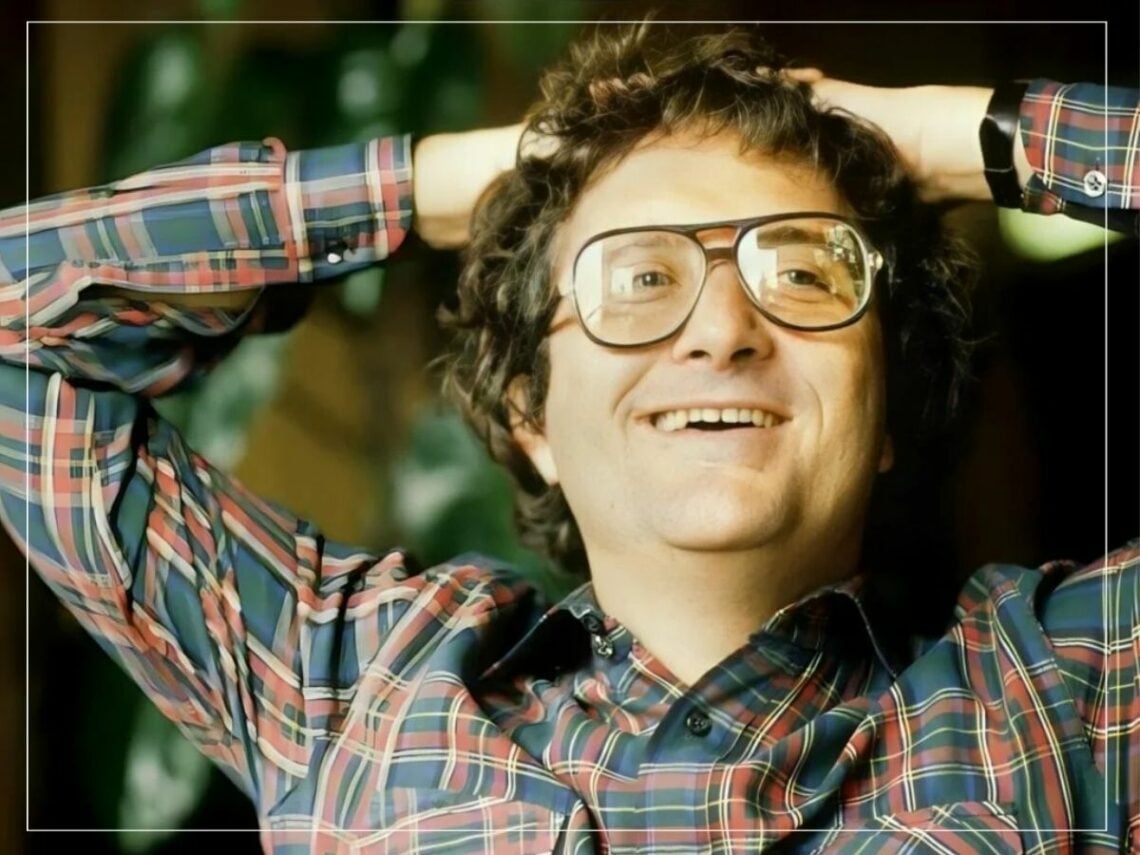
The story of ‘Randy Newman’s Faust’, which pits him against James Taylor’s God

While there have been plenty of artists who have dabbled in creating elaborate satirical works, there aren’t many who have done it as frequently and consistently as Randy Newman.
Born into a family of composers, Newman was always destined to find his feet in the music industry, and having first established himself as a songwriter in the late 1960s, he went on to record a series of albums that have achieved cult status, although not been lauded as outright classics. Perhaps this is an unfair assessment of Newman’s work and achievements, but at the same time, some of his work was so drenched in cynicism and droll humour that it passed many mainstream listeners by.
That being said, Good Old Boys and Little Criminals are sublime examples of how Newman has always been able to carve out narratives that are surrounded by unusual and often despicable characters who he assumes the position of. Given his talents for writing in this way, you’d think that would put him in a good position to adapt a piece of classic literature and bring it into the modern world with his acerbic wit and knack for storytelling.
However, Randy Newman’s Faust, a 1995 reinterpretation of the story of German legend that had been previously tackled in works by Christopher Marlowe and Johann Wolfgang von Goethe, was far from being the grandiose display of his talents that it could have been. Even with the help of an ensemble cast of other esteemed musicians on board playing the key parts in the story, his intricate imagining could not be rescued from under the weight of its own loftiness.
With Newman assuming the role of the Devil, whom Don Henley’s Faust makes a pact with at a crossroads, he is at war with James Taylor’s God throughout, but there appears to be far too much in common between the two beings that it’s almost impossible to distinguish between who is really playing the benevolent and evil roles. The two opposites end up trading snide remarks towards one another without ever really asking the important questions of morality and who is doing right or wrong, something that most other interpretations of Faust look to tackle as the main priority.
Even the secondary characters of the story, played by Elton John, Bonnie Raitt and Linda Ronstadt, can’t rescue Newman’s warped perspective on the narrative, and Raitt’s rebellious character ends up prevailing more than Ronstadt’s pious and angelic character. Newman’s version did eventually make its way to the stage, and had multiple productions staged around the world, but the overwhelming consensus is that he misfired dramatically on the studio recording.
For someone usually so astute when it comes to dissecting the hypocrisy of people in society, Randy Newman’s Faust ends up as a disappointing curiosity where he struggles to delve beyond surface level insinuations that there is no divide between good and evil. Musically, the album is just as strong as ever when compared to his other compositions, but in terms of narrative, you’d think that someone like Newman would have been able to make a better stab at a tale of this magnitude.
