


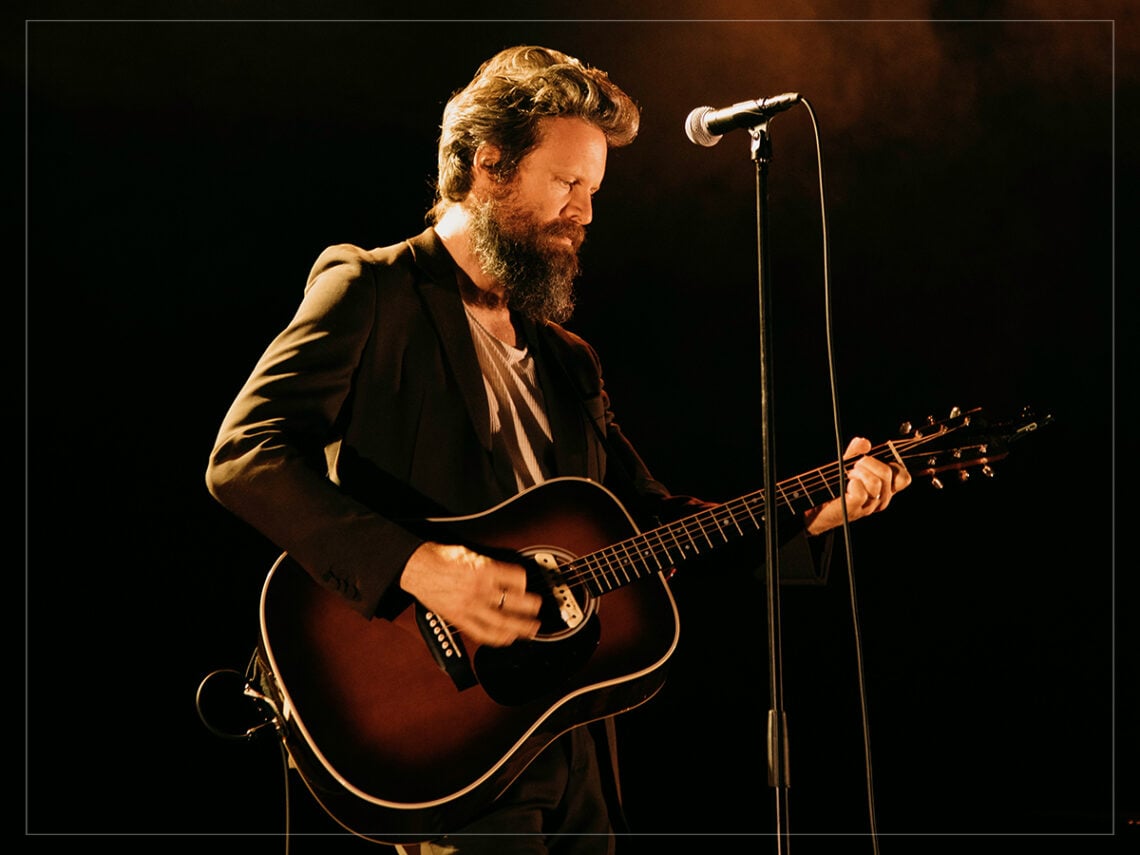
“Beautiful Irony”: When Father John Misty recorded ‘Everything Is Free’ at Spotify Studios

For every stream on Spotify, an artist gets somewhere between $0.003 to $0.005. The amount varies a little, depending on things like country and subscription levels. In 2024, they changed this, adding an extra rule that an artist has to reach a certain number of streams before they get any level of payout. But even for the biggest artists, it doesn’t amount to much when you really think about it. Take Father John Misty, and take his song ‘Chateau Lobby #4’, a truly beloved now indie-classic. As I’m writing this, the track has 85,113,267 streams. Since its release in 2014, Tillman has made around $340,453 from the song on the service. It’s a decent amount, but it doesn’t seem like enough.
Obviously, Tillman is more than aware of his privilege here. He is one of the lucky ones who has managed to truly make it big, making a living off his work and dedicating himself wholly and solely to his art. He has tours, merch, and physical music sales that can prop up his income. A quick Google suggests his average booking fees sit somewhere between $75,000 and $149,999, so the artist is doing well for himself.
But really, that makes no difference when it comes to the wider conversation of revenue injustice in music. And really, it makes him the perfect candidate to be speaking up about it, given his lucky position and the fact that he’s sorted and stable; he can risk more, he can speak louder, he can make a difference.
It’s always inspiring to see artists realise that. Taylor Swift became a prime example in 2014, removing her music from free music streaming platforms due to their near non-existent payouts for small artists and publicly speaking out against Apple Music for not offering royalties to artists during the free three-month trial period it offered customers. When she threatened to take her music off the platform, too, they changed their rules. With her power, she made a difference and got artists paid.
Father John Misty didn’t go that far. He’s big, but he’s not Taylor Swift big, so definitely not publicly boycotting streaming services big. But when he stepped into Spotify’s studio to record a cover for them, he still made a statement.
“Everything is free now / That’s what they say / Everything I ever done / Gonna give it away”, he sang in 2018, covering ‘Everything Is Free’, a track written by Gillian Welch in 2001. “It was when Napster was starting to decimate the traditional recording industry dynamic, the viability of making your livelihood [from] your art,” Welch said of the song to Rolling Stone, able to recall exactly the context of its creation. Written on the brink of a new age in the industry, Welch saw a collapse coming, and since then, several artists have covered it from within the impact of that destruction.
Welch’s song is about streaming services. It is specifically about the way that they have cheapened art by offering it out to the masses for free, making it easily accessible and in turn making it easier for the industry to cheapen artists too, seeing their lives’ work as something to pay $0.004 for, rather than something to respect both monetarily and culturally.
“They figured it out / That we’re gonna do it anyway / Even if it doesn’t pay”, sits as a central lyric, capturing how the industry exploits the creative drive of artists and the desire to make art regardless, using their passion as an excuse to not pay them.
Once again, obviously, Father John Misty is getting paid. But as he was in the lucky position of getting invited into Spotify, being allowed to use their studio to record a new version of ‘Mr Tillman’, as well as a cover, he chose to sing Welch’s words in protest for other artists, drawing attention to the fact that her worries in 2001 are only proving truer with time. Sure, his work might not be free anymore, but when he was a new artist, it would have been; he would have struggled like anyone else, so he now uses his platform to speak up for them. And he used Welch’s articulate words to say it perfectly.
The kicker, though, is where it is said, and that’s what Welch loved about this cover, too. “It’s mostly a retired song, so I was always very moved when people would be brave enough to holler for it at my shows, this quiet little threatening song,” she said as she’d essentially left the track behind. But as the years went on, she heard more and more artists singing it for her, including Courtney Barnett, Phoebe Bridgers and Conor Oberst, and then, as she put it, “the real capper was when Father John Misty played it with beautiful irony at a Spotify Session”.
To get Spotify, a major culprit behind the issues that this song addresses, to put out and publicly promote the track, Tillman demanded a display of total hypocrisy from them. He essentially demanded embarrassment from them and made them cough up those cents.
