


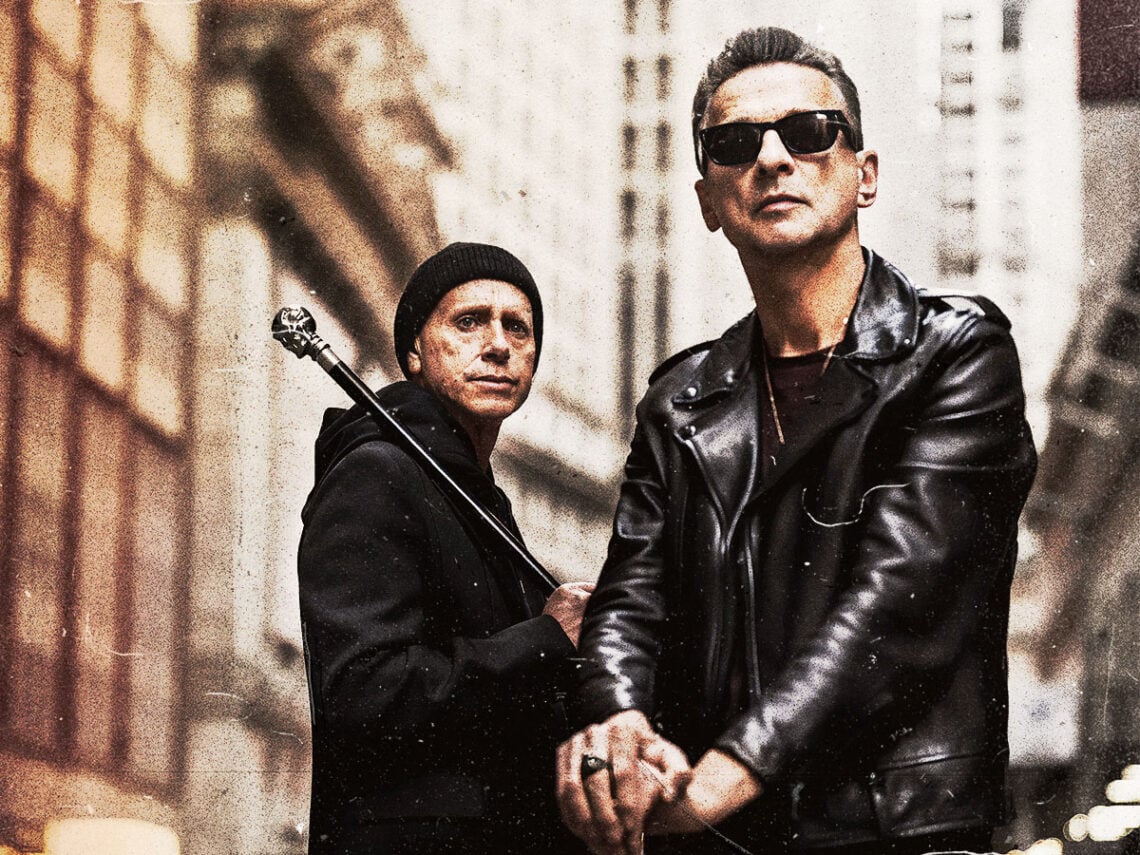
When Depeche Mode nearly triggered a riot in Los Angeles

Nobody was expecting Depeche Mode to reach the stratospheric pop heights they’d won by the end of the 1980s.
Speak & Spell’s a fine debut, but polyphonic peers The Human League, Heaven 17, Soft Cell, and Orchestral Manoeuvres in the Dark all boasted infinitely more essential albums across the UK’s synthpop peak of 1981. As the electronic takeover of the charts swiftly waned and brought its pioneers to either disbandment or creative dead ends, Depeche Mode soldiered through all the odds, even after losing their ‘Just Can’t Get Enough’ hitmaker Vince Clarke in the process.
But on they went. With the nurturing help of Mute Records and dark horse Martin Gore stepping up to songwriter duties, each following record would take bolder, creative steps into European industrial and the surrounding alternative darkwave, ready to crack America while synthpop was seen as ancient history. Music for the Masses would dominate MTV, and its tour would push Depeche Mode to veritable superstardom.
Naturally, such pop conquest brought with it fan hysteria. Depeche Mode were flying high off the mammoth success of ‘Personal Jesus’ and ‘Enjoy the Silence’, and US distributor Sire Records sought to pull out all the stops for Violator’s launch. Released on March 19th, 1990, Los Angeles radio station KROQ-FM organised a meet-and-greet at La Cienega Boulevard’s Wherehouse record and video store the following day with the album hot off the press. The plan was for Gore, Dave Gahan, Alan Wilder, and Andy Fletcher to be open for business at 9pm, offering signatures and signing merchandise til midnight for the queue of fans outside.
The numbers were vastly underestimated. Despite heavy promo from KROQ-FM, the rumours surrounding 10,000 attendees heading to the Wherehouse location were dismissed, no less than Gore, who called in to the local TV show Request Video to set expectations on the crowd volume anticipated. With the press having congregated throughout the day, by 8pm, several thousand fans had already thronged to the store, a dedicated few having set up camp the night before. Once the band had arrived by limousine, ready for 9pm, LAPD reports had informed the Depeche Mode team that there were as many as 17,000 eager fans clamouring outside across 15 blocks.
It didn’t take long for chaos to ensue. As the numbers rose, so too did the realisation that not everybody was going to be able to meet their beloved Mode. Anxieties were unwittingly fuelled by the mass local coverage of the increasingly unwieldy crowd size, prompting some to begin rushing the queue and fighting their way to the Wherehouse doors. The shop staff had to nearly barricade the entrance, and even the team of security were struggling to manage the growing mania. By 10:15pm, the LAPD put a stop to the event for everyone’s safety, escorting Depeche Mode out of the building through a backroom, then making an announcement to the crowd that there would be no more signings.
Such news only inflamed the fury in the air. Before long, a few drunks started throwing rocks and bottles from the top of the car park above, and other fans reportedly were jumping from the tops of individual news vans, breaking car windows, and indulging in general vandalism. Despite no arrests, it took a linked-arm bulwark of around 100 police officers in full riot gear, plus helicopter surveillance above, to take control of the streets after two hours of chaos.
Sire, Wherehouse, and KROQ-FM were all anxious that they’d be legally and financially liable, the City of Los Angeles allegedly demanding someone cough up as much as $30,000 dollars for the emergency services, police time, and clean-up operation. As an apology, Sire issued a limited edition promotional cassette for the LA area, featuring interviews of the day, an exclusive remix of ‘Something to Do’, and a photograph by regular Depeche Mode art director and music video man Anton Corbijn for its cover.
In a press conference not long after, Depeche Mode were keen to downplay the incident, Gahan leaning into Wilder’s ear as he’s making a statement and prompting a quip to the day’s football violence back home in the UK, “Chelsea on a Saturday afternoon – now that’s a riot.”
