


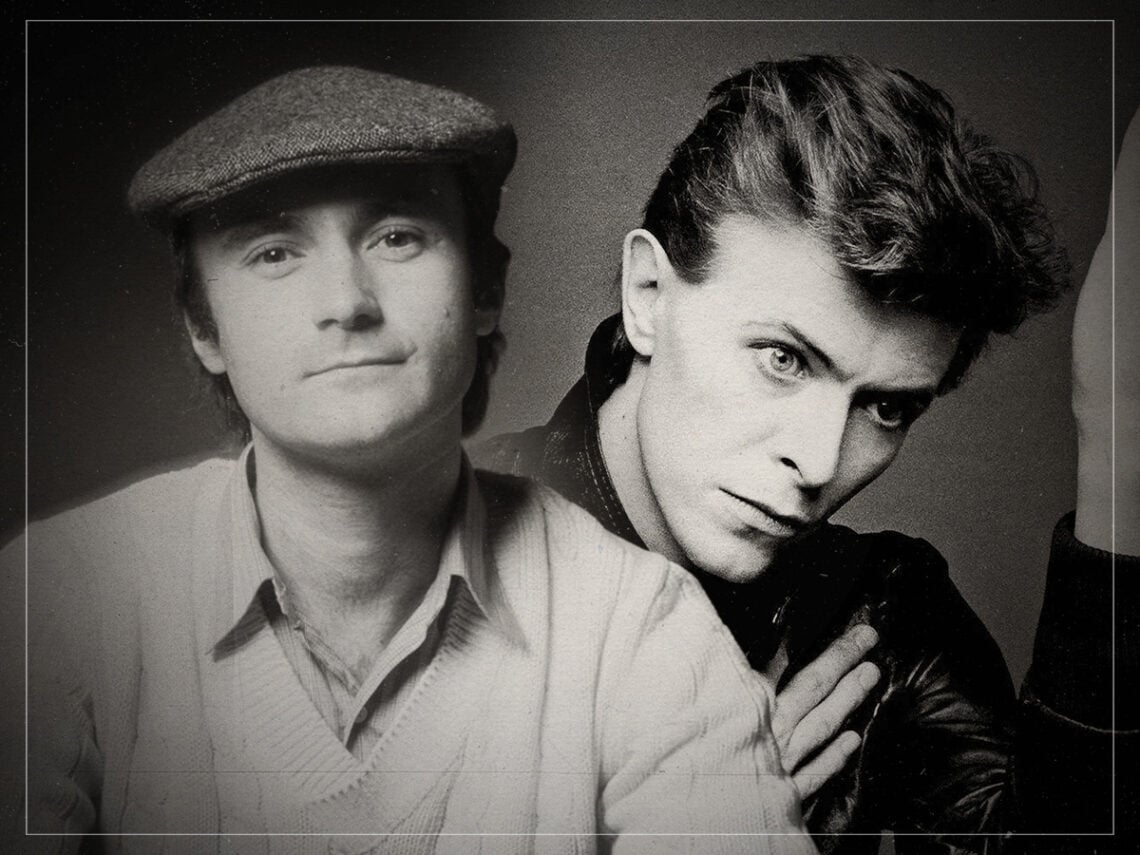
When David Bowie started appealing to Phil Collins fans, he knew he had to change

The entire career of David Bowie was built on a philosophy of constant change and evolution, and for him to stay in one lane for too long ultimately meant accepting a period of stagnation.
When folk-pop whimsy was no longer serving him well by the end of the 1960s, he pivoted into his glam era. When that well dried up, he had a brief flirtation with blue-eyed soul. When this reached its logical conclusion, he was ready to move on to exploratory art rock that pushed boundaries with its avant-garde leanings. When the world was ready to hear something different from Bowie, he would always oblige, but not necessarily in the way that many expected him to.
After the ‘Berlin trilogy’ of Low, Heroes and Lodger, potentially adding Scary Monsters (and Super Creeps) as a coda at the end of this fruitful period, Bowie was evidently at the peak of his creative powers once more, but commercial growth wasn’t necessarily treating him with the same level of kindness. Songs like ‘Heroes’, despite being regarded as a classic in modern times, failed to even reach the top 10 in the singles chart in the UK, and it wasn’t until ‘Ashes to Ashes’ in 1980 that he’d find himself at the top of the charts in his home country.
The trouble is, the urge to create something with mass appeal can often distract you from following your creative instincts, and while ‘Under Pressure’, his collaborative single with Queen, helped him reach number one for a second time in as many years, it was arguably one of the safest singles he’d ever released up to this point in his career.
Only a few years later, he would score a third chart-topping single with ‘Let’s Dance’, with the album of the same name becoming his best-selling LP to date. On the surface of things, there’s little wrong with the track if you consider it as being another example of Bowie testing the waters with other genres and diverting his attention to disco and funk, but those who had been fans of his for much longer knew that he was capable of pushing boundaries further.
Dissatisfied with how he was entering a creative drought as a direct cost of commercial success, he knew that he had to make some sort of change to his approach. His recruitment of American rock improviser Reeves Gabrels was one change that he made to his live and studio setup that seemed to indicate he was willing to shake things up, and both of them were willing to admit that this meeting of minds triggered a dramatic change.
“He knew that it had gone wrong after Let’s Dance,” Gabrels would later confess when discussing his initial meeting with Bowie. Knowing that it would partially become his job to help Bowie out of this situation, where he had released a string of albums that weren’t creatively satisfying for him, he suggested a revolutionary change in tack.

“I was something I never wanted to be,” Bowie reflected in a 1997 interview with Q Magazine. “I was a well-accepted artist. I had started appealing to people who bought Phil Collins albums. I like Phil Collins as a bloke, believe me, but he’s not on my turntable 24 hours a day. I suddenly didn’t know my audience and, worse, I didn’t care about them.”
While this damning indication that he didn’t want to transform into the same artist that Collins had become, Bowie and Gabrels ended up making a brave move to form Tin Machine, a hard rock band that released two self-titled albums in 1989 and 1991. To say that this transition went well would be false, considering how flat these albums fell upon release and how derided they remain as oddities in Bowie’s catalogue, but had he managed to shake off the Collins fans in his audience? You bet he had. He’d practically shaken everyone off and needed to return to the drawing board.
