


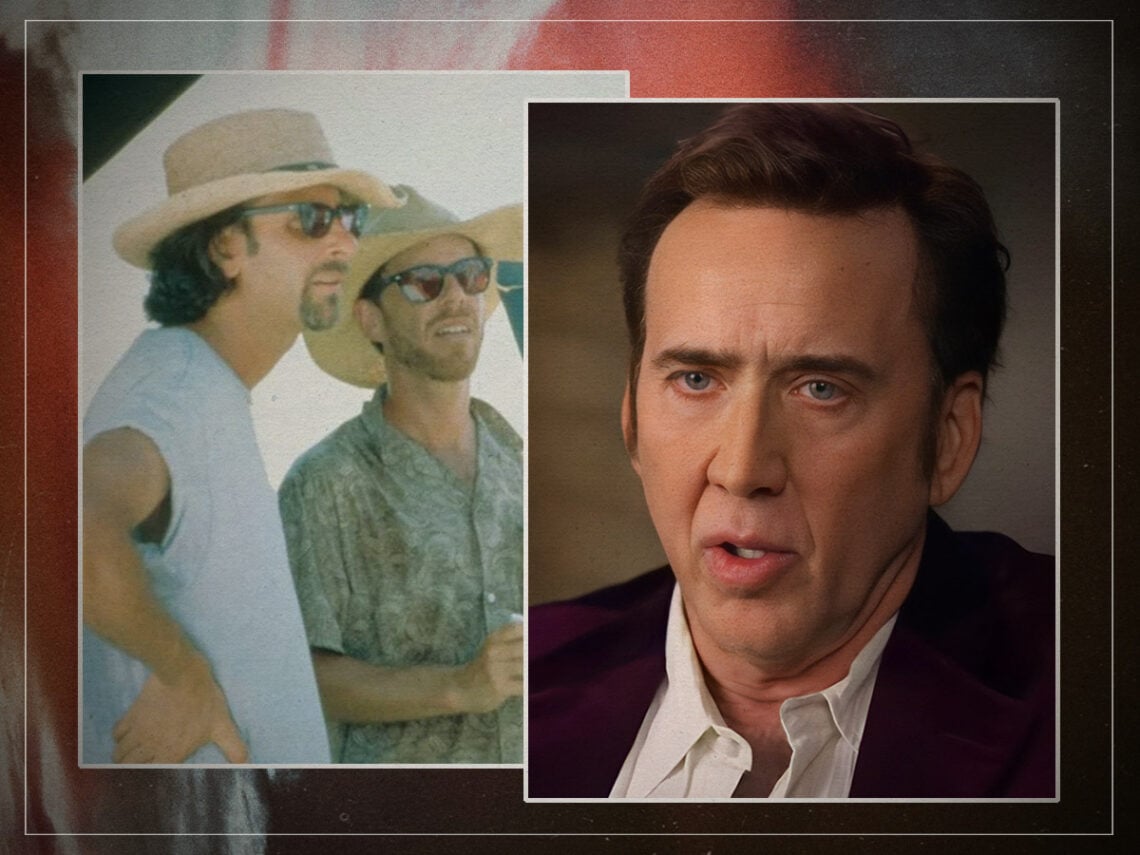
When the Coen brothers and Nicolas Cage clashed on-set: “They have an autocratic nature”

In 1987, actor Sam McMurray worked with the Coen brothers on their second film, Raising Arizona. At this point, the brothers’ directorial style hadn’t become crystallised yet in the minds of their cast and crew, so when McMurray got the chance, he improvised a line in a rehearsal. He’d made similar additions on many other productions, but when Ethan told him in no uncertain terms to never do it again, he understood that the Coens were a different kettle of fish than most directors. Unfortunately for lead actor Nicolas Cage, he also soon fell afoul of the Coens’ dictatorial approach to filmmaking.
By the time Cage was cast as the cartoonish Hi ‘Hi’ McDunnough in the Coens’ loony kidnapping caper, he’d already begun developing a reputation as one of Hollywood’s most experimental young talents. In films like Birdy, Valley Girl, and most notably Peggy Sue Got Married, Cage had been given leeway by his directors to follow his muse. This led to him pulling from wild and wacky inspirations for his characters, who had wild hair, spoke in bizarre voices, and sometimes even resembled cartoon characters given life.
Not everyone was on board with Cage’s approach. In fact, it drove his Peggy Sue co-star Kathleen Turner nuts. But, given how the Coen brothers envisioned Raising Arizona as the live-action equivalent of a Looney Tunes animation, casting Cage in the lead role seemed to make perfect sense. The problems came when Cage mistakenly tried to work his ideas and improvisations into scenes the Coens had meticulously crafted in their script. You see, letting actors say and do things that aren’t in the script is a big no-no for the brothers.
In a 2022 oral history of the movies, editor Michael Miller noted, “It’s a funny thing to say about these two very easygoing guys, but they never compromise. ‘This is our movie, take it or leave it.'” McMurray came up against this staunch refusal to deviate from their vision when he made that ill-advised improvisation in rehearsals on the spur of the moment. He distinctly remembered Ethan saying, “We’re going to keep it. But never do that again.” Having said that, it did allow him to brag, “I have the only improvised line in the movie.”
While it mightn’t have seemed like it at the time, there’s every chance that McMurray caught the Coens on a good day. Perhaps they decided his one contribution would be their only compromise, because every time Cage tried to throw in his two cents, he was knocked back. Indeed, it was reported that Cage regularly arrived on set with ideas for his character, but each and every one was respectfully turned down by the Coens.
Miller revealed an example of Cage’s frustrated ambitions. He suggested that the ex-con McDunnough could be comically pressed for time in every scene, manifesting in his nervously checking his watch at every turn. To his disappointment, though, the Coens “mentioned it as something they didn’t want in the film, and it didn’t make the cut.” They argued, “If a character on screen starts checking his watch, everyone in the audience is going to start checking their watch.”
Ultimately, Raising Arizona was one of the Coens’ best movies, and they directed Cage to one of his most memorable performances. However, the constant clash between their working styles wasn’t pleasant for either party, and it’s not particularly surprising that Cage didn’t become a regular member of their acting troupe. In fact, he never worked with them again, and once mused, “Joel and Ethan have a very strong vision, and I’ve learned how difficult it is to accept another artist’s vision. They have an autocratic nature.”
