


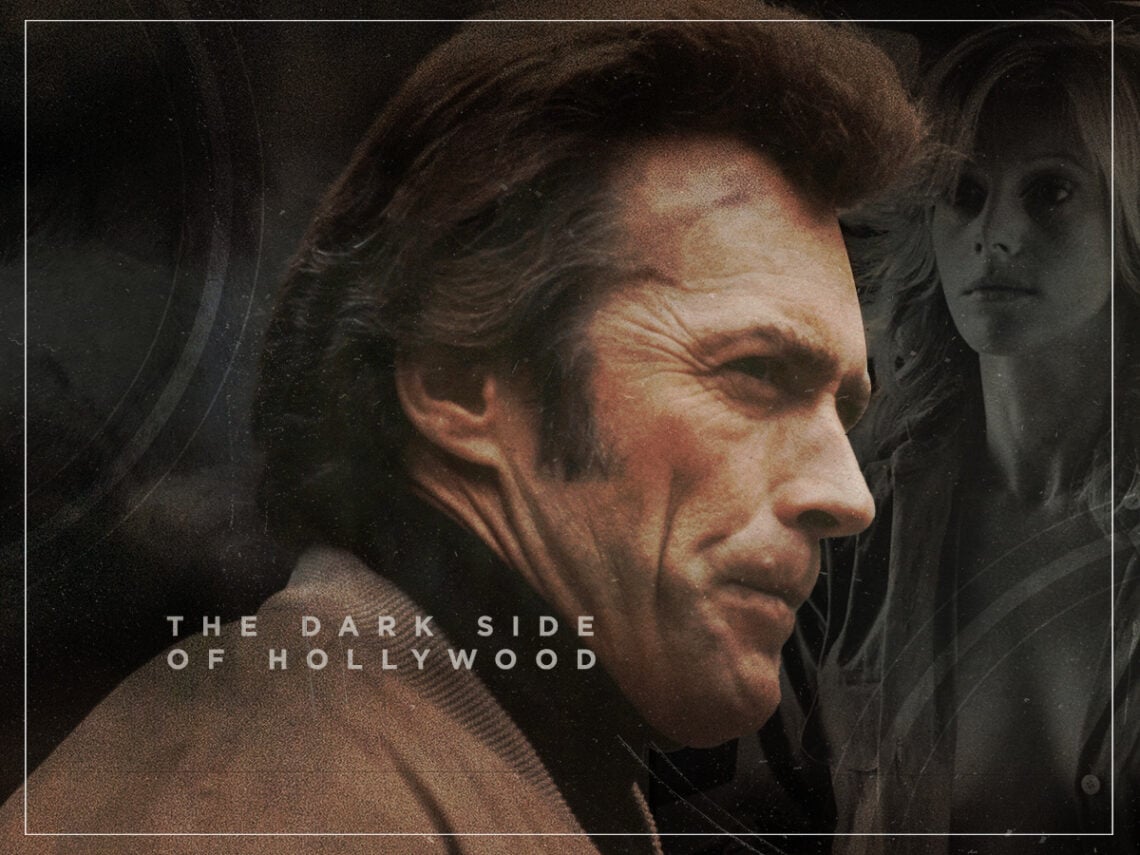
The Dark Side of Hollywood: Did Clint Eastwood conspire with a studio to ruin his ex’s career?

Clint Eastwood will always be known as the ‘Man with No Name’ and the most successful movie star-turned-director in Hollywood history, but in the middle of his career, he was embroiled in a legal battle that not only became tabloid fodder but revealed unsavoury details about his notoriously busy personal life that cast him in a not-so-chivalrous light. In the process, it was not his reputation that was destroyed but the reputation of the woman who accused him of conspiring to ruin her career.
Sondra Locke met Eastwood in 1972 when she auditioned for a role in his film Breezy. She lost the part, but the two struck up an affair when she was cast as his love interest in the 1976 western The Outlaw Josie Wales. Eastwood was married at the time and had two children, but when the film finished shooting, he invited Locke to move to Carmel, California, where the actor lived with his family so that they could be together. Eastwood quickly consumed her life, allegedly suggesting that she use his agent instead of her own and insisting that she only make movies with him so they would never be separated.
This latter demand was the first nail in the coffin of Locke’s career. She was a rising star when they worked together on Josie Wales, but when her future screen credits were limited to Eastwood movies, the perception was that she only managed to score them because she was his mistress. On the contrary, being his mistress was the only reason she couldn’t secure other roles.
Eastwood bought two houses for Locke, one for them to live in together and one for her husband, Gordon Anderson, who was openly gay and had shared a platonic relationship with the actor since they were children. Locke later explained that the house Eastwood bought her had been a consolation prize for one of the darkest parts of their relationship. She had two abortions during their 15-year relationship, both of which she claimed he initiated. According to Locke, Eastwood hadn’t approved of any form of birth control, at least until he suggested that she get her tubes tied. The house, she decided, would be her child.
The couple starred together in several movies throughout the late 1970s and early ’80s, including The Gauntlet, Every Which Way but Loose, Bronco Billy, Any Which Way You Can, and Sudden Impact. But Locke had aspirations beyond Eastwood and even beyond acting. In fact, Sudden Impact had initially been her project, which she had intended to direct without his involvement, but he bought the material for himself, hired a new writer, and turned it into a Dirty Harry movie.

Two years later, Eastwood was more accommodating, securing a deal with Warner Bros for her to direct 1986’s Ratboy. But she soon discovered that his patronage had a catch. Eastwood took control of the film, dictating casting and even overseeing the editing process. Locke would later point to the movie as the beginning of the end of their relationship. Her second feature, though, proved much more appealing to US critics. Impulse starred Theresa Russell as a police officer who goes undercover as a sex worker. It received mixed reviews, but Roger Ebert and Gene Siskel were effusive in their praise, particularly regarding Locke’s direction.
In the middle of the shoot, her relationship with Eastwood broke down. He reportedly changed the locks on the home he’d purchased for her and moved all of her things into Gordon’s home. Devastated, Locke sued Eastwood for palimony to ensure that she could keep the house. During the deposition for the case, he fought back, referring to her as a “part-time roommate”, per Eastwood’s biographer Marc Eliot. Eastwood acknowledged that he had tapped her phone but claimed it was because he had fallen prey to a stalker. A judge determined that she had no right to remain in the home.
Locke continued her legal fight for 19 months despite contracting and undergoing treatment for breast cancer. Finally, in 1990, they agreed on a settlement in which Eastwood would set up a three-year, $1.5 million deal for her at Warner Bros in which she would be able to develop and direct her own projects. It seemed like the perfect solution. During the next three years, however, the studio rejected all 30 projects Locke proposed, including one which already had Arnold Schwarzenegger locked down as the star. They wouldn’t even let her direct any of the films they had already developed within the studio.
Locke, feeling disillusioned, hired a new agent who helped her do some sleuthing. Two years later, she filed an explosive lawsuit in which she claimed that Eastwood had laundered his own money through the budget of the 1992 film Unforgiven in order to pay her the $1.5 million. In a 1995 lawsuit for fraud and breach of fiduciary duty, Locke’s lawyer accused Eastwood of committing “the ultimate betrayal” by contriving a fake deal with Warner Bros. that was meant to prevent her from working.
In 1996, E News reported that, according to one of the jurors in the trial, the jury had sided with Locke 10-to-2 (nine votes were required for a verdict) and were only debating how much to award her in damages. Before they could finish deliberating, however, Locke and Eastwood agreed to an undisclosed settlement.
“If you look at [Locke’s lawsuits], money was the issue,” Eastwood told The Independent in 1997. “Somebody can make up stories and put on an act and play the victim. Are they victims, or are they volunteers? Some people feel that the world owes them a living.”
When Locke died of bone cancer in 2018, she hadn’t directed a film in over 20 years. Her death didn’t reach the press for over a month, and she did not appear in the ‘In Memorium’ segment at the Oscars. Eastwood, who was promoting his film The Mule when her death reached the media, never mentioned her publicly.
In fact, most of the details that we have about their relationship comes from contemporaneous reporting, Locke’s memoir, and Eastwood’s biographers, because Eastwood himself has carefully removed her from his history. In his 1997 documentary, Eastwood on Eastwood, a supposedly candid peek into his life and career, she is never mentioned, even though their trial had only wrapped up the year before. Since he began describing her as a “part-time roommate” in the 1980s, he has all but erased her from his story.

Never Miss A Tale
The Far Out Clint Eastwood Newsletter
All the latest stories about Clint Eastwood from the independent voice of culture.
Straight to your inbox.