


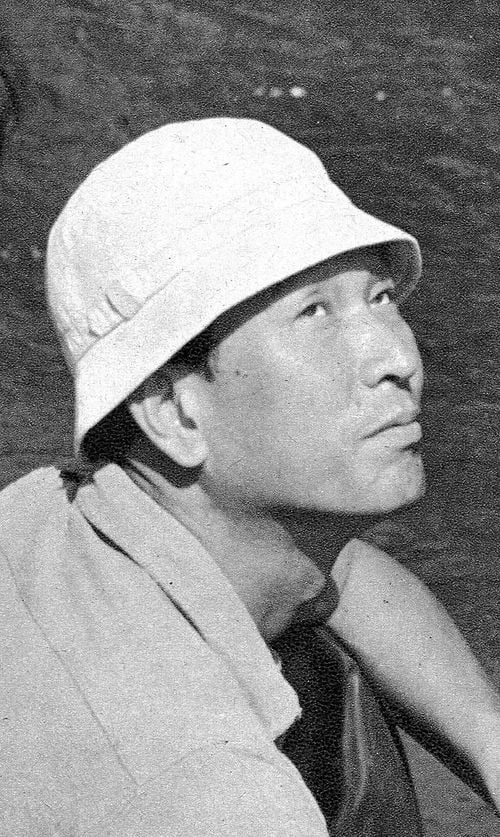
When Akira Kurosawa explained his Samurai lineage

A trailblazer in filmmaking and regarded as one of its most important contributors, Akira Kurosawa was a Japanese filmmaker who experienced a five-decade career in which he created 30 defining films. These include the artistic epic Ran and drama Ikiru, as well as other features that exhibit the filmmaker’s bold, dynamic style alongside exacting themes of mentorship and spiritualism. However, perhaps his most notorious movie was the 1954 picture Seven Samurai, a film which explored an area of Japanese heritage that the filmmaker had a familial connection with.
The director appeared on The Dick Cavett Show on Thursday, October 22nd, 1981, with an interpreter to discuss his heritage and the impact Western culture, which he discovered through reading books, the only source of entertainment for children of the time, had on his films. He also expressed his love for John Fonda movies, a director he admired as “Just as they have exceptional works, they were also very distinguished in character”. They could “express human problems in a natural way.” The filmmaker shares how he dreamed of meeting John Wayne but never got the chance to.
One thing Cavett is eager to discuss with Kurosawa is his heritage. The Kurosawas were descendants of a former samurai family from the Akita prefecture, located in the northern parts of Japan’s largest island Honshu. They could trace their lineage to the 11th-century warlord Abe no Sadato (1019-1062). When the host asks the filmmaker for details of his lineage, Kurosawa shares: “When I was a child, my father still had the top knot”, specifying the trademark hairstyle the noble military members kept.
From this, Cavett asks for contemporary context surrounding the director’s heritage, such as wondering if being of Samurai lineage provides any specific privileges or outcomes. The Ran director replies: “No, not today. Nothing”. However, he shares how this change has come about over time: “In the old days, a Samurai family used to have a special nameplate on the front gate, but now there’s no way of telling who is Samurai lineage and who isn’t”.
Kurosawa’s filmography employs Samurai imagery and ideals, most notably in his critically acclaimed Seven Samurai, released in 1954, which narrates a story set in 1586. In the epic drama, a desperate village of farmers hires seven Samurais to combat bandits who threaten to steal from the land. The film stars Takashi Shimura, Toshiro Mifune, Daisuke Katō, Isao Kimura, Minoru Chiaki, Seiji Miyaguchi and Yoshio Inaba as the seven samurais.
The BBC voted Kurosawa’s film in 2018 as the greatest foreign-language film of all time, regarded as monumentally impactful in films that followed through remakes and references. As usual with all his works, the director was an active contributor in all areas of the film’s creation, writing and editing the film in addition to directing and set design. “The quality of the set influences the quality of the actors’ performances,” the legendary director, who had a background in painting, explained. “For this reason, I have the sets made exactly like the real thing. It restricts the shooting but encourages that feeling of authenticity.”
Seven Samurai stands with Ran and Throne of Blood as upholders of Kurosawa’s legacy in film, helping his career remain honoured and studied critically.
