


‘When a Cowboy Trades His Spurs for Wings’: The Coen brothers’ most defining moment

More often than not, a new movie from the Coen brothers will unite film purists and casual movie lovers, with memories of the great Big Lebowski and No Country for Old Men helping to glue their iconic industry stature in place. Yet, the maverick directors sometimes slip through the cracks of public consciousness, with 2018’s Ballad of Buster Scruggs being a prime example, arriving on Netflix to little fanfare, where it remains to this day, shuffling its shoes in whistling winds of the old American west.
Certainly among the least respected works in the entire filmography of Hollywood’s most influential movie-making brothers, The Ballad of Buster Scruggs was devised over a number of decades, with the pair jotting down various short stories over the years that eventually found themselves into the Oscar-nominated anthology. The tale that ties it all together, however, is the titular Ballad of Buster Scruggs, a tale of fantastical folklore about a cocky gunslinger.
A singing, guitar-strumming cowboy clad in white, Scruggs, played by Coen regular Tim Blake Nelson, is equal parts loveable and insufferably arrogant, speaking to the viewer as an omniscient storyteller. Yet, this man is no cartoon character. Even if you became fond of his quick wit and sharp tongue, his intolerance of anyone even slightly confrontational leads to hasty violence, finishing off a bar full of drinkers with six clean shots and the toothy grin of a caricature.
“You killed my brother, you cowardly son of a bitch,” the family member of his following victim in subsequent bar screams as Scruggs sings and dances, celebrating his latest kill with a song and dance number with half of the town. It’s the perfect meeting of tragedy and absurdity that the Coens have built their filmography on for so long, with the colourful myth of the American Wild West clashing with the lawless reality of the late 19th century.
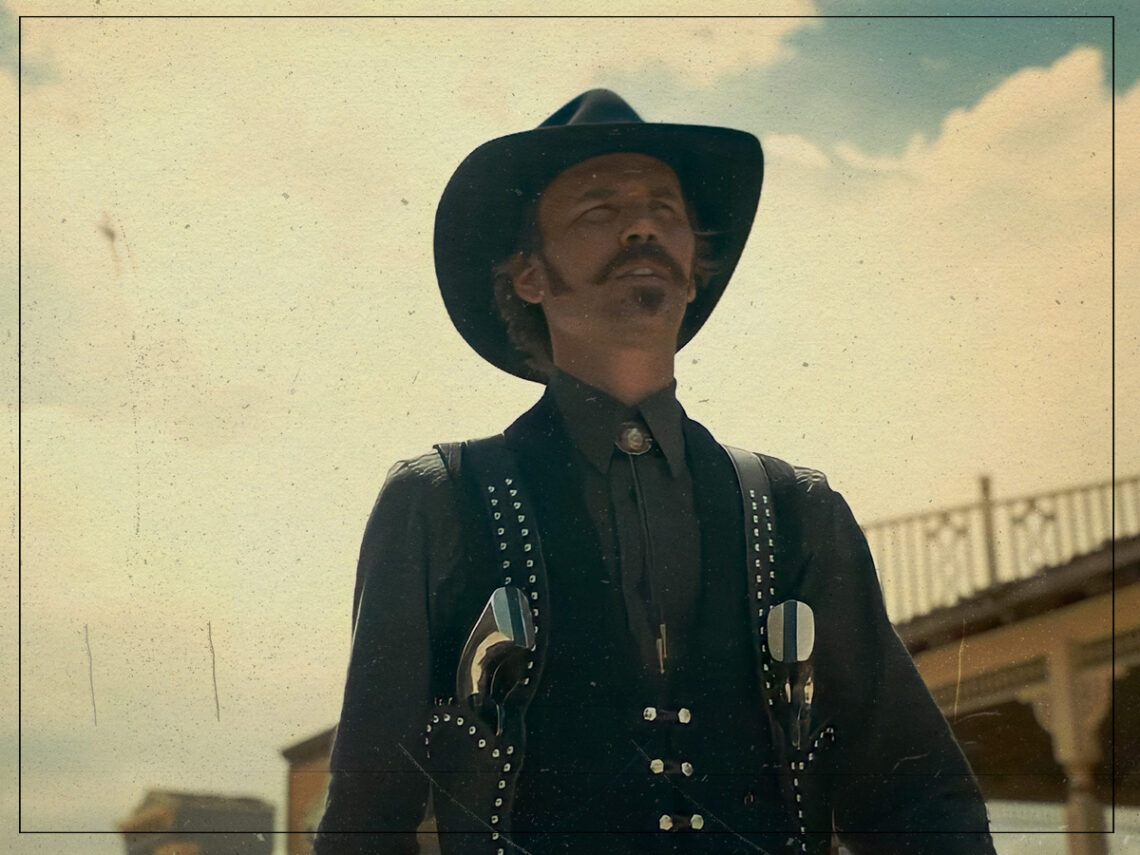
Yet, to the disappointment of but a few, Scruggs’ arrogance gets the better of him and, by the hand of a mysterious black-clad harmonica-blower, he hears his last gunshot, with the lead piercing through his pristine white hat, into his brain, and out the other side. Scruggs’ ballad might be over, but he leaves the viewer with just one more tune, one that speaks of his own passing to the land of the dead.
“Can’t be top dog forever,” he mutters as the narrator, looking down at his lukewarm corpse before he and his killer engage in a duet that manages to bottle all the mystery, mythos and sheer style of the western genre. The result is a profound and strangely moving tune that concerns itself with the “diming campfire” of life, with the Oscar-nominated song ‘When a Cowboy Trades His Spurs For Wings’ perfectly representing the characteristics of the Coen brothers’ style.
Regularly placing eccentric characters front and centre of their stories, whether it be Buster Scruggs himself or the titular Barton Fink from their 1991 classic, the Coen’s thrill in toying with their subjects before bringing reality to their doorstep, making the audience feel bad for ever thinking of them as anything other than merely ‘human’. Cheeky and very cine-literate, their films engage in a lighthearted form of nihilism, which suggests that nothing matters without drowning their audience with total cynicism.
Indeed, as Buster Scruggs rises up into the sky playing a tiny harp, he stoically awaits his arrival at the pearly gates, no longer radiating his arrogance. Surely, in his final words, even his past victims can share a smile and speck of sympathy, drawling: “There’s just got to be a place up ahead where men ain’t low down and poker’s played fair. If there weren’t, what are all the songs about? I’ll see y’all there, and we can sing together and shake our heads over all the meanness in the used to be.”
Buster Scruggs was human, after all.
