


‘Palo Alto’: When a bad movie changes your life

Everyone has that one life-changing discovery movie that sets their life on a completely different trajectory to the one that they’d be on if they hadn’t stumbled upon it, and for me, it’s one I don’t even consider to be all that good.
At about 13 or 14, I stumbled upon Gia Coppola’s 2013 Palo Alto on Netflix in the throes of increasingly finding myself obsessed with flicking through Tumblr pages featuring sad-looking teens and bruised knees, the sound of Lana Del Rey’s Ultraviolence soundtracking these scrolling sessions, sometimes lasting until the early hours. Palo Alto was the perfect film to satiate my craving to bring these images to life in front of my eyes, and thus I clicked on it, and soon I couldn’t stop going back to it.
To be honest, the first time I watched it, I felt like I was too naive to fully understand it all. I went to an all-girls school and had hardly any experience of parties, boys, and drinking (I’ll be honest with you, I was a few years into having a chronic illness; I really wasn’t getting out all that much), so the events of Palo Alto were so foreign to me, yet so captivating.
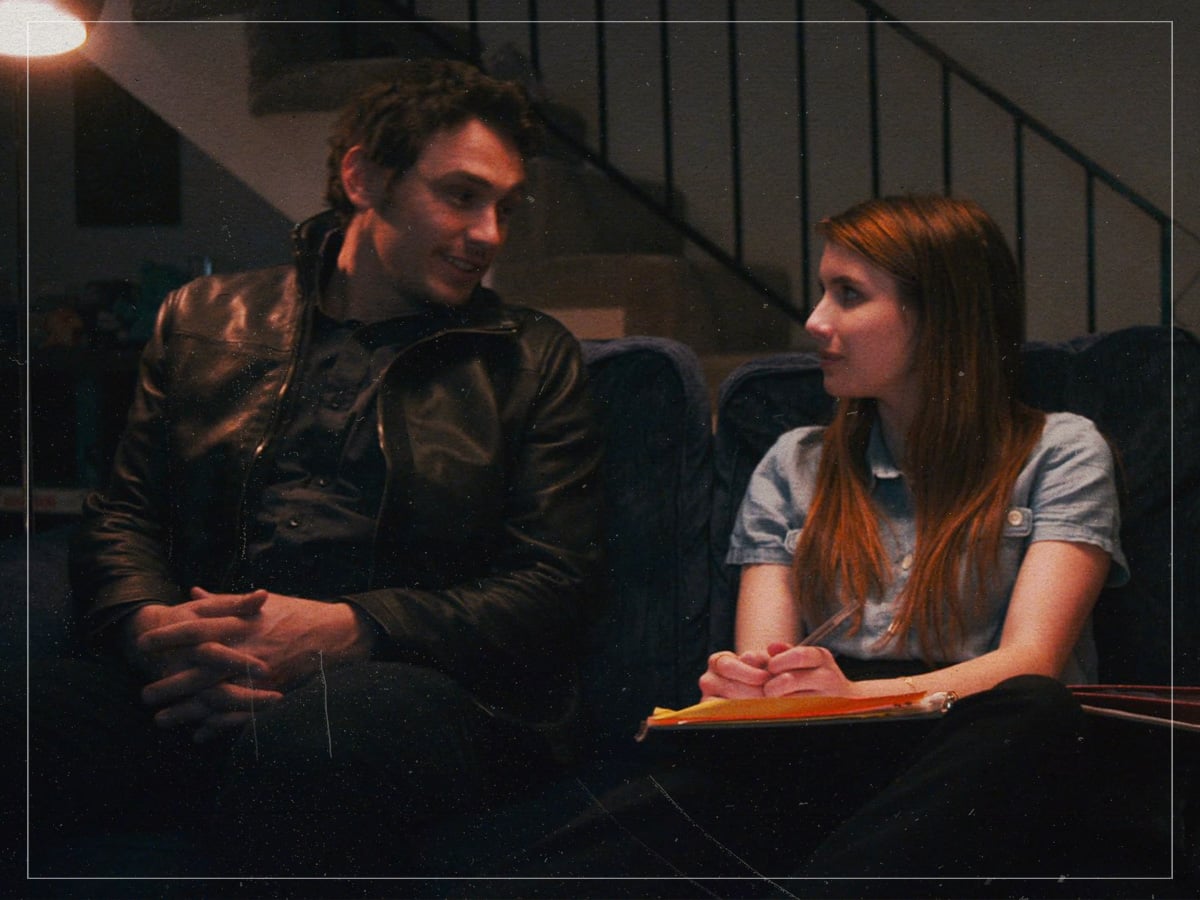
The film depicts the various exploits of a few Californian teenagers, primarily all played by nepo actors (the director is Francis Ford Coppola’s granddaughter and Sofia Coppola’s niece, after all). Emma Roberts starred as April, a fairly quiet high-schooler who begins babysitting for the gym teacher, played by James Franco, who soon takes advantage of her virginity, while Jack Kilmer, son of Val, is the artistically gifted Teddy who accidentally gets himself into trouble. His friend Fred, portrayed by Nat Wolff, is the ultimate bellend, and he treats the apparently promiscuous Emily like an object.
These intersecting stories present a troubled idea of adolescence, one where girls are taken advantage of, some boys are horrible, some are misunderstood, and violent outbursts and casual sex are incredibly common. It couldn’t have been more different from my own experience of being a teenager, me, a girl from an English village, them, disaffected teens in California, but I wanted to immerse myself in their horrible world, where every shot could’ve been screenshotted and uploaded to Tumblr.
The spilt pink milkshake on tarmac, April standing on her bed in front of a The Virgin Suicides poster, Teddy wearing Gummo-esque rabbit ears, April smoking on the football pitch, all these images are seared into my brain, even though, looking back, I can identify them as being slightly derivative and certainly driven by aesthetics over anything else.
Perhaps that’s why I so easily overlooked the pretty brutal moments of the story in favour of the atmosphere of the film, which was dreamily scored by Blood Orange genius Devonte Hynes. The soundtrack played on repeat in my earphones while I studied for school, the Blood Orange track ‘Champagne Coast’ went platinum in my bedroom, and of course, I would play Mac DeMarco’s ‘Ode to Viceroy’, taken from a party sequence in which they watch a horror movie in a haze of beer and smoke. I thought it was so cool.
When you’re that age, the drama of adolescence has this strange appeal; you don’t realise how shit it would be to actually experience many of the things explored in films like Palo Alto or the TV series Skins, another piece of media I was obsessed with. Instead, you get swept up by these hazy images, which present a life so distant from yours, you can’t help but wonder what it would be like if you lived like them, even just for a day.
The thing is, Palo Alto is full of clichés, and it meanders a lot, often lingering on images of Roberts staring out of a car window or partygoers getting fucked up. There’s not a whole lot of in-depth character development, and Fred is easily one of the most heinous characters ever presented in a teen film. Are we meant to feel sorry for him? Coppola tries to give him more depth, but it’s too late as his actions are irredeemable.
Despite the film lacking nuance and prioritising aesthetics, as a young teen, it changed my life. I can honestly say I’ve watched Palo Alto more than any other film, and even though it’s now been roughly six years since I last watched it when I was 18, I still hold it close. I know it’s not great, but it was, for better or for worse, a movie that resonated with me in some way or another, and showed me another world, even though it was a pretty terrible one.
When you’re young and you find a film to become obsessed with, it will play a part in shaping you in some way. Sometimes, something just clicks, a film just seems to understand a part of your brain, even if everyone else is slating it, but who cares? A bad or a bang average film has the potential to change your life sometimes, and that’s why cinema is pretty good at sneaking up on you when you least expect it.
