


What does Vince mean by a “palooka” in ‘Pulp Fiction’?

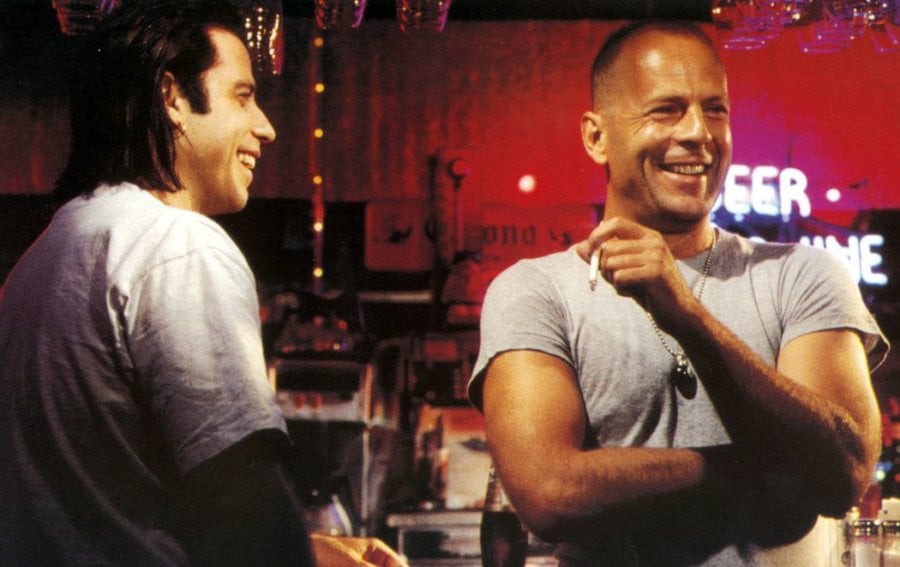
Picture the scene in your mind’s eye. John Travolta‘s hitman Vincent Vega sits at the bar in Sally Leroy’s nightclub in the middle of the day, sipping a cup of coffee. Bruce Willis’ down-on-his-luck boxer Butch Coolidge sidles up next to him and orders a pack of cigarettes. Vega simply stares at the bald pugilist while he drinks, and Coolidge notices. He says, “Lookin’ at somethin’, friend?” to which Vega spits, “I ain’t your friend, palooka.”
Coolidge is clearly offended by that remark and slowly turns to stare Vega down. “What was that?” he asks, but Vega simply adds, “I think ya heard me just fine, punchy.” It looks like something is about to kick off between the two men, but then Ving Rhames’ crime boss, Marsellus Wallace, interrupts them, and the potential confrontation is forgotten.
This, of course, is a scene from Quentin Tarantino’s seminal crime masterpiece Pulp Fiction. It’s easy for any viewer to see why there is tension between the men – Vega disrespects Coolidge and can’t be allowed to stand. However, what mightn’t be immediately obvious is how he disrespected him – and that’s because you mightn’t know what “palooka” means beyond it being some kind of insult.
According to the Merriam-Webster dictionary, though, no one quite knows the exact origin of “palooka” – let alone how it became an insult. There are theories, though.
So, why does “palooka” have an offensive meaning?
The first theory is that Variety sportswriter and baseball star Jack Conway first began using the term in the 1920s. Incidentally, it’s believed Conway can also be credited with coining “bimbo” and “baloney.” Either way, “palooka” was first seen in print in 1920, but it reached a new level of popularity in the ’30s thanks to the Joe Palooka comic strip. This strip ran in newspapers from 1930 to 1984, and at the height of its popularity, it appeared in an enormous 900 papers.
Cartoonist Ham Fisher first envisioned the character in 1921 when he encountered boxer Pete Latzo outside a pool hall and was immediately taken with his whole vibe. He told Collier’s magazine, “Here, made to order, was the comic strip character I had been looking for – a big, good-natured prize fighter who didn’t like to fight; a defender of little guys; a gentle knight. I ran back to the office, drew a set of strips and rushed to the newspaper syndicates.”
As this description would suggest, Joe Palooka was a heavyweight champion and a man of the people in the classic strip. This is why it’s so perplexing that the word “palooka” would somehow find itself attached to clumsy, inept fighters or those with little experience.
For the purposes of Vega’s insult, though, it should be noted that the word also holds a more damning connotation in some quarters. Over the years, “palooka” has been applied to boxers willing to be paid to throw a fight – and that is exactly what Coolidge is in Pulp Fiction. The struggling fighter agrees to take a cash payment from Wallace to take a dive in his next contest, and Vega clearly has no respect for him making a mockery of a sporting contest. Perhaps Vega’s scorn even helps convince Coolidge to find his self-respect again and double-cross Wallace by winning the fight.
So, there you have it – now you know what “palooka” means and why Coolidge would have been so upset by it. In the end, he could’ve taken that dive, but instead, he rejected a one-way ticket to Palookaville.

Never Miss A Take
The Far Out Quentin Tarantino Newsletter
All the latest Quentin Tarantino content from the independent voice of culture.
Straight to your inbox.