


What the hell was the ‘cartoon rave’ phenomenon?

The Prodigy is not widely remembered for making funny music, far from it in some cases, but they always had a sense of humour, dating all the way back to their first major single, 1991’s ‘Charly’, a track that unwittingly launched a brief but interesting little sub-genre known as ‘toytown techno’ or ‘cartoon rave’.
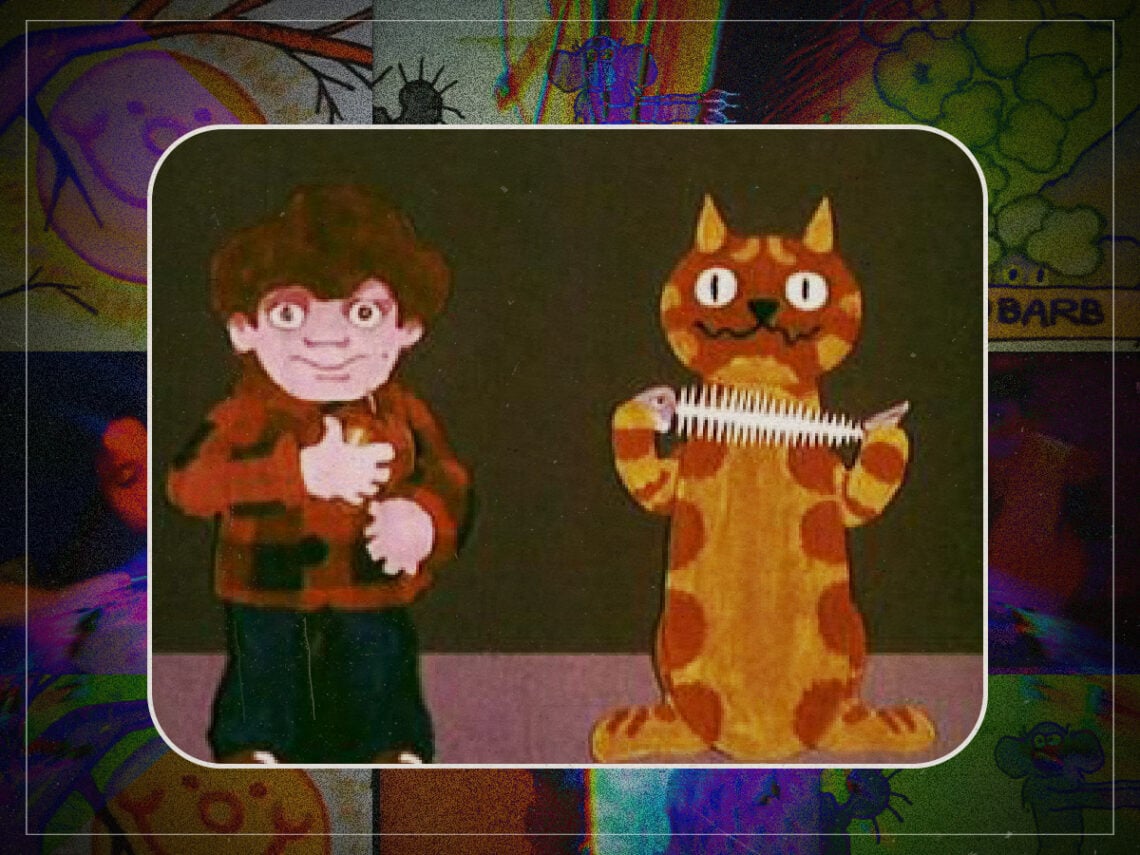
Both in its own time and 30 years later, ‘Charly’ is a bit of a polarising single in the Prodigy catalogue, primarily due to its prominent use of goofy samples from an animated 1970s child safety film series called Charley Says, featuring a boy and his cat. The innocent guidance from that educational short, “Charly says you should always tell your mummy before you go off somewhere”, was suddenly rattling off the walls of rave clubs, for better or worse.
Liam Howlett certainly took The Prodigy in another direction in the years that followed, but when he was asked about ‘Charly’ in 2004, he had nothing bad to say about it. “I stand by that record,” he told The Guardian, “It’s a fucking great tune. Whether or not it was comical, who gives a shit? It was the imitators afterwards that were the problem.”
Those imitators arrived fast, for after ‘Charly’ hit number three on the UK singles chart in September of ‘91, it inspired dozens of producers across the rave scene to dig through their own collections of old VHS and BetaMax tapes, looking for potential sampling gems. The legal ramifications certainly hadn’t been resolved, and The Prodigy would eventually be sued over their own unlicensed cartoon copying, but nonetheless, within months, hardcore techno and breakbeat tracks were suddenly stuffed with samples from kids’ TV, adverts, and novelty records, all blasted over euphoric pianos and breakneck beats.
One of the most notorious examples was Smart E’s ‘Sesame’s Treet’ in 1992, which repurposed the theme from Sesame Street into a full-on rave anthem that improbably went to number two in the UK. Around the same time, Urban Hype scored a number-one hit with ‘A Trip to Trumpton’, built on samples from the stop-motion children’s show Trumpton, Shaft reached the top ten with ‘Roobard & Custard’, using samples from the cartoon of the same name, and Mark Summers’ ‘Summer Magic’, which actually pre-dated ‘Charly’ by a minute, also came to be seen as part of the trend, thanks to its use of a sample from The Magic Roundabout.

“They weren’t records made by talentless people who got lucky,” former rave DJ Billy Daniel Bunter reflected to The Guardian in 2017, “They were made by really great producers and engineers. I didn’t play ‘Trip to Trumpton’, but the B-side, ‘I Feel the Heat’, became a seminal, hands-in-the-air rave classic.”
Within a few months, a backlash to the toytown scene did inevitably begin with underground ravers and dance music purists accusing cartoon rave of cheapening the culture just as it was gaining legitimacy. Critics complained that the scene had been hijacked by novelty records aimed at kids and chart success rather than sweaty warehouses and sound system culture, and even artists within the hardcore scene distanced themselves from the trend, worried that smiley faces and TV jingles would undo years of credibility-building.
As the serious producers course-corrected, the heyday of cartoon rave came to an end by the start of 1993; still, this unusual tangent in electronic music history wasn’t all bad. For a generation of younger listeners, it provided a gateway to, or a sneak preview of, what rave culture was all about, as the nature of these tracks brought them up from the underground into the daylight.
“It was a dream for Radio 1,” Bunter said, “At 3.30pm, you couldn’t play ‘Genaside II Narra Mine’, but you could play ‘Roobarb and Custard’”.
Cartoon rave had reinforced the idea that electronic music didn’t have to take itself seriously to be innovative or exciting. The plucking and warping of childhood nostalgia would also remain a revisited trope in the genre for years to come, from the work of EDM acts like Boards of Canada up through vaporwave’s obsession with lost media and hauntology.
It might not be a wildly celebrated moment in British music history, but cartoon rave was an early sign of the retromania that would soon take over popular culture; a stew made from ‘70s and ‘80s nostalgia that’s now a nostalgic bit of ‘90s lore.
