


What makes something “Kafkaesque”?

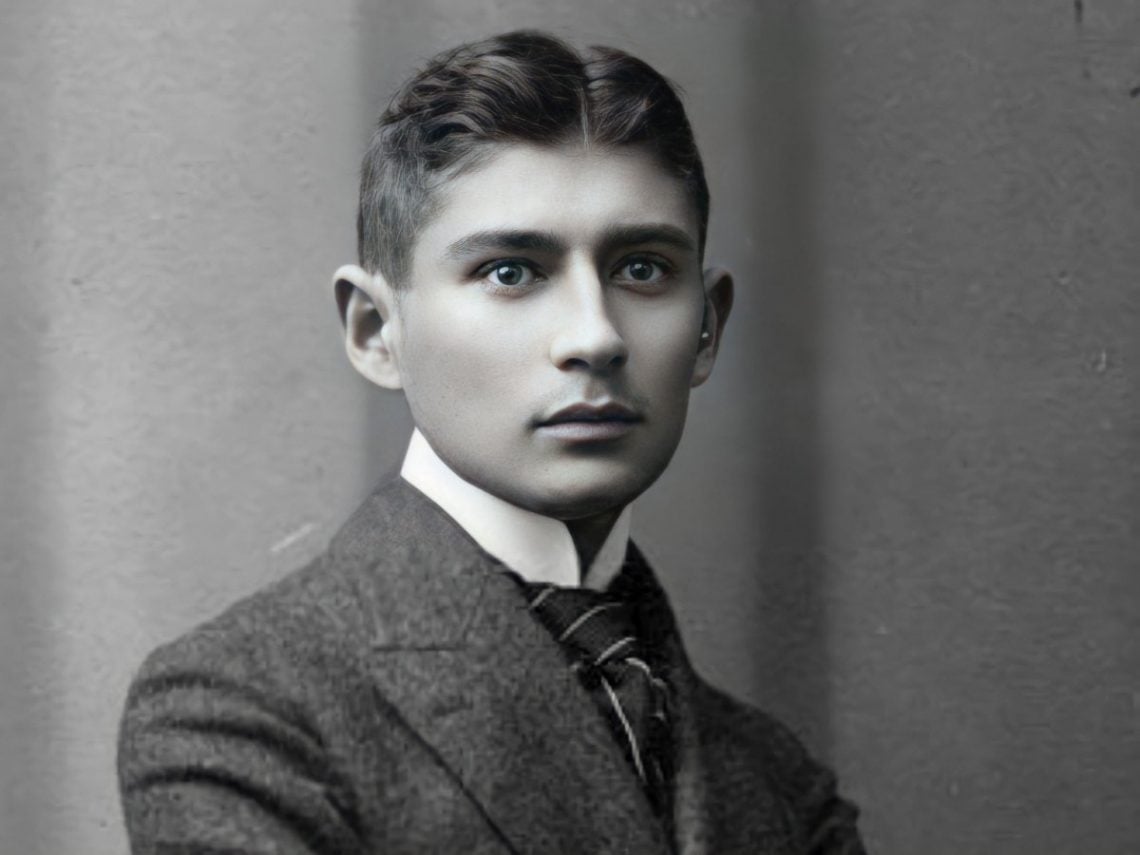
As far as the great European writers of the 20th century go, it’s hard to look beyond the stunning impact that Prague’s Franz Kafka made in the early part of the era, with reverberations of his work still being felt today. In fact, Kafka’s name often crops up in discussions of today’s literature, social criticism, and politics, particularly through the use of the term “Kafkaesque”.
But what exactly does it mean for something to be Kafkaesque? Well, to understand the term, we need to understand the broader themes of the author’s work. Best known for his novella The Metamorphosis and his novels The Trial and The Castle, few of Kafka’s works were published during his lifetime. When his friend and literary executor Max Brod refused to destroy his manuscripts upon his death and published the works, the world was introduced to one of the most important literary figures of the 1900s.
Much of Kafka’s writing is surreal and absurdist in its approach and frequently assumes the quality of a nightmare from which his characters can never awake. Thematically, Kafka’s stories detail alienation, existential dread, and bureaucratic oppression, and they focus on scenarios in which individuals are faced with a life with no escape from the just-mentioned.
For something to be Kafkaesque, these facets ought to be involved in one way or another. On one level, there must be a sense of absurdity present with a lack of logic that might aid a character in living their life with existential freedom. Gregor Samsa from The Metamorphosis, for example, wakes up one day to find he has turned into a giant bug, and without explaining why, Kafka posits that the things that oppress us most in life are those that defy explanation and reason.
Another facet of Kafkaesque is the oppressive quality of a bureaucratic society, as Josef K tragically discovers in The Trial. Dragged into an arbitrary court case without any glaringly obvious reason, Josef’s life is interrogated and scrutinised by a seemingly incompressible social bureaucratic institution, whereby the very process of the trial becomes the punishment for merely living. If a bureaucratic process is arbitrary and unnecessarily longwinded in our time, then it would be fair to refer to it as Kafkaesque.
The pervading feeling of dread, alienation and isolation that was not only evidently felt by Kafka during his life in the late 19th and early 20th centuries but also by many of us in the 21st is certainly Kafkaesque. Many of Kafka’s characters seem to be cut off from society or the world around them, which forces them down an ever-darkening hole of existential anxiety. Even within his family home, Gregor Samsa is isolated from his friends and family, while Josef and K from The Castle are both faced with situations that are so futile that they alienate them from their own lives.
Such examples are profoundly unsettling and are felt in full force in our contemporary society. The never-ending process of applying for a new job without ever being invited for an interview could be considered Kafkaesque, while even having a truly miserable day in which everything seems to go wrong could also be regarded Kafkaesque.
Of course, there is also an element of absurdist humour in the work of Kafka. These scenarios are beyond our ordinary comprehension, and sometimes, the only adequate response is to laugh at them, regardless of how frustrating they become.
In other media, there are certainly examples of Kafkaesque, too. In cinema, Alex Proyas’ Dark City, Terry Gilliam’s Brazil and the Coen Brothers’ Barton Fink are all Kafkaesque (or Kafkan) in their approach, while other authors that seem to be indebted to Kafka’s mood and tone include Thomas Pynchon and Haruki Murakami. Even some of the more existentially anxious songs of Radiohead, like those on Kid A, could be considered Kafkaesque.
To call something Kafkaesque is to highlight its absurd and oppressive qualities that invoke an uncanny and unsettling mood. 20th-century society onwards has often been defined by its living under bureaucracy and its overwhelming shared sense of alienation. To read Kafka is to experience a literary form of existential dread. Still, it opens our eyes to the many examples of Kafkan oppression that happen around us all the time.
