


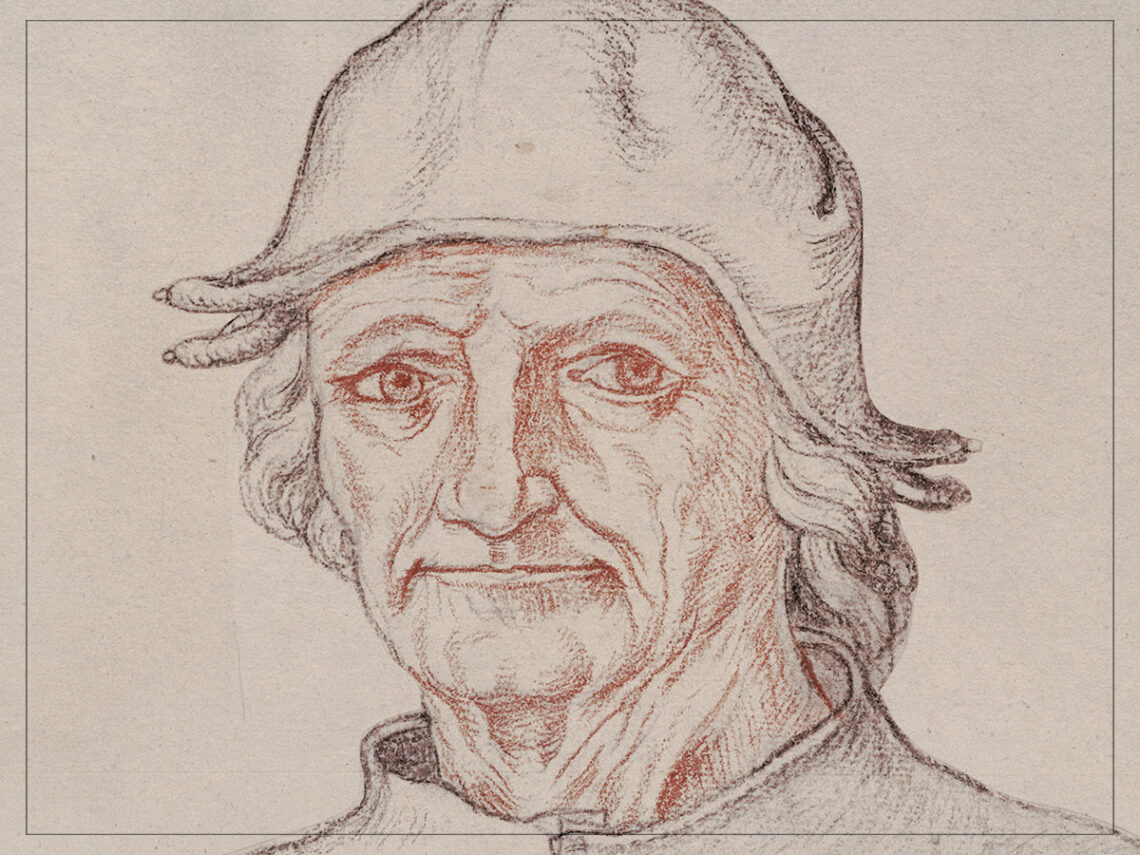
What makes the work of Hieronymus Bosch so surreal?

What makes a piece of art truly surreal? It should be an easy question to answer. Just throw something on the canvas/screen/stage that looks a bit weird, and that’s yer lot, right? Surrealism, in a nutshell, is if it doesn’t really make sense, you’ve done the job. However, as we can see from the work of Hieronymous Bosch, it really isn’t that simple though.
I’m sure we’ve all been there. Taken in something that fancies itself as boundary-pushing, dangerous and nightmarish, blissfully unaware that all they’ve done is rehash ‘The Mighty Boosh’ without really understanding it. It’s always tough to bear because deep down, we know genuine Surrealism when we see it, and we see it in Bosch’s work.
Even when the man wasn’t literally depicting hellscapes in his work, they looked like hellscapes. The fact that his works look genuinely distressing in the year 2025 is one thing; one can only imagine what they must have felt like to view when they were originally painted in the 1400s. So what about his work triggers that uncanny response in our brain? Hear me out, but I believe one of the key aspects making the work of the Dutch master so deeply surreal is how rooted in reality it is.
Now, I know how that sounds. This is a man who regularly depicts chaotic, fantastical, and, often, rather disturbing visions in his work. Writhing masses of humanity interact with vast landscapes that might be desolate and bleak in their emptiness or teeming with life, but mostly the kind that we can’t quite fathom as a viewer.
How exactly is the work of Hieronymous Bosch rooted in reality?
This makes the most sense when we talk about surrealism less as a general vibe but more as a movement with a clear artistic message. To take the work of Bosch into account is really engaging with a form of proto-surrealism, as the actual movement wouldn’t take shape as we know it until a good 400 years after his passing. However, I think there’s enough about his work that speaks to the same themes that justify it being considered that far ahead of its time.

As the movement’s ideological forebearer, André Breton, wrote in The Surrealist Manifesto, the movement’s intention was to “resolve the previously contradictory conditions of dream and reality into an absolute reality, a super-reality.”
Think of it this way. It makes sense that despite Bosch’s canvases acting as a window to something unfathomable, so much of what we’re looking at, even down to the way we’re looking at it, reflects a human way of perception. Take one of his countless masterpieces, The Garden of Earthly Delights.
The painting presents the viewer with a large, unfathomable and chaotic work of art, yet the perspective encloses the innate essence of humanity. The people in the painting express emotions that we understand. Even the setting is a green idyll with a blue sky above it—all things that anyone viewing the piece may come across in their daily lives.
Which is where things start falling apart. In a way that recalls dream logic, what truly distresses us about the painting is how much of it we can understand. There’s just enough there to make us believe we can find our footing, even subconsciously, before we see a mallard the size of a motorbike feeding a grown man a cherry, and everything falls apart again.
Even the imagery itself is rooted in fairly common religious beliefs of the time. As Walter S Gibson wrote in his paper, The Garden of Earthly Delights by Hieronymus Bosch: The Iconography of the Central Panel, “The various activities and forms in the garden allude to the doctrines and rites of the Adamites, which Franger… derived from such heterogeneous sources as the Orphic mysteries, Egyptian mythology and medieval alchemy… Bosch was himself a member of this heretical brotherhood.”
What we can understand here is that by viewing this painting half a millennium after its creation, we are not privy to many of its aspects that Bosch may be referencing with his imagery. Gibson states in his paper that the imagery showcased in Garden… is based around religious iconography that would have at least been familiar to the viewer of the time.
Just as showing Tracey Emin’s My Bed to a person from the 1500s would cause no end of confusion, looking at Bosch’s masterpiece now raises puzzling questions. MJ Dorian picked apart the symbolism of using a Kingfisher so prominently in the centre panel in a podcast episode discussing the painting in detail.
He said, “It is interesting to note that the Kingfisher is a bird known for one incredible talent…it hunts fish right out of the water. It waits in the trees and when it sees its moment, swoops down with intense speed, and pierces a fish with its beak, then flies back out and eats it.” He continues, “It’s interesting to note that Jesus’ symbol is the fish. So not only are these larger-than-life birds symbolising the sway of our animal impulses and the subservience of lustful man to nature, but also, in this case, the symbolic death of Christ, a theme which Bosch takes great care in foreshadowing in Panel One.”
Thus, we see that the true nature of the painting’s surrealist tone lies in the uncanny. There isn’t a hint of expressionism here, no distortion to depict how the painting is meant to feel, only a depiction of a perverted version of our world in a visual language we understand. With no emotional direction to guide the viewer, we are left to figure out the message of the piece ourselves.
This can be seen in his early work, too, with works like Adoration of the Magi being as clear and readable as any pre-Raphaelite piece in its depiction of the Wise Men visiting the newborn Christ. Bosch’s later works like Garden… and The Temptation of St Anthony merely apply that kind of clarity of idea to more terrifying and inhuman images.
Thus, true Surrealism comes from knowing just enough to realise how little we understand. There must be enough to understand just how lost we truly can get within a work of art, along with the different ways to see the same truths.
