


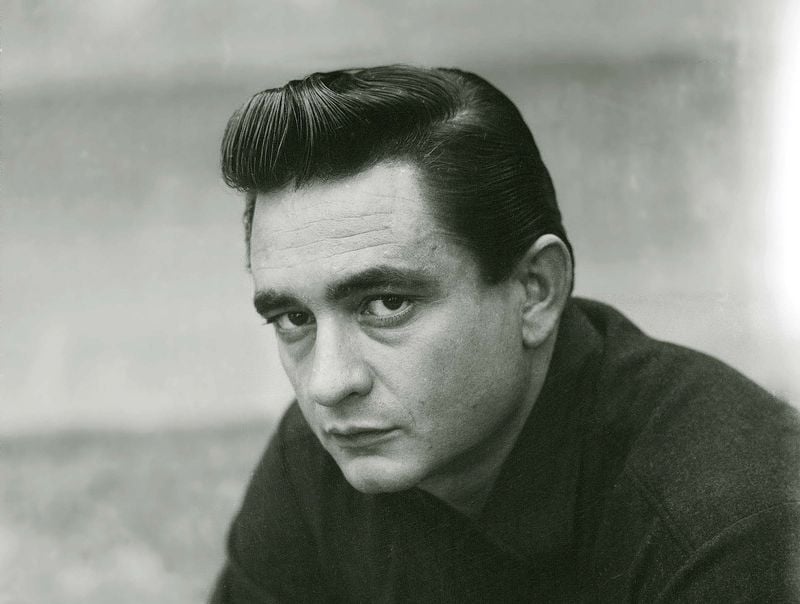
What Johnny Cash really thought of The Doors

Johnny Cash rose to prominence in the late 1950s as one of the eminent names on Sun Records’ country roster. His first recordings, ‘Hey Porter’ and ‘Cry! Cry! Cry!’, released in 1955, gave him leverage in the scene that he would capitalise upon with ‘I Walk the Line’, ‘Folsom Prison Blues’, and his 1957 debut album, With His Hot and Blue Guitar.
As a rising talent in the mid-west, Cash had the honour of joining the circuit with the likes of Elvis Presley, Carl Perkins, Jerry Lee Lewis and future wife June Carter. As the ‘Man in Black’ who pioneered prison gigs, Cash built up a reputation as an outlaw. This image was compounded by his hedonistic lifestyle of drug and alcohol abuse, which saw him arrested on a couple of occasions over the early 1960s.
An uneasy patch prevailed through most of the ‘60s, as Cash struggled with his failing marriage to first wife Vivian Liberto and his muse on the road, June Carter. By 1966, Cash had divorced Liberto, and in March 1968, he finally got remarried to Carter, who helped placate Cash’s inner outlaw.
Just two months after Cash’s second marriage, he found himself on tour in London, UK. During his stay, he was invited to review some of the records of May 1968 at the Melody Maker headquarters for their Blind Date series. At the time, the press was fuelling a ‘50s rock and roll revival, and labels were reissuing classic records by the likes of Buddy Holly and Little Richard.
The first record Cash reviewed during his visit was a reissue of ‘Good Golly Miss Molly’ by Little Richard. “Yeah, that’s right,” Cash said as the record played. “He’s made it a hit. That’s Little Richard. This rock revival is a good thing, and Little Richard should be one of the big names of the revival. I’m not surprised it’s happening. In fact, I expected it to happen; I guess pop was getting too far out for some people. There’s a whole new generation who haven’t heard Carl Perkins, and they’re hearing him now. Did you know that Carl is on the tour with me? People of all generations are the same, they will buy rock and roll again.”
Second up, the folks at Melody Maker put the late Buddy Holly’s reissued single, ‘That’ll Be The Day’, on the turntable. “It’s Buddy Holly,” Cash identified. “I remember the song. It’s not one of my favourite Buddy Holly songs, though. I don’t know if the country is really ready for this again, and I’m a Buddy Holly fan. I don’t think this can be brought back, although he could.”
“I don’t mean that literally, of course,” he added, with an air of dark humour.
Later in the interview feature, Cash heard The Doors’ new single, ‘We Could Be So Good Together’, the B-side to ‘The Unknown Soldier’. “That’s the wrong side,” Cash said. “The other side is the hit called ‘The Unknown Soldier’. (Record hastily reversed.) I don’t like it. They haven’t had a hit here in the UK yet, but I’m sure they will. I’m quite interested in some of the West Coast groups, but I don’t think this’ll be a hit here. It’s not the sort of thing teenagers want to hear. They don’t want to hear military drum beats. In fact, I don’t want to hear military marches. God no, it’s all over now. I’m sorry, they’re a great group, but this record doesn’t mean anything.”
Through Cash’s unbalanced answer, it appears he was impressed with The Doors’ musical talent but impartial to their output so far. While he clearly endorsed some of the progressive artists emerging from the 1960s pop scene, Cash’s support for the 1950s rock and roll revival suggested that he was already feeling a little outdated and out of touch with the contemporary psychedelic and progressive rock wave.
Listen to The Doors’ ‘The Unknown Soldier’ below.
