


What, exactly, is the ‘Windmill Sound’?

For a moment, around five years ago, the music press in the UK and beyond couldn’t get enough of the supposed ‘Windmill Sound’.
A few silly names were slapped on the moment by journalists eager to create some demarcation from the 2010s’ broader post-punk revival, be it crank wave or gristle rock. But the ‘Windmill Sound’ stuck, a useful moniker to tag a host of disparate bands all working away in south London’s alternative underground despite such eclectic identities.
A serious rollcall of eventual big names all orbited the Windmill community. Black Midi, Squid, Shame, The Last Dinner Party, Fat White Family, Fontaines DC, Goat Girl, and Black Country, New Road all found their legs in the Windmill petri dish before a few blowing up on the UK Album Charts, playing prominent festival slots, and being offered slots on mainstream mainstays like Later with Jools Holland.
The name comes from the Brixton pub that stood at the scene’s centre. Serving as a vital hub for the constellation of acts and projects gravitating toward the strictly independent venue, The Windmill, nestled in a residential area off Brixton Hill beside Blenheim Gardens Estate, and so named after the still functioning Ashby’s Mill nearby, quickly became a key music breeding ground in the early 2000s.
Remarkably, bookings man Tim Perry managed to carry over its unique energy in the south London cultural fringes, bottling that same identity that attracted DJs and poets to the former Irish when managed by Seamus McCausland. Perry’s a much-loved figure of the Windmill that’s little-known outside the community. Taken on by McCausland, Perry’s former music journalist antenna saw his radar take a punt on a myriad of bands who struggled to find any other venue interest, including future composer Mica Levi, Windmill veterans Fat White Family, and Black Midi’s very first gig, all hosted by Brixton’s tucked-away pub.

There’s an understanding, too, that Perry’s not out to shaft anyone. One look at their very DIY website can spot the reassuringly frank admission of the bookings ethos: “For promoters, please bear in mind that we are signed up to the Musicians’ Union Fair Play Venue Scheme and adhere to those principles strongly. If you want to rip off artists, go elsewhere, like preferably nowhere.” Amid the headaches of unscrupulous promoters and/or venues mired in ‘pay to play’ controversies or merchandise revenue cuts, Perry’s’ no parasie approach has only fostered the goodwill from the music world.
A definite post-punk/alternative community began to congregate at the Windmill, but was there a specific sound? Some would point to a sense of urgency, highlighting producer Dan Carey’s routine nabbing of Windmill bands to take part in his Speedy Wunderground ‘get in, get out’ studio sessions, all cut in a day with scant overdubs. Others have made much of the supposed ‘sprechgesang’ penchant for semi-spoken vocal deliveries associated with the likes of Yard Act or Heartworms, an association likely to have been met with an eyeroll.
Then there’s the cultural context of its emergence. Beginning to spark in 2016, the smothering ennui and bad mood that hung in the British air after six years of Tory austerity, coupled with the dreary dead-end the country seemed determined to hurtle towards in light of the Brexit referendum, seemed to imbue the likes of Fat White Family’s acerbic garage attack or Sorry’s ennui pop. Such retrospective framing has been kicked against by some, however.
“I don’t think there’s actually any bearing of Brexit on any of our music,” Black Midi bassist Cameron Pucton told Exclaim! in 2022. “And if you were going to call anything post-Brexit, it would be the bands that are starting out now, maybe.”
Political backdrops can inspire atmosphere and an attitude, as the likes of Crass or The Specials can attest, but social anxieties can alone forge a distinct, stylistic identity. The ‘Windmill Sound’ isn’t really a sound at all, but a convenient umbrella for a cluster of post-punk adjacent groups holding firm together as the UK’s cost of living began to gnaw ever more deeply and render such musical communities ever more precarious in the five odd years since its heyday.
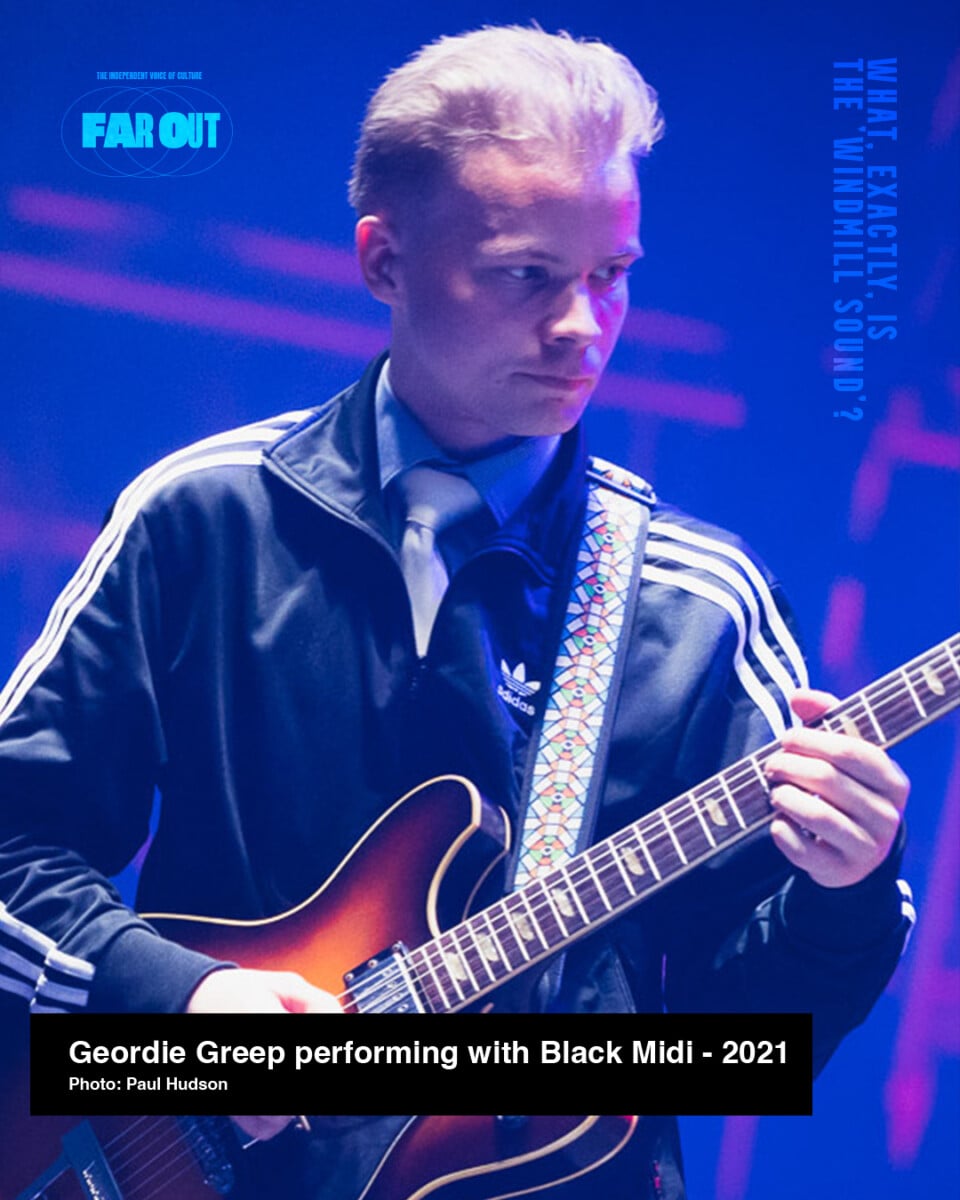
Other venues have cultivated their own similar ‘families’ like Shadwell’s The George Tavern or Strange Brew over in Bristol, but no sound has ever been ascribed, which is perhaps just as well, emphasising community and solidarity over arbitrary genre checklists that impede creativity. Such labels have been rejected by Perry himself. Candid about his dislike for the “uniforms” that can slowly take hold of a certain scene’s sounds and flair once established, the eclectic scope of bands that pass through the Windmill’s doors is a source of pride for its bookings man, not any easy categorisation.
“When it becomes a bad fashion vibe, the music becomes redundant,” Perry told whynow in 2020. “The looks are a little bit of a twist on the ordinary in here. This brings me round to the whole “Windmill scene” thing… There isn’t a fucking scene! There are certain linked people, but that’s it. The bands are so different anyway! I just try to be eclectic and not get bogged down into titles.”
Just as CBGBs never truly stayed put in one sound underneath its punk banner, notions of ‘The Windmill sound’ do the venue service, rather better labelled as a community that oversaw a crucial petri-dish of alternative music in the face of all economic odds plaguing independent venues up and down the country.
