


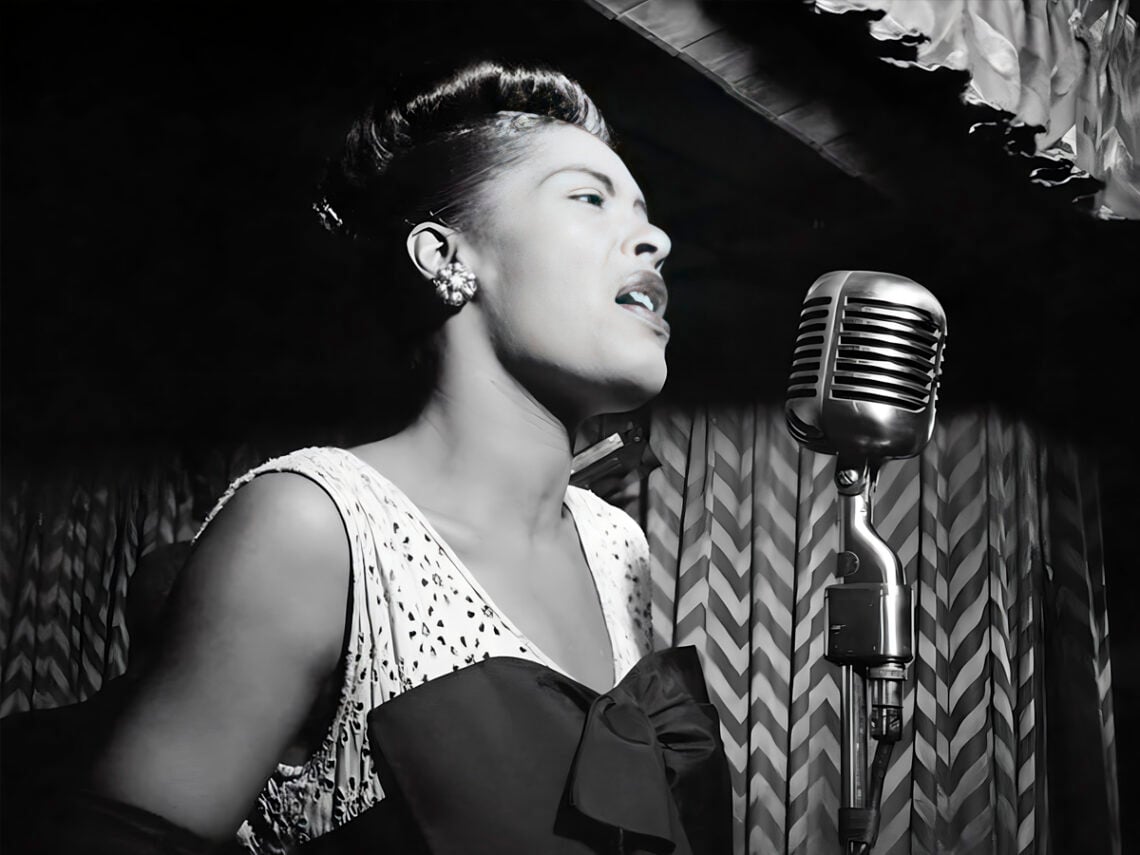
What is the “strange fruit hanging from the poplar trees” in Billie Holiday’s song?

First recorded in 1939, the rendition of ‘Strange Fruit’ by Billie Holiday would go on to haunt the United States for the next 20 years, raising the demand for civil equality and the call for a movement against white supremacy in the starkest possible terms, to such an extent that the FBI felt the need to repress the song and its author.
The track began as a simple poem by a New York schoolteacher by the name of Abel Meeropol. It just so happened that as well as inadvertently supplying Holiday with her most affecting and important material, Meeropol would also inspire one of his high-school English students, James Baldwin, to become one of the most important English-language writers of the 20th century.
Yet how did it come to be that a 12-line poem about “strange” or “bitter” fruit would attain such importance in the civil rights movement? A song about fruit hanging from poplar trees, however strange, doesn’t seem like a particularly significant image. But when the grim reality of the song’s meaning is revealed, there is no grimmer picture painted in the history of modern music.
The fruit described isn’t a natural phenomenon, a “crop” belonging to the trees that “bear” it. It’s something distinctly unnatural and unspeakably inhumane.
Where did the “fruit” come from, then?
The second line of the song provides a hint as to what it’s really talking about, as it describes the poplar trees as being covered in “blood”. The third line then spells it out directly, referring to “black bodies swinging”. Meeropol’s wife had urged him to change the original draft of his poem, making this reference more direct so there’d be no mistaking the metaphor.
What the lyrics describe are the dead bodies of African Americans who’ve been lynched by white supremacist mobs in the southern states of the US. This appalling crime against humanity was a relatively common occurrence at the time the song was written. Almost 5,000 people were lynched in the US between the late 19th century and the Second World War. Three-quarters of them were black.
The eighth line mentions “the smell of burning flesh”, because in many cases it wasn’t enough for lynch mobs to string their victims up on tree branches, having already beaten them to a pulp. Many of the bodies were then burned so that flesh was mutilated, and the victims’ families couldn’t even give them a dignified burial.
This dark chapter in American history is thankfully closed, but its legacy lives on in institutional oppression still faced by the country’s black demographic today. And many black families in the Southern states have relatives from the last century who had to endure such atrocities themselves. This is why works of such cultural significance as ‘Strange Fruit’ are remembered and revered today. They’re an invaluable weapon against these kinds of horrors, rearing their head in society once more.
